(888) 737-7690
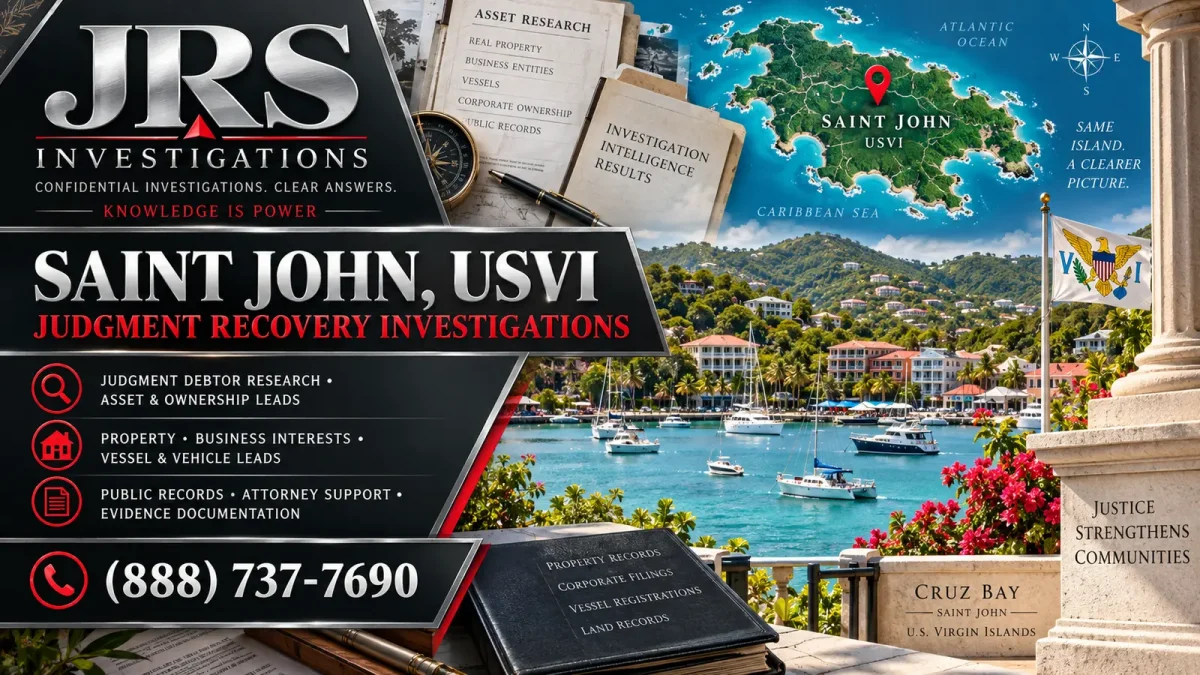
Saint John USVI Judgment Recovery: Asset Research Guide
Winning a judgment is an important legal milestone, but it does not automatically reveal where a debtor’s assets are located or whether those assets can lawfully be reached. JRS Investigations provides Saint John USVI judgment recovery research for attorneys, creditors, businesses, and authorized representatives who need reliable information before deciding on their next legal step. Our role is investigative: we help identify, organize, and document lawful asset and ownership leads for counsel to evaluate.
Saint John presents a distinctive research environment. The island’s close-knit community, vacation-property market, marine activity, business relationships, and connections to the wider U.S. Virgin Islands can make a debtor’s financial footprint more complex than a single database search suggests. JRS combines local-area research with broader U.S. and international capabilities to develop a clearer, source-supported picture.
What a Saint John Judgment-Recovery Investigation Can Do
A judgment-recovery investigation begins with the judgment, the correct debtor identity, and the client’s lawful purpose. From there, investigators can look for property, business, litigation, marine, vehicle, and other ownership indicators. The objective is not to seize property or collect a debt. It is to give the client and counsel organized intelligence that may support lawful post-judgment remedies.
Depending on the facts, our work may include:
- Confirming the judgment debtor’s full legal name and known aliases
- Resolving current and historical addresses
- Researching real-property ownership and recorded interests
- Identifying businesses, trade names, officers, and related entities
- Reviewing public court, bankruptcy, lien, and litigation records
- Developing vehicle, vessel, and other titled-asset leads
- Mapping connections between people, companies, properties, and jurisdictions
- Documenting findings for review by the client’s attorney
For matters extending beyond the territory, JRS can coordinate broader international asset investigations and cross-border lead development.
Key Research Sources and Asset Categories
1. Judgment and Court-Record Validation
Good research starts with the underlying case. Investigators verify the debtor’s name, parties, court, case number, judgment date, and any known post-judgment activity. The Virgin Islands Judiciary public case search can provide an important starting point for territorial court information. Court records may reveal addresses, related disputes, business relationships, counsel, or sworn representations that guide further investigation.
A court entry is a lead, not a complete financial profile. Names can be similar, addresses can become stale, and a record can refer to a different person or entity. JRS cross-checks identifiers before associating a record with the subject.
2. Identity and Address Resolution
Asset research can fail when it begins with the wrong individual, an incomplete company name, or an outdated address. We compare available identifiers such as middle names, former addresses, business affiliations, telephone history, relatives, and known associates. This helps distinguish the actual judgment debtor from people with similar names and may uncover links between Saint John, Saint Thomas, Saint Croix, the mainland United States, and other jurisdictions.
Address resolution can also show patterns: a property used as a residence, a mailing address tied to a company, or a recurring address appearing across public records. Each connection is evaluated and labeled according to its source and strength.
3. Real Property, Deeds, Mortgages, and Liens
Real estate is often a central part of a judgment-debtor investigation, especially in a market with vacation homes, investment property, family ownership, and entity-held parcels. The Office of the Lieutenant Governor includes the Recorder of Deeds, Tax Assessor, and related property functions; its official USVI portal helps explain the territorial record system. The USVI property-tax portal may also assist with lawful parcel and assessment research.
We may examine ownership names, acquisition dates, deed history, mortgages, liens, parcel descriptions, mailing addresses, and transfers. A name on a record does not by itself establish present equity or legal availability. Mortgages, senior liens, co-ownership, exemptions, trusts, entity structures, and recent transfers can all affect what a property lead means. Counsel should determine whether any interest is reachable and what legal process is appropriate.
4. Corporations, LLCs, Trade Names, and UCC Leads
A debtor’s assets or income indicators may be connected to a corporation, limited liability company, partnership, or trade name. The Lieutenant Governor’s Division of Corporations and Trademarks serves as the territory’s corporate filing registry. Research may identify entity status, formation dates, registered agents, managers or officers shown in public filings, business addresses, and connections among related entities.
Corporate affiliation is not the same as personal ownership of every company asset. JRS separates confirmed filings from inferences and highlights issues for counsel, such as recently created entities, overlapping addresses, repeated registered agents, or changes occurring near the time of litigation.
5. Vehicle and Vessel Leads
Saint John’s island setting makes marine leads especially relevant in some cases. Publicly available information, marina observations made where lawful, business records, advertisements, photographs, and authorized database research may indicate an association with a vessel or vehicle. We document registration or ownership indicators when available and distinguish ownership from simple possession, use, charter activity, or appearance in a photograph.
Vessels can be registered, documented, owned through entities, moved between jurisdictions, or subject to liens. A credible report therefore records the source, date, identifiers, and limitations of the lead instead of treating a sighting as proof.
6. Federal Litigation and Bankruptcy
Federal cases and bankruptcy filings can materially change the value or timing of an investigation. The judiciary’s official PACER case locator supports searches of federal court records, while the District Court of the Virgin Islands Bankruptcy Division provides access to its CM/ECF system. Relevant filings may identify creditors, claimed assets, business interests, property, transfers, or restrictions affecting enforcement.
Bankruptcy information is time-sensitive and legally significant. JRS reports what the public record shows; the client’s lawyer should interpret stays, exemptions, discharge issues, priorities, and available remedies.
7. Employment, Business, and Revenue Indicators
Lawful research may identify professional licenses, company roles, commercial activity, public-facing businesses, rental or hospitality connections, contracting relationships, or other indicators of economic activity. These findings can help counsel decide whether formal discovery, subpoenas, depositions, or other lawful procedures are justified.
JRS does not promise access to private bank balances, confidential tax returns, payroll systems, or protected account information. We use public records, authorized sources, lawful fieldwork, and client-provided materials. When nonpublic information requires legal process, that decision belongs to counsel and the court.
8. Cross-Jurisdiction Connections
A Saint John subject may own property elsewhere, conduct business through a mainland entity, use an address in another territory, or maintain relationships across the Caribbean. JRS follows documented connections rather than assuming the investigation ends at the island boundary. Our U.S. Virgin Islands investigative coverage and wider network can help develop leads across multiple locations while respecting applicable law.
Our Investigation Process
Phase 1: Scope and Conflict Review
We begin by confirming the client’s identity, lawful purpose, relevant parties, judgment information, deadlines, known assets, and priority questions. We also define the geographic scope and the level of reporting required. A focused assignment controls cost and keeps the work aligned with the legal strategy.
Phase 2: Baseline Research
Investigators build a verified subject profile and review appropriate court, property, corporate, lien, address, and open-source records. We note discrepancies and develop additional search terms, affiliated entities, and connected jurisdictions. When a case involves suspected misrepresentation or concealed relationships, our fraud investigation services may provide a useful companion scope.
Phase 3: Lead Development and Corroboration
Promising leads are checked against multiple sources where practical. A business address may be compared with property records; an entity may be linked to officers, registrations, litigation, or public commercial activity; a vessel lead may be evaluated using identifiers and date-specific observations. For higher-risk transactions or counterparties, JRS can also perform due diligence investigations.
Phase 4: Evidence Documentation and Reporting
The final report organizes confirmed findings, qualified leads, source references, relevant dates, and limitations. Clear separation between fact and inference helps counsel assess whether additional discovery or enforcement action is warranted. Supporting records may be included when legally available and within the agreed scope.
Important Limits in Judgment-Recovery Research
Locating an apparent asset does not prove that the debtor owns it outright, has recoverable equity, or that it can be reached under Virgin Islands or federal law. Title may be shared, ownership may sit with a separate entity, a lien may have priority, or an exemption may apply. Records can also be delayed, incomplete, or affected by name variations.
JRS is an investigative firm, not a law firm, collection agency, or court officer. We do not provide legal advice, guarantee recovery, levy accounts, seize property, or decide whether an asset is exempt. Attorneys should direct formal discovery and determine the legal effect of every finding.
When an Investigation May Be Especially Useful
- The debtor claims to have no assets despite visible business or lifestyle indicators
- Known addresses or employment information are outdated
- Property or companies may be held under related names or entities
- The debtor has connections to several islands, states, or countries
- Ownership changed during litigation or after the judgment
- Public records contain conflicting identities, addresses, or affiliations
- Counsel needs organized leads before using formal discovery
Our broader investigative services can support related needs, including records research, due diligence, fraud inquiries, and field investigation. Clients seeking a local starting point can also review our Saint John private investigator page.
Frequently Asked Questions
Can JRS guarantee that a judgment will be collected?
No. We develop lawful intelligence and asset leads, but no investigator can guarantee that assets exist, have sufficient value, or are legally reachable. Recovery depends on the facts, competing claims, exemptions, legal procedure, and decisions made by the client and counsel.
Can you obtain bank-account balances or private tax records?
Not without lawful authorization or proper legal process. JRS does not use pretexting, unauthorized account access, or illegal methods. We can identify public and authorized leads that may help counsel determine whether formal discovery is appropriate.
Do you work directly with attorneys?
Yes. We regularly structure research around counsel’s questions and reporting needs. Attorney direction is especially valuable when the matter involves discovery strategy, privilege, bankruptcy, transfers, exemptions, or multiple jurisdictions.
Can you investigate assets outside Saint John?
Yes. When the evidence points elsewhere, JRS can expand the scope to Saint Thomas, Saint Croix, the mainland United States, other Caribbean jurisdictions, or international locations as appropriate and lawful.
Discuss a Saint John Judgment-Recovery Investigation
If you have a judgment and need a clearer picture of the debtor’s possible assets, ownership interests, or connected entities, JRS can help define a focused investigative scope. Contact JRS Investigations or call (888) 737-7690 to discuss the judgment, known facts, jurisdictional connections, and the questions your attorney needs answered.
Knowledge is power. The right research can help you and counsel make informed, proportionate decisions about the next lawful step.