(888) 737-7690

TSCM Bug Sweeps & Hidden Camera Detection
Professional TSCM Bug Sweeps for Homes, Offices, Vehicles and Vessels
Hidden-Camera, Audio-Device, RF-Signal and GPS-Tracker Detection
Confidential Consultation: (888) 737-7690
Free Consultations
Residential TSCM Bug Sweep Services
When private conversations, movements or confidential information appear to be known by someone who should not have access, a professional technical-surveillance review can help separate a specific technical concern from guesswork. JRS Investigations provides authorized TSCM bug sweeps for residences, apartments, hotel rooms, offices, vehicles and vessels. The assignment begins with a confidential intake so the inspection can focus on the rooms, devices, access points and time periods that matter.
What Is TSCM?
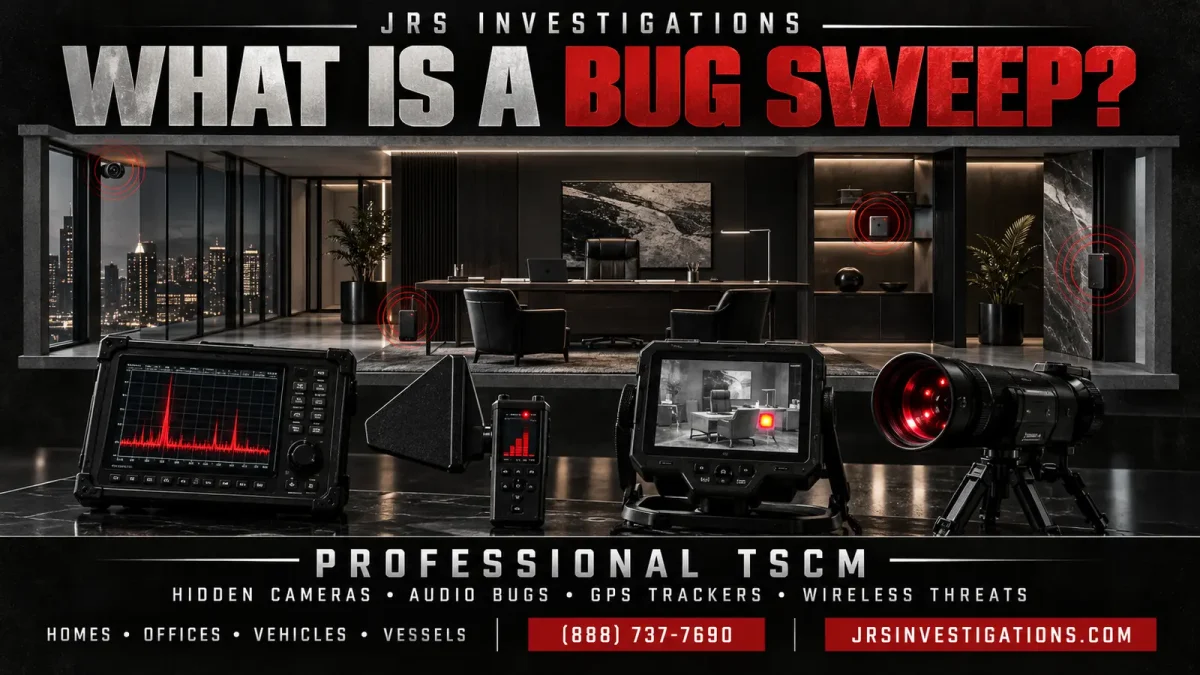
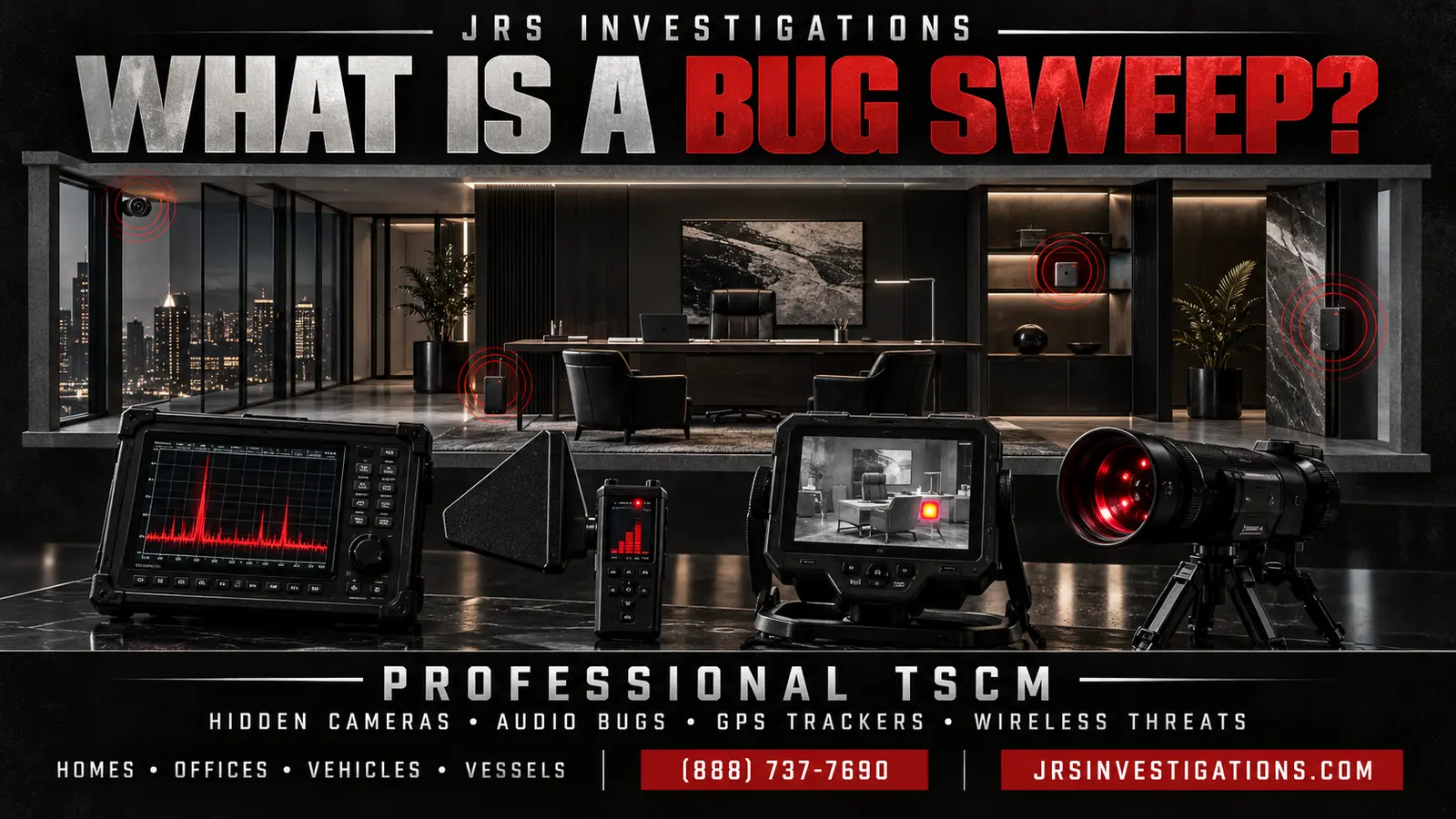
Technical Surveillance Countermeasures, commonly called TSCM, is a structured inspection for unauthorized surveillance technology and signs of tampering. Depending on the property and the agreed scope, an inspection may include a careful physical examination, radio-frequency analysis, hidden-camera detection, non-linear junction detection, network and Wi-Fi review, thermal observations and a vehicle search. No single instrument can identify every possible threat, so professional work combines equipment, inspection methods and investigator judgment.
Residential and Personal-Privacy Concerns
Common assignments involve a home after a separation or access dispute, a short-term rental or hotel room, a home office handling confidential information, a vehicle that may contain a tracker, or a residence where an unfamiliar device or alteration has been found. Suspicion alone does not establish that surveillance is occurring. Ordinary electronics, wireless networks, building systems and software can create confusing signals, which is why findings must be evaluated carefully.
Physical TSCM and Digital Concerns Are Different
A physical bug sweep is not a promise to recover deleted messages, identify every compromised online account or replace a qualified digital-forensics or cybersecurity examination. If the concern involves account access, malware, cloud credentials or a remote compromise, JRS will explain the appropriate next step and help define a lawful scope. Clients should avoid resetting, dismantling or discarding a suspected device before professional guidance because doing so may change or destroy useful evidence.
Corporate and Executive TSCM Surveys
Businesses, law firms, executives and organizations may request a TSCM survey when confidential meetings, negotiations, litigation strategy, client information, intellectual property or travel plans could be exposed. The objective is not to dramatize a concern. It is to define the authorized areas, assess realistic technical risks, inspect them methodically and document what was observed.
Common Corporate Assignment Scopes
- Executive offices, conference rooms, boardrooms and private meeting areas
- Temporary offices, hotel meeting suites and event spaces
- Company vehicles, executive vehicles, aircraft or vessels when access and authority are confirmed
- Wireless devices, network-connected equipment and unfamiliar electronics within the agreed TSCM scope
- Post-incident inspections after unauthorized access, employee separation, sensitive negotiations or unexplained disclosure
Planning, Confidentiality and Access
Before the sweep, JRS confirms who is authorized to request the work, which rooms and assets may be inspected, who has had access, what changed, and whether counsel, security staff or information-technology personnel should be involved. To protect confidentiality, scheduling and communication can be limited to designated contacts. Clients should not announce the sweep or confront a suspected person before discussing safety and evidence-preservation considerations.
Reporting and Evidence Handling
After the inspection, the client receives a debriefing and, when included in the engagement, a written report describing the scope, methods, observations and recommendations. If a suspicious device or installation is identified, JRS can document its condition and location and discuss preservation, counsel and law-enforcement options. Admissibility and legal use depend on the facts, jurisdiction and chain of custody; no investigator can guarantee how a court or agency will treat a particular item.

Warning Signs That May Justify a TSCM Assessment
None of the following signs proves that a listening device, hidden camera or tracker is present. Each can have an innocent explanation. A pattern of unexplained events, recent unauthorized access or a specific discovered object is more useful than a general feeling alone.
- Private information repeatedly becomes known to someone who should not have received it
- An unfamiliar charger, adapter, smoke detector, clock, USB device or network component appears in a sensitive area
- Fixtures, outlets, ceiling tiles, furniture, vehicle panels or electronic equipment show unexplained disturbance
- A home, office, vehicle, hotel room or vessel was accessed by an unauthorized or recently separated person
- Unrecognized wireless devices or network changes appear and cannot be explained by the owner or IT administrator
- A suspicious object, wiring change, small lens opening, magnetic device or power connection is discovered
- Confidential meetings, travel plans, litigation strategy or business decisions appear to be anticipated by an outside party
If there is an immediate safety risk, leave the area and contact emergency services or law enforcement. Do not dismantle, disconnect or publicize a suspected device until evidence-preservation and safety options have been considered.
What a Professional TSCM Bug Sweep May Include
The inspection plan is matched to the property, concern and lawful authority. Not every method is appropriate for every assignment, and a responsible provider should explain the scope and limitations before work begins.
- Confidential intake and authorization: identify the concern, relevant dates, authorized decision-maker, locations, devices, vehicles and access history.
- Physical examination: inspect accessible furnishings, fixtures, electronics, power sources, cabling and other locations where surveillance equipment or tampering could reasonably be concealed.
- Radio-frequency analysis: examine the local signal environment and investigate emissions that warrant closer review. Normal Wi-Fi, cellular, Bluetooth and building systems must be distinguished from suspicious activity.
- Hidden-camera inspection: assess likely camera positions and use appropriate optical, physical and electronic methods to evaluate suspicious objects or viewing angles.
- Non-linear junction detection: when appropriate, search for electronic components that may not be actively transmitting.
- Network and wireless review: identify relevant connected devices, unauthorized access points or unusual wireless activity within the authorized scope.
- Vehicle or vessel inspection: examine accessible areas for trackers, transmitters, cameras or signs of installation when ownership and permission are confirmed.
- Debriefing and report: explain findings, limitations, evidence-preservation steps and practical security recommendations.
Learn how to evaluate a professional investigation and TSCM provider.
Why Clients Request TSCM Bug Sweeps
- Personal privacy: assess a residence, vehicle or temporary accommodation after a specific access or surveillance concern.
- Confidential business information: protect meetings, negotiations, client data, trade information and executive activity.
- Legal and investigative matters: document the condition of a location or device and preserve observations for counsel or law enforcement.
- Travel and event security: evaluate hotel rooms, meeting spaces, vehicles, yachts or temporary work areas before sensitive use.
- Preventive security: establish a baseline and improve access control, device inventory and inspection procedures.
What a Clean Result Means
A clean result means that no unauthorized device or actionable technical anomaly was identified within the agreed locations, access limits, methods and time of the inspection. It does not guarantee that a future device cannot be installed or that every remote, digital or previously removed compromise is excluded. The final debriefing should state those limits clearly and recommend reasonable follow-up measures.
How to Prepare for a Sweep
- Provide accurate square footage, room counts, vehicle details and access restrictions
- List unfamiliar items, recent repairs, service visits, break-ins or people with keys or credentials
- Preserve suspicious objects and photographs without dismantling them
- Arrange access to locked rooms, vehicles, network equipment and relevant devices
- Use a private channel to schedule the inspection when confidentiality is important
Frequently Asked Questions
Can a TSCM sweep include vehicles or vessels?
Yes. An inspection can include authorized vehicles or vessels when they are identified in advance and safely accessible.
Can JRS inspect cell phones?
The agreed scope may include physical inspection, device inventory and review of observable settings or indicators. Suspected malware, account compromise or deleted-data recovery may require a separate digital-forensics or cybersecurity specialist.
What happens if a suspicious device is found?
JRS can document the item and its location, discuss immediate safety and preservation steps, and help the client coordinate with counsel or law enforcement when appropriate. The device should not be handled unnecessarily.
How long does a bug sweep take?
Timing depends on square footage, layout, number of rooms, electronics, vehicles, network complexity, access and the specific concern. A realistic estimate is provided after the confidential intake.