(888) 737-7690
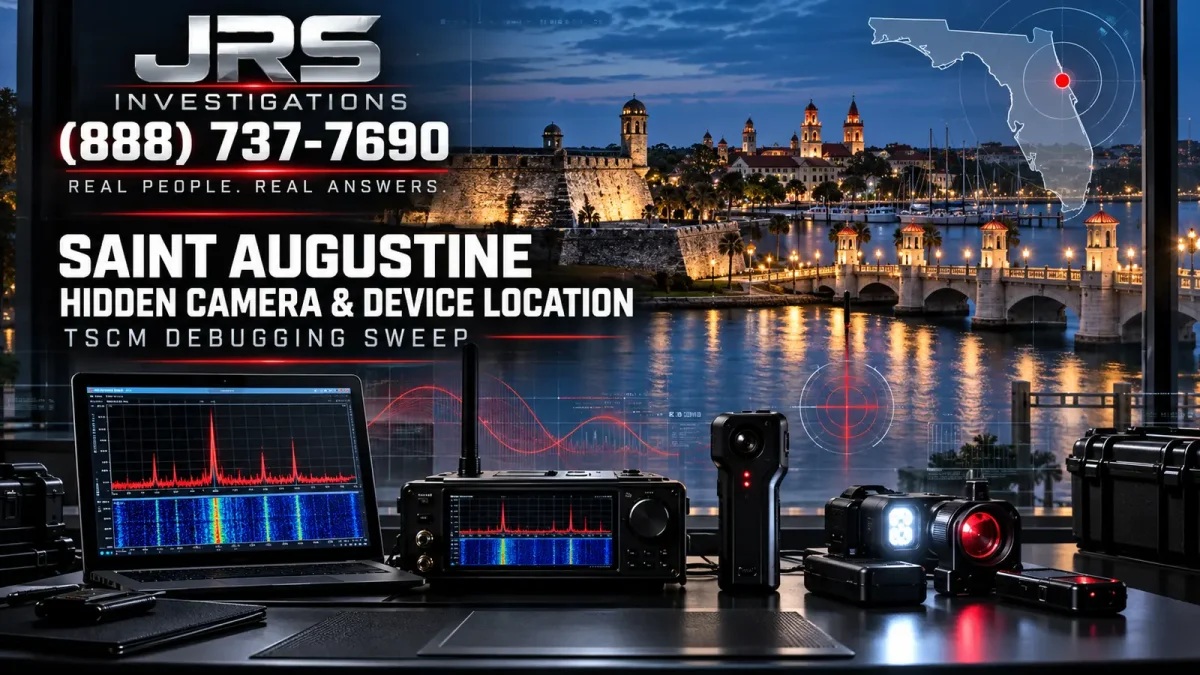
Saint Augustine TSCM Bug Sweeps: A Professional Guide
Privacy concerns can be difficult to evaluate in Saint Augustine, where historic buildings, modern wireless systems, hospitality properties, residences, professional offices, and vehicles create very different inspection conditions. Professional Saint Augustine TSCM bug sweeps use a controlled process to assess a defined area for hidden cameras, listening devices, unauthorized transmitters, and other surveillance risks.
Technical Surveillance Countermeasures, commonly called TSCM, is not a quick pass with one detector. A credible sweep combines radio-frequency analysis, inspection for concealed electronics and camera lenses, thermal observations, physical examination, and authorized network review when appropriate. Each result must be interpreted in context because ordinary electronics can produce the same initial alerts as suspicious equipment.
If you have a current concern, call (888) 737-7690 or use the confidential JRS contact form to discuss the property, timing, authorization, and reason for the inspection.
Why Saint Augustine Properties Need Careful TSCM Planning
Saint Augustine includes historic downtown buildings, boutique hotels and inns, waterfront properties, modern offices, gated communities, short-term rentals, and high-traffic visitor areas. Construction materials may range from coquina and thick masonry to plaster, wood framing, concrete, and renovated mixed-use systems. Those differences affect access, radio propagation, thermal patterns, and the locations where electronics can be concealed.
Historic properties require a particularly measured approach. Original finishes, decorative millwork, masonry, and previous renovations may limit what can be opened or moved. A professional scope should identify inaccessible areas and avoid unnecessary damage. The examiner must work within the client’s authority and the physical limitations of the property.
Hotels, inns, vacation rentals, and event locations present another challenge. Smart televisions, electronic locks, routers, sensors, chargers, wireless speakers, and neighboring networks can create dense signal activity. Guests or temporary occupants may have only a limited access window. Good planning allows the examiner to distinguish known equipment from unexplained findings without disrupting the location more than necessary.
When a Saint Augustine Bug Sweep May Be Appropriate
A TSCM inspection may be reasonable when specific facts create concern or when the consequences of exposed information are substantial. Common requests involve confidential legal or business meetings, sensitive negotiations, suspected stalking or harassment, domestic disputes, former employees or contractors with unresolved access, unexplained knowledge of private conversations, and unfamiliar equipment found in a room or vehicle.
Businesses may schedule preventive inspections before a high-value meeting, after renovations, following an access-control failure, or when executive, client, or legal information requires added protection. Residents and travelers may request help after noticing altered fixtures, unknown network devices, unusual wiring, evidence of unauthorized entry, or an object positioned toward a private area.
A concern does not prove that surveillance is occurring. Wi-Fi equipment, Bluetooth devices, cellular systems, security cameras, smart-home products, medical electronics, and equipment in neighboring units can all create unexpected activity. A professional process tests possible explanations and documents what is found instead of assuming a conclusion.
What Professional TSCM Bug Sweeps Examine
Radio-frequency spectrum activity
Spectrum analysis evaluates radio-frequency activity across relevant bands and over time. The examiner looks for unexplained transmitters, unusual signal behavior, intermittent bursts, and a connection between a signal and a specific room, object, or device. A signal alone is not evidence of eavesdropping. It must be correlated with known systems, location, timing, and technical characteristics.
Electronic components, including dormant devices
A non-linear junction detector can help identify semiconductor components in furniture, fixtures, walls, containers, and other accessible areas. This method may locate electronics even when a device is not transmitting. It also reacts to legitimate electronics and certain metal junctions, so the response must be localized and confirmed through physical examination or another method.
Hidden-camera lenses and sightlines
Optical inspection tools can reveal reflections associated with camera lenses. The examiner also considers sightlines and examines small openings, smoke detectors, clocks, chargers, power strips, decorative objects, vents, and other items positioned toward private activity. Reflections from screws, glass, or polished surfaces can resemble a lens, which makes direct confirmation essential.
Heat patterns and physical concealment
Thermal imaging may show heat that deserves closer inspection around powered or recently powered electronics. It cannot see through walls and does not prove that a device is covert. A careful physical inspection remains central because wired microphones, local recorders, modified fixtures, and powered-off devices may produce little useful radio-frequency evidence.
Authorized networks and connected devices
When the client controls the network and authorizes access, a review may help identify unknown connections, unfamiliar equipment, or devices that do not match the site inventory. This complements the RF and physical examination. It does not replace them because a device may use cellular service, record locally, connect intermittently, or stay offline during the sweep.
For details about local service coverage, review Saint Augustine TSCM debugging and bug-detection sweeps. JRS also provides an overview of its broader TSCM bug-sweep services.
How a TSCM Inspection Is Structured
1. Confidential intake and scope
The process begins with the reason for concern, relevant dates, known access, the areas involved, and who has authority over them. The client should identify the rooms, vehicles, vessels, networks, and devices that must be included. Clear scope prevents gaps and helps the examiner select the right equipment and time allocation.
2. Site preparation and baseline observations
Whenever practical, the location should be available without unnecessary occupants and with normal electronics identified. The examiner records the layout, building materials, visible equipment, nearby sources of interference, and access limitations. In a shared historic building or hospitality property, neighboring systems may influence readings and must be considered.
3. Layered technical and physical examination
The sweep proceeds methodically through the approved rooms, furnishings, fixtures, electronics, and other relevant assets. RF analysis, non-linear junction detection, optical examination, thermal observations, and physical inspection are used where appropriate. Suspect findings should be checked through another method rather than accepted from one alert.
4. Findings, documentation, and follow-up
The client should receive a clear explanation of the examined scope, material limitations, notable observations, and recommended next steps. If a suspected device is found, preserving its position and condition may be more important than immediate removal. Photographs, access control, handling records, and consultation with counsel or law enforcement may help protect evidence.
Saint Augustine Locations That Require Special Consideration
Historic residences and commercial buildings: Thick masonry, original finishes, additions, shared walls, and old electrical systems can affect readings and access. The scope should protect historic surfaces while documenting any area that cannot be examined.
Hotels, inns, and short-term rentals: Electronic locks, smart televisions, guest networks, chargers, alarm devices, and frequent occupant turnover create a busy environment. The client must have authority over the specific room or property and enough private access for a meaningful inspection.
Professional offices and meeting spaces: Conference technology, managed networks, cleaning crews, vendors, and shared access may expand the threat surface. Boardrooms, executive offices, reception areas, and vehicles used for sensitive conversations may require separate attention.
Waterfront property and vessels: Marine electronics, radios, navigation systems, shore power, and compact compartments differ from a normal building environment. A vessel or dock area should be named specifically in the scope so the examiner can plan for access and equipment conditions.
Vehicles: Modern vehicles contain Bluetooth, cellular, telematics, diagnostic systems, navigation equipment, and cameras. An examination may include the passenger area, cargo spaces, accessible wiring, exterior attachment points, and authorized digital systems while separating factory components from aftermarket equipment.
For more local examples, see seven Saint Augustine locations where TSCM sweeps may be considered and the related Saint Augustine TSCM debugging-sweep overview.
Lawful Access and Evidence Preservation
A sweep should be performed only with permission from someone who has authority over the property, room, vehicle, vessel, or network being examined. Ownership, tenancy, workplace policy, consent, and the type of communication involved can change what is lawful. Federal law restricts the intentional interception of certain communications under 18 U.S.C. Section 2511, and Florida law or other rules may also apply.
JRS investigators do not provide legal advice. Matters involving employee monitoring, domestic disputes, privileged communications, litigation, or suspected criminal conduct may require guidance from a qualified Florida attorney. If a potential device may become evidence, discuss collection and chain-of-custody needs before it is moved, powered, disconnected, or tested.
What a Sweep Can and Cannot Establish
A well-executed sweep can identify suspicious devices or anomalies that are present and detectable within the agreed scope and conditions at the time of examination. It can document the environment, resolve many ordinary false alarms, and support practical security improvements. It cannot guarantee that no device has ever been present, predict a later installation, or overcome areas that were inaccessible.
Results are strongest when the concern is described accurately, the scene is preserved, access is complete, and more than one method supports significant findings. Recommended follow-up may include changing access controls, improving meeting practices, reviewing credentials, replacing compromised equipment, obtaining digital-forensics assistance, or scheduling another inspection after a new access event.
Choosing a Saint Augustine TSCM Provider
Ask how the provider defines the scope, which inspection methods are included, how ordinary signals are identified, how questionable findings are confirmed, and what reporting is provided. Be cautious of guaranteed detection claims, unexplained references to secret equipment, or a process centered on one consumer RF detector.
The provider should explain limitations clearly and protect the client’s confidentiality before, during, and after the assignment. Experience, lawful procedures, methodical documentation, and the ability to distinguish facts from possibilities matter more than dramatic claims.
Schedule a Confidential Saint Augustine TSCM Consultation
If private information, personal safety, or business strategy may be exposed, avoid disturbing the location more than necessary. Record what prompted the concern, preserve relevant access records or messages, and use a communication channel that you do not believe is compromised.
Call JRS Investigations at (888) 737-7690 to discuss a Saint Augustine hidden-camera and device-location sweep. Real people answer real questions, and the consultation can help define a lawful, proportionate scope before the on-site examination is scheduled.