(888) 737-7690

How to Hire a Private Investigator in Nassau, Bahamas
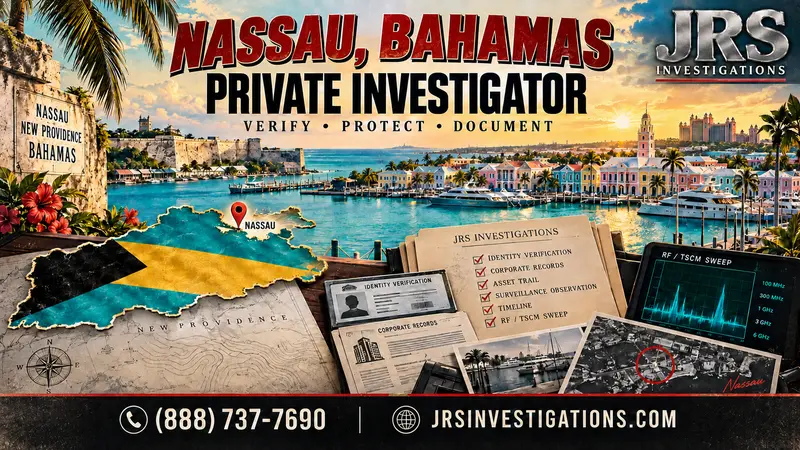
If you need a private investigator in Nassau, Bahamas, the most important decision is not simply who answers the phone first. The right investigator must understand New Providence, work within Bahamian law, protect confidential information, and provide a written plan for gathering useful evidence. JRS Investigations helps individuals, attorneys, families, and businesses define the assignment, organize available evidence, and coordinate appropriately licensed investigative resources for work in Nassau and throughout The Bahamas.
Nassau cases often combine local fieldwork with records research, international communication, travel logistics, and careful evidence handling. This guide explains what to verify before retaining an investigator, which services may fit your situation, and how JRS Investigations approaches a lawful, discreet inquiry.
Why Nassau Investigations Require Local Knowledge
Nassau is the capital of The Bahamas and the commercial center of New Providence. Investigations may involve downtown Nassau, Paradise Island, Cable Beach, Lyford Cay, Old Fort Bay, gated communities, marinas, hotels, restaurants, corporate offices, or inter-island travel. Traffic patterns, resort access, private-property restrictions, ferry and flight schedules, and the movement of visitors can all affect a field assignment.
A useful plan accounts for those conditions before surveillance or interviews begin. It should also distinguish between information that can be researched from outside the country and work that must be completed by a properly authorized person on the ground. JRS can coordinate the broader case while working with qualified local resources where Bahamian licensing or physical presence is required.
Common Reasons to Hire a Nassau Private Investigator
Marital and Infidelity Investigations
Clients may request discreet observation when a spouse or partner travels to Nassau, stays at a resort, visits a private residence, or appears to be concealing a relationship. A properly scoped Nassau private investigation focuses on lawful observation from permitted locations and objective documentation. It does not involve trespassing, account hacking, unlawful tracking, or intercepting private communications.
Background and Due-Diligence Research
Before entering a business relationship, investment, employment arrangement, or significant personal commitment, a client may need identity verification, company research, litigation checks, professional-history review, or other lawful background investigation services. No single database provides a complete picture. The investigator should explain which sources are available, what requires consent, and which findings still need primary-source confirmation.
Hidden Assets and Financial Leads
Asset investigations may arise from judgments, divorce, fraud allegations, estate disputes, or business litigation. The objective is to identify lawful leads such as company interests, real property, vessels, vehicles, court matters, and documented business relationships. Read more about the practical limits and records used in a Nassau hidden-asset investigation. An investigator should never promise to locate every asset or gain access to protected banking information without proper legal authority.
Missing-Person and Locate Assignments
A locate case can involve an estranged relative, witness, debtor, beneficiary, former employee, or person whose last known activity was in The Bahamas. The first step is to establish a verified identity and timeline. If there is an immediate safety concern or a suspected crime, contact the Royal Bahamas Police Force. Private investigative work can supplement, but should not obstruct, a police investigation.
Corporate Fraud and Internal Investigations
Businesses may need help assessing theft, conflicts of interest, false credentials, diversion of company property, undisclosed relationships, or suspicious transactions. A defensible inquiry begins with a written scope, lawful authority from the client, preservation of original records, and a clear decision about when counsel, insurers, regulators, or police should be involved.
TSCM and Technical Security
Executives, law firms, businesses, yacht owners, and high-profile travelers sometimes request a technical-surveillance countermeasures inspection after unexplained information leaks, unusual electronic behavior, or a security incident. JRS provides TSCM and bug-detection guidance for Caribbean assignments. A professional sweep should be based on the environment, threat history, equipment, and documented findings—not fear-based claims or guarantees that a space is permanently secure.
Licensing and Legal Boundaries in The Bahamas
The Bahamas regulates inquiry agents and security-guard businesses. The government states that people engaged in providing inquiry-agent services must obtain the required licence. The Government of The Bahamas licensing guidance and the Inquiry Agents and Security Guards Act provide the starting point for verifying the current requirements.
Before fieldwork begins, ask who will perform it, what authorization they hold, and whether the licence is current for the assignment. When an international firm coordinates a case, the written agreement should identify the scope and explain when properly licensed Bahamian personnel or local counsel will be used.
Privacy matters as well. The Bahamas has a Data Protection framework governing the collection, processing, use, retention, and disclosure of personal information. The legal basis for a particular investigative step depends on the facts. A reputable investigator will not promise unlawful access to private messages, bank accounts, telephone records, hotel systems, or restricted government data.
How to Evaluate a Private Investigator in Nassau
Use a short, practical checklist before paying a retainer:
- Identity and licensing: Confirm the legal name of the firm and the person who will conduct local inquiry-agent work.
- Relevant experience: Ask for experience with your type of matter, not only general years in business.
- Written scope: The agreement should define objectives, authorized methods, geographic limits, reporting, fees, and stop conditions.
- Privacy safeguards: Ask how sensitive documents, photographs, video, and personal data will be stored and shared.
- Evidence standards: Confirm that original files, dates, times, source notes, and a clear activity log will be preserved.
- Communication: Establish who receives updates, how often, and what triggers an immediate call.
- Realistic expectations: Avoid anyone who guarantees a particular result, promises illegal access, or claims every record is available instantly.
Useful Nassau Records and Official Sources
Depending on the assignment and lawful access, research may include corporate filings, civil or criminal court information, land or vessel records, professional credentials, news archives, and open-source material. The Registrar General’s Department provides official services involving company registrations and other public records, while its online corporate services can help verify names and filings.
An investigator should distinguish an official record from a database lead. Names, addresses, and dates can belong to different people, particularly in cross-border research. Important findings should be corroborated before they are presented as fact.
What a Professional Investigation Process Looks Like
- Confidential intake: The client explains the concern, desired outcome, deadlines, known facts, and legal context.
- Conflict and authority review: The investigator confirms who the client is, whether the purpose is lawful, and whether attorney coordination or consent is needed.
- Case plan: JRS identifies research steps, potential local fieldwork, likely limitations, estimated time, and a working budget.
- Evidence preservation: Existing messages, photographs, documents, transaction records, and timelines are organized without altering originals.
- Research and fieldwork: Authorized tasks are completed using lawful methods and appropriately licensed resources.
- Quality review: Findings are checked for source reliability, identity matches, dates, and reasonable alternative explanations.
- Reporting: The client receives a clear summary, supporting material, limitations, and practical next steps.
Costs and Timelines for Nassau Investigations
No responsible investigator can quote every Nassau case from a single menu. Cost depends on the number of investigators, hours, travel, transportation, accommodation, records fees, equipment, urgency, reporting, and whether work extends beyond New Providence. Surveillance is usually billed differently from a focused records search or a technical sweep.
Ask for a written retainer agreement and an explanation of how the budget will be used. A strong plan prioritizes the steps most likely to answer the client’s question and includes a point at which the parties review results before committing additional funds.
Timing also varies. A preliminary records review may move quickly, while multi-day surveillance, inter-island inquiries, complex company research, or coordination with counsel can take longer. JRS should be told about court dates, travel dates, business closings, or other hard deadlines during intake.
Why Clients Contact JRS Investigations
JRS Investigations brings disciplined case planning, discreet client communication, and experience coordinating personal, legal, corporate, and technical matters. Our broader private investigation services include surveillance, background research, hidden-asset leads, missing-person work, corporate investigations, and TSCM assignments where legally permitted.
For Bahamas matters, our role is to build the right team for the facts. That may include appropriately licensed Bahamian inquiry agents, local records resources, attorneys, or other qualified professionals. The goal is useful, accurately described evidence—not exaggeration, shortcuts, or promises no investigator can lawfully make.
Frequently Asked Questions
Is it legal to hire a private investigator in The Bahamas?
Yes, but inquiry-agent work is regulated. Confirm that the person conducting local fieldwork holds the authorization required for the assignment and that every requested method is lawful.
Can an investigator access a spouse’s phone, email, or bank account?
Not without lawful authority. A legitimate investigator will not hack accounts, impersonate the subject, unlawfully obtain protected records, or install tracking equipment without a valid legal basis.
Can JRS help if I am in the United States?
Yes. Many Bahamas cases begin with a client, attorney, family, or business outside the country. Documents and strategy can be coordinated remotely while appropriate local resources handle work that must occur in Nassau.
Will the evidence be usable in court?
That depends on how it was obtained, authenticated, preserved, and presented, as well as the rules of the court hearing the matter. Tell JRS if litigation is pending so the investigative plan can be coordinated with your attorney. No investigator should guarantee admissibility.
What if the matter involves an emergency or crime?
Call the Royal Bahamas Police Force at 911 or 919 for an emergency. The RBPF also provides information about reporting a crime or incident. A private investigator is not a substitute for police emergency response.
If your Nassau itinerary also requires airport, hotel, meeting, or yacht security coordination, review our Nassau executive protection and private security planning. Protection and investigative work need separately agreed scopes, permissions, and local resources.
Speak With JRS Investigations About a Nassau Case
Contact JRS Investigations for a confidential discussion about surveillance, background research, hidden assets, fraud, missing persons, or TSCM support. Review our Bahamas private investigation services for broader case-planning information. We will help define a lawful scope, explain likely limitations, and identify the appropriate resources before work begins.
Call toll-free: (888) 737-7690
Website: JRSInvestigations.com