(888) 737-7690

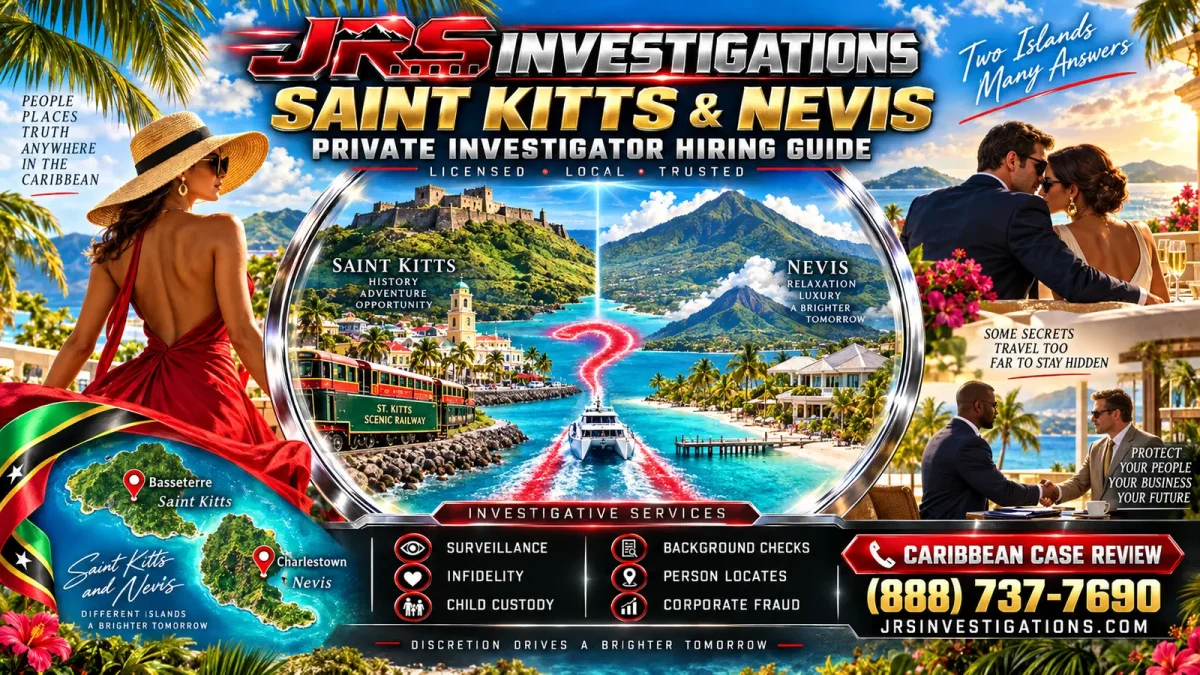
How to Hire a Private Investigator in Saint Kitts and Nevis
Hiring a private investigator in Saint Kitts and Nevis should begin with a clear objective, a realistic plan and a confidential conversation. Whether the concern involves a spouse, a child-custody dispute, a background check, missing assets, corporate fraud or a person who must be located, the right investigator should explain what can be documented, what cannot be promised and how island logistics affect the assignment.
JRS Investigations assists private clients, attorneys and businesses with carefully scoped investigations throughout the Caribbean. For a confidential case review, call (888) 737-7690 or review our Saint Kitts and Nevis private investigator services.
For another eastern Caribbean perspective, review our guide to hiring a private investigator in Saint Lucia.
Define the Question Before Hiring an Investigator
A productive investigation is built around a question that can be answered with facts. “Is my spouse cheating?” may become a request to document meetings, overnight activity or repeated visits during a defined period. “Is this applicant trustworthy?” may become verification of identity, employment, litigation, business interests and other lawful records. A focused objective helps the investigator recommend the right service, schedule and budget.
Prepare a concise timeline, accurate names, known addresses, photographs that were lawfully obtained, vehicle details and any relevant court orders or contracts. Avoid editing screenshots or combining assumptions with confirmed facts. The investigator should be able to separate what is known, what is suspected and what must be verified.
Private Investigation Services in Saint Kitts and Nevis
Surveillance and infidelity investigations
Professional surveillance may document public activity, travel patterns, meetings and interactions without unnecessary confrontation. In a small-island environment, discretion matters. Familiar vehicles, limited routes and close community relationships can make careless surveillance obvious. A sound plan accounts for the subject’s schedule, the location, daylight, traffic, ferries and possible movement between Saint Kitts and Nevis.
For relationship concerns, the goal is objective documentation rather than pressure or provocation. Learn more about JRS infidelity investigations.
Child-custody and family matters
Custody investigations may document compliance with court-ordered schedules, caregiving conditions, public conduct or other specific concerns identified by a client or attorney. The assignment should be tied to the language of the order and the legal team’s evidentiary needs. Investigators do not decide custody; they collect and organize observations that counsel can evaluate.
Clients should provide the current order, exchange schedule, approved locations and a list of clearly defined concerns. JRS also provides child-custody investigation support.
Background checks and due diligence
A background investigation can help evaluate a prospective partner, employee, caregiver, vendor, tenant or investment contact. The scope may include identity confirmation, address history, court and business records, professional claims, social-media review and verification of disclosed information. Availability varies by jurisdiction, so a credible investigator will identify gaps rather than presenting an automated database result as complete.
For international matters, names, dates of birth, former countries of residence and company affiliations can materially improve accuracy. See JRS background investigation services.
Corporate fraud and asset inquiries
Businesses and attorneys may need help with suspected employee theft, false vendor relationships, conflicts of interest, insurance matters, hidden business connections or asset-related litigation. These cases often require a combination of records research, interviews, site observations and carefully planned surveillance. The investigator should define the lawful sources to be used and explain how findings will be documented.
Missing persons and locates
Locating an individual may involve record research, contact development, address verification and field checks. A responsible investigator will ask why the person is being sought and will protect sensitive location information when safety, stalking, domestic violence or another risk is present. Review JRS missing-person and locate services.
TSCM and executive protection planning
Some Caribbean assignments involve confidential meetings, high-profile travel or concerns about unauthorized surveillance devices. These are specialized services that require separate planning, appropriate authorization and clear site access. JRS can evaluate whether technical surveillance countermeasures or executive protection is appropriate for the circumstances.
Why Island Logistics Change the Investigation Plan
Saint Kitts and Nevis is a two-island nation, and travel between islands can affect timing, staffing and coverage. Ferry schedules, ports, resort access, gated properties, mountain roads, weather and limited alternate routes can all influence surveillance. An assignment in Basseterre may require a different approach from one in Frigate Bay, Charlestown or a rural area of Nevis.
International clients should also consider time zones, secure communication and the speed at which instructions can be approved. A good investigator will establish a primary contact, an emergency decision process and a reporting schedule before fieldwork begins. If a subject unexpectedly changes islands or leaves the country, the team should know whether to continue, pause or seek new authorization.
How to Evaluate a Private Investigator
Ask about relevant experience
Experience should match the case. A surveillance assignment requires different skills from a corporate due-diligence review or a protective detail. Ask for a description of the process, the likely limitations and the form of the final report. Be cautious when anyone guarantees a specific result before reviewing the facts.
Confirm authority, privacy and evidence handling
Ask who will perform the work, where the investigator is authorized to operate and how local requirements will be addressed. Discuss confidentiality, secure storage, photograph and video handling, retention periods and who may receive reports. If litigation is involved, coordinate with counsel before the assignment begins.
Demand a written scope and billing structure
The agreement should identify the objective, geographic area, anticipated hours, travel costs, reporting method and circumstances that require additional approval. Surveillance cannot promise continuous results because subjects change schedules, locations may be inaccessible and lawful observation has practical limits. Clear expectations protect both the client and the integrity of the work.
What a Professional Report Should Include
A useful report distinguishes observation from interpretation. It should identify dates, times, locations, investigator actions and material events in chronological order. Supporting photographs or video should be labeled and connected to the narrative. Unconfirmed information should be described as unconfirmed, and the report should avoid exaggerated conclusions.
For attorneys and corporate clients, agree in advance on delivery format, privilege considerations and the need for affidavits or testimony. For personal cases, ask how updates will be delivered without compromising the operation.
Warning Signs When Comparing Investigators
- Promises of guaranteed proof or a predetermined outcome.
- Requests to access private accounts, phones or property without clear authority.
- Vague pricing with no written scope or approval threshold.
- No explanation of confidentiality, evidence security or reporting.
- Pressure to confront a subject or take unnecessary risks.
- Claims that every record is instantly available through one database.
Frequently Asked Questions
How much does a private investigator cost in Saint Kitts and Nevis?
Cost depends on the service, number of investigators, hours, travel between islands, access requirements and reporting needs. A written scope should explain the retainer, billing rate, expected expenses and when additional authorization is required.
Can an investigator follow someone between Saint Kitts and Nevis?
Potentially, when the assignment is lawful and properly planned. Ferry timing, ports, transportation and staffing may affect continuity. The client and investigator should agree in advance on authority and budget for inter-island movement.
Can surveillance guarantee proof of infidelity?
No. Surveillance can document observable activity during authorized periods, but it cannot guarantee that a particular event will occur. Ethical investigators report what was observed without manufacturing a conclusion.
Can a private investigator obtain private messages or bank records?
Not simply because a client requests them. Access to private communications, financial information and protected accounts requires lawful authority. A credible investigator will explain legitimate alternatives and refuse improper access.
What should I bring to the first consultation?
Bring a short timeline, correct names, photographs, known addresses, travel information, vehicle details and relevant contracts or court orders. Explain the decision the investigation is intended to support and the deadline, if any.
Start With a Confidential Case Review
The best first step is a focused conversation about the objective, location, urgency and available information. JRS Investigations can evaluate the assignment, identify realistic options and develop a documented scope for work in Saint Kitts and Nevis.
Call (888) 737-7690 or visit the Saint Kitts and Nevis investigation service page to request a confidential consultation.