(888) 737-7690

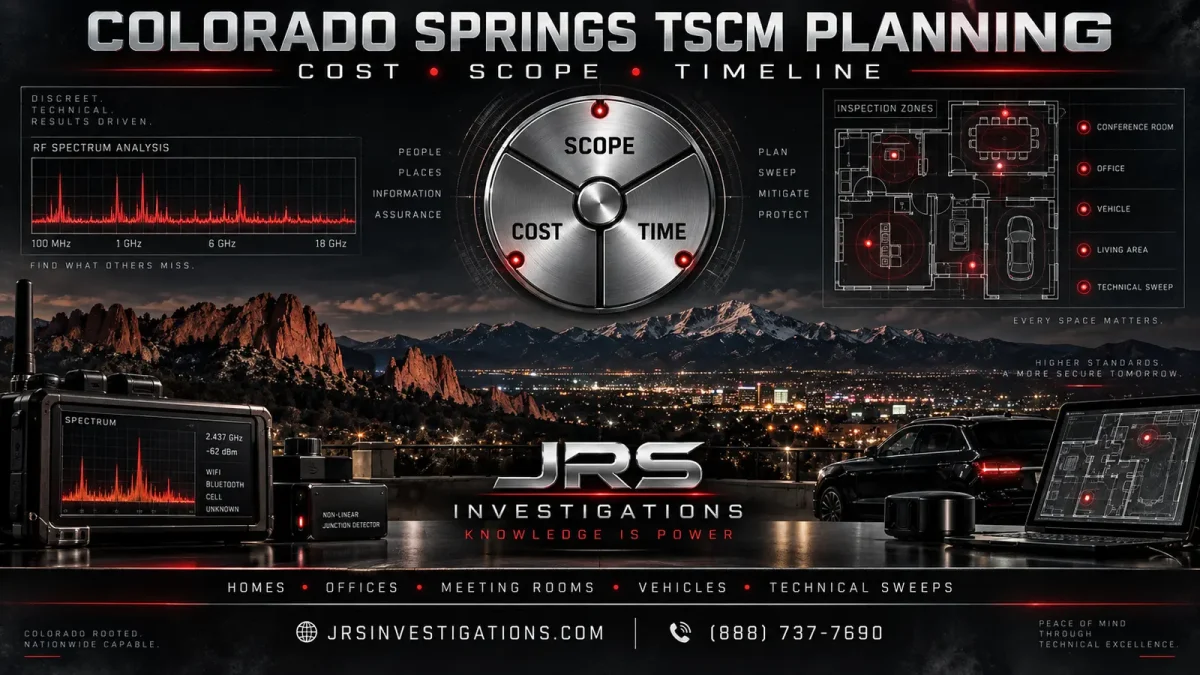
Colorado Springs TSCM Planning: Cost, Scope & Timeline
A professional bug sweep is not priced by pressing a button or walking through a room with a handheld detector. The cost and duration of a Technical Surveillance Countermeasures inspection depend on the space, the threat concern, the number and type of electronic systems, access conditions, vehicle coverage, travel, documentation, and the level of follow-up required.
This Colorado Springs TSCM planning guide explains the factors that shape scope, timeline, staffing, and price before an authorized inspection begins. It is intentionally different from our Colorado Springs service page and from our separate guide about the devices and techniques used during a sweep.
For a confidential scope discussion, call JRS Investigations at (888) 737-7690 or review our Colorado Springs TSCM bug sweep services.
The Three Variables That Control a TSCM Project
Scope: what must be inspected?
Scope is more than square footage. A small executive office with dense electronics, shared walls, networked conference equipment, and difficult access may require more analysis than a larger but simpler room. A useful intake identifies every authorized area, including offices, meeting rooms, residences, hotel rooms, vehicles, storage areas, communications equipment, and adjoining spaces that affect the assessment.
The client should decide whether the priority is a single room, an entire floor, a residence plus vehicles, or a broader business environment. Scope should also state what is excluded. Unclear boundaries create gaps, delays, and disagreements about what the original estimate covered.
Time: how long will planning, inspection, and reporting take?
Field time is only one part of the project. A professional engagement may include secure intake, threat review, equipment preparation, travel, site coordination, baseline observations, electronic and physical inspection, anomaly resolution, client briefing, media organization, and written reporting. The schedule should allow the team to work methodically and safely rather than racing an arbitrary deadline.
Timeline also depends on when the space can be controlled. An occupied office with constant meetings, cleaning crews, deliveries, and active wireless equipment may be difficult to inspect. Quiet access outside normal activity can improve efficiency, but after-hours work may affect staffing, building access, and cost.
Cost: what resources are required?
A responsible estimate connects price to a defined plan. It may account for professional time, number of technicians, travel, lodging when applicable, specialized equipment, vehicles, research, reporting, evidence handling, and follow-up consultation. JRS does not publish one universal number because two spaces of similar size can present very different technical and operational demands.
The better question is not “What is the cheapest sweep?” It is “What work is included, what conditions could change the estimate, and what will I receive when the inspection is complete?”
Information to Gather Before Requesting an Estimate
A concise, factual intake helps the investigator design the right plan and avoid unnecessary field time. Before calling, gather:
- the address and general type of property;
- the number, approximate size, and use of the rooms or vehicles to be inspected;
- who owns or controls each space and who can provide written authorization;
- the reason for concern and when it began;
- known access by employees, contractors, guests, former partners, tenants, maintenance staff, or vendors;
- recent renovations, moves, break-ins, disputes, terminations, travel, or changes in occupancy;
- the number and type of Wi-Fi networks, access points, cameras, smart devices, telephones, conference systems, and other expected electronics;
- preferred dates and the hours when the space can be kept controlled;
- whether vehicles, lodging, detached buildings, or adjacent offices are part of the request; and
- the reporting format, legal coordination, or evidence-preservation needs.
Do not dismantle suspicious objects, announce the planned sweep broadly, or conduct an improvised search before the consultation. If there is an immediate safety concern, contact the appropriate authorities. Otherwise, preserve the environment and discuss discreet next steps from a device and location you reasonably trust.
How Property Type Changes the Scope
Homes and private residences
A residential inspection may include living areas, bedrooms, home offices, utility spaces, smart-home devices, security systems, network equipment, and authorized vehicles. The household should identify legitimate devices and recent installations so the team can distinguish expected electronics from unexplained anomalies.
Authorization matters. A client cannot extend consent to a separate apartment, another person’s private room, a neighboring property, or a vehicle they do not control. Questions about ownership, tenancy, consent, or litigation should be discussed with qualified counsel before work begins.
Offices and conference rooms
Business spaces often contain dense wireless traffic, audiovisual systems, access controls, telephones, printers, building-management devices, and equipment owned by landlords or vendors. A corporate inspection may require coordination with facilities, security, IT, and counsel—but the need for discretion may limit who is informed before the work.
It is helpful to identify the conversations or data at risk, the rooms where they occur, and the people or contractors with past access. A sweep of one boardroom may not address vulnerabilities in the executive office, waiting area, shared ceiling space, or the devices used to join remote meetings.
Hotels, rentals, and temporary meeting spaces
A hotel room, rental, or event space presents changing occupancy and limited control over fixtures and infrastructure. Permission from the proper owner or authorized occupant must be clear. Check-in and event schedules can compress the working window, while housekeeping, maintenance, and venue staff may introduce activity that complicates the baseline.
Vehicles
Vehicle inspections differ from room sweeps. The team needs lawful control of the vehicle, safe access around and beneath it, adequate lighting, and enough time to examine installed electronics, aftermarket components, interior cavities, and relevant radio-frequency activity. A rushed parking-lot check is not equivalent to a planned vehicle inspection.
Why Square Footage Alone Is Not a Reliable Price
Square footage helps, but technical density and physical complexity often matter more. These conditions can increase the required time or resources:
- many expected wireless devices or overlapping networks;
- high-rise or multi-tenant radio-frequency congestion;
- built-in cabinetry, suspended ceilings, raised floors, wiring closets, or complex conference systems;
- several vehicles or detached structures;
- large numbers of objects that cannot be moved or identified;
- restricted access hours, escorts, parking, loading, or security procedures;
- a need for two or more technicians to cover the site appropriately;
- potential evidence requiring careful documentation and coordination; and
- travel, lodging, weather, or scheduling constraints.
Colorado Springs assignments may involve downtown offices, Broadmoor-area residences, northern commercial corridors, mountain-facing properties, gated communities, or locations outside the city. The address alone does not establish the risk or the scope; the actual environment and objective do.
What a Written TSCM Proposal Should Clarify
Before authorizing work, ask for a written description of the project. It should identify:
- Authorized areas: rooms, vehicles, devices, and property included in the assignment.
- Primary objective: the concern the inspection is designed to assess.
- Methods: a general description of electronic, optical, network-related, and physical inspection components appropriate to the scope.
- Personnel: anticipated staffing and who will lead the engagement.
- Schedule: access time, estimated field window, travel assumptions, and reporting timetable.
- Fees and expenses: what the retainer or estimate includes and what requires additional approval.
- Deliverables: briefing, photographs, anomaly log, written report, recommendations, or follow-up consultation.
- Limitations: excluded spaces, unavailable systems, destructive examination restrictions, and conditions that could prevent a complete assessment.
A proposal should not promise that no device exists or guarantee that every surveillance method will be discovered. TSCM is a structured risk assessment conducted with professional tools and judgment under the conditions available at that time.
How to Prepare the Site Without Compromising the Sweep
Limit unnecessary disclosure
Only people needed for authorization, access, safety, or coordination should know the schedule. Avoid discussing the sweep in the space of concern or through a communication channel you believe may be compromised. At the same time, do not create false stories, impersonate authorities, or take unsafe steps to conceal the work.
Preserve the ordinary environment
Do not unplug every device or clear the room before receiving instructions. A team may need to understand normal equipment, network activity, and access patterns. Ask what should remain powered, which systems require an IT representative, and whether normal occupants should be absent during the inspection.
Create an inventory of expected electronics
A list of authorized cameras, access points, smart devices, conferencing equipment, cellular boosters, security sensors, and recently installed systems can save time. Include model information and vendor contacts when readily available, but do not delay an urgent consultation while trying to build a perfect inventory.
Plan for anomaly decisions
Before fieldwork, determine who can authorize opening a fixture, disconnecting equipment, preserving an item, contacting counsel, or involving law enforcement. Technicians should not destroy, remove, or disable property without proper authority. Radio-frequency jamming is also not a do-it-yourself remedy; interference with authorized communications can create safety and legal problems.
What Happens After the Field Inspection
The engagement should end with a clear debrief. The team explains what was inspected, what was observed, which anomalies were resolved, what could not be assessed, and what follow-up is recommended. If an item appears suspicious, the next step depends on ownership, safety, evidentiary needs, counsel, and possible law-enforcement involvement—not curiosity or confrontation.
A written report may include the authorized scope, dates, personnel, methods at an appropriate level, site conditions, observations, photographs, limitations, and security recommendations. It should distinguish confirmed facts from unresolved indicators and should not inflate routine electronics into dramatic “finds.”
The project may also reveal procedural weaknesses rather than a covert device: uncontrolled keys, shared passwords, unmanaged contractors, unsecured meeting rooms, unknown network equipment, exposed cabling, or poor visitor practices. Correcting those weaknesses can be as important as the technical inspection itself.
Common Estimate Mistakes to Avoid
- requesting a quote without identifying every room and vehicle;
- choosing a provider solely by the lowest price;
- assuming a consumer RF detector is a complete TSCM program;
- expecting the space to remain fully occupied and unchanged during fieldwork;
- failing to confirm lawful access and written authorization;
- excluding reporting, travel, or follow-up from the comparison;
- expecting a guarantee that no surveillance device is present; and
- removing a suspicious object before evidence and safety decisions are made.
If your concern is focused specifically on covert video, our separate article describes four common hidden-camera disguises in Colorado Springs. For a broader overview of authorized technical inspections, visit our main TSCM and counter-surveillance service page.
Frequently Asked Questions
Can JRS quote a Colorado Springs sweep by square footage?
Square footage is one factor, but not enough by itself. JRS also needs the property type, room use, electronic density, threat concern, authorized areas, vehicles, access schedule, travel, and reporting needs.
How long does a TSCM inspection take?
Duration depends on scope and conditions. Intake, setup, physical and electronic inspection, anomaly resolution, briefing, and reporting all require time. JRS explains the anticipated schedule after reviewing the actual assignment.
Should I turn off Wi-Fi or unplug devices first?
Not unless the TSCM team instructs you to do so. Normal equipment and signal activity may be relevant to the assessment. Prepare an inventory and let the team define the site protocol.
Can a sweep include my vehicle and office?
Yes, when you have lawful authority over both and they are included in the written scope. Each environment has different access, equipment, and time requirements.
Does a higher price guarantee that a device will be found?
No. Price reflects the resources required for a defined professional assessment, not a promised discovery. A trustworthy provider reports the findings and limitations whether or not they confirm the client’s concern.
Request a Confidential Colorado Springs TSCM Plan
Prepare the address, authorized areas, approximate room sizes, vehicle details, access window, expected electronics, reason for concern, and desired deliverables. JRS can then define the likely staffing, schedule, expenses, and reporting approach without relying on a one-size-fits-all estimate.
Call (888) 737-7690 to discuss a confidential Colorado Springs TSCM inspection. Knowledge is power—and a precise scope is the first step toward a useful assessment.