(888) 737-7690

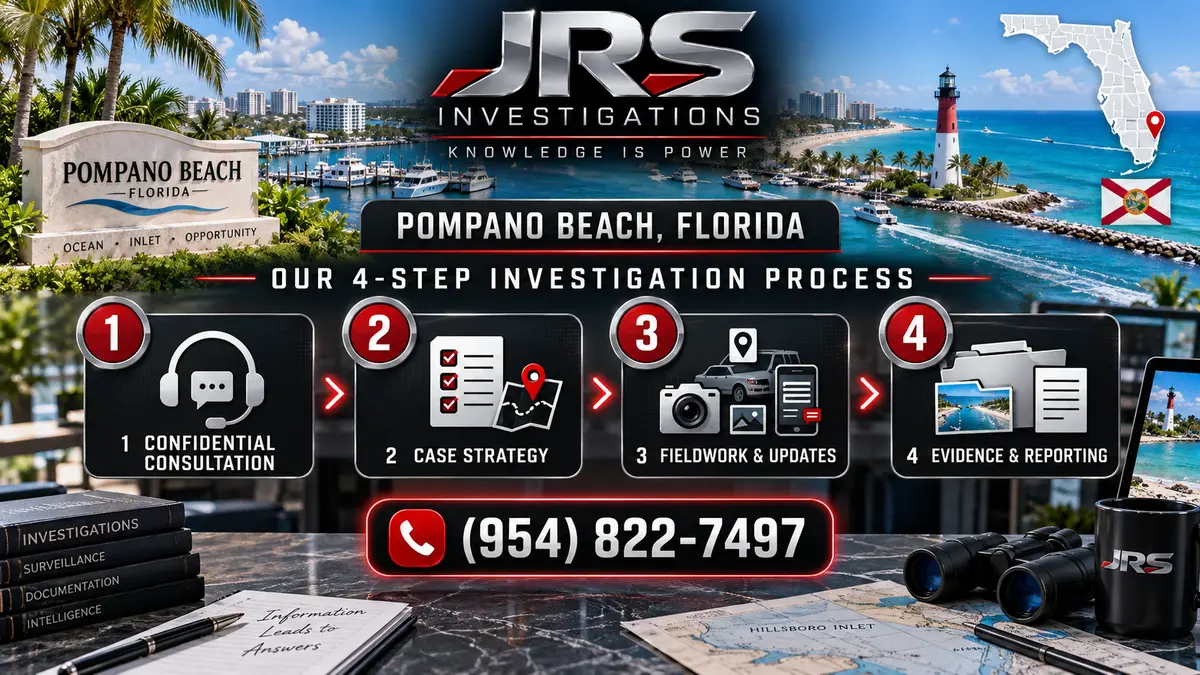
Pompano Beach Investigation Process: 4 Steps
A reliable Pompano Beach investigation process should give the client a clear path from the first confidential conversation to useful, organized findings. At JRS Investigations, the work is built around four practical stages: consultation, case strategy, lawful fieldwork with updates, and evidence reporting. The exact methods change with the facts, but the structure keeps objectives, budget, communication, and deliverables aligned.
That matters because an investigation is not a generic package. A family-law concern may call for time-sensitive surveillance and careful activity logs. A business decision may require records research and due diligence. A locate or background matter may depend on identity resolution, jurisdictional records, and source verification. Starting with the question—not a predetermined tactic—helps keep the work focused.
The four steps at a glance
- Confidential consultation: define the concern, the decision the client must make, the relevant people and places, and any deadlines.
- Case strategy: turn the concern into answerable questions, select lawful methods, set priorities, and agree on the working scope.
- Fieldwork and updates: conduct the approved research, surveillance, interviews, or documentation while communicating meaningful developments.
- Evidence and reporting: organize observations, records, photographs, video, and source information into a clear delivery for the client or counsel.
These stages are connected. New information during fieldwork can change the strategy, and the reporting format should reflect how the client plans to use the findings. No ethical investigator can promise a particular fact will be discovered or that a court will admit a specific item. The goal is disciplined, lawful fact-gathering and accurate documentation.
Step 1: Confidential consultation
The first conversation establishes what is known, what is suspected, and what still needs to be verified. Clients should be ready to describe the situation in chronological order and explain the decision the investigation is meant to support. Useful intake details may include full names, known aliases, recent photographs, vehicle information, addresses, workplaces, travel patterns, relevant court dates, and the contact information for an attorney when counsel is involved.
This stage also separates facts from assumptions. “I need to know whether this person is visiting a particular address after work” is an answerable question. “Prove this person is dishonest” is too broad. Converting the concern into specific questions helps avoid unnecessary hours and produces findings that are easier to evaluate.
Urgency is discussed at the start. Some opportunities are time-sensitive: a scheduled exchange, a known trip, a business closing, or a court deadline. Other matters benefit from research before field activity begins. When a child may be in immediate danger or a crime is in progress, the appropriate first contact is law enforcement or emergency services—not a private investigator.
What JRS clarifies during intake
- The client’s objective and intended use of the information
- The identities, locations, dates, and events connected to the matter
- What documentation the client already has and how it was obtained
- Whether an attorney, insurer, business, or other stakeholder is involved
- Immediate safety concerns, legal restrictions, or court orders
- The preferred method and frequency of client communication
Step 2: Build the case strategy
After intake, JRS develops a proportionate plan. The plan identifies the questions to answer, the sources and methods most likely to answer them, the order of work, the proposed schedule, and the expected deliverables. It should also identify decision points—for example, when to extend surveillance, when a record needs independent confirmation, or when the client should consult counsel before proceeding.
A strong strategy uses more than one source when possible. Database information can be incomplete, outdated, or tied to the wrong person. Public records may contain similar names or data-entry errors. An investigator therefore looks for corroboration among identifiers, addresses, dates, filings, direct observations, and other lawful sources.
The strategy may combine:
- Records research: locating and reviewing relevant public filings, property information, business records, court dockets, and other accessible sources.
- Background research: resolving identity and examining records appropriate to the client’s lawful purpose. See JRS background check services.
- Surveillance: documenting activities from lawful vantage points when observation is relevant and proportionate.
- Interviews and canvasses: identifying people who may have first-hand knowledge and documenting what they report.
- Open-source research: reviewing publicly available online information while preserving source context and dates.
- Due diligence: comparing claims, ownership, litigation, affiliations, and risk indicators before a transaction or relationship.
Cost is influenced by the number of investigators, geography, travel, hours of coverage, urgency, record fees, and the level of reporting required. A narrow, well-defined objective usually provides better control than an open-ended request. When facts change, JRS can discuss whether the scope should be adjusted rather than continuing automatically.
Step 3: Lawful fieldwork and useful updates
Fieldwork is where the plan is tested against real conditions. Traffic, secured properties, changing schedules, weather, crowds, or incomplete identifiers can affect an assignment in Pompano Beach and elsewhere in Broward County. Investigators document what they can verify and distinguish direct observation from information supplied by another source.
For surveillance assignments, preparation may include reviewing the target location, confirming the correct subject or vehicle, considering entry and exit routes, and selecting observation points that do not require trespass or unlawful access. The purpose is not to provoke contact. It is to observe and document relevant activity discreetly within legal limits.
Communication during this stage should be meaningful. Depending on the assignment, JRS may report a significant development as it happens, provide a scheduled progress update, or wait until an operational period ends so fieldwork is not disrupted. The consultation and strategy stages establish that cadence. Clients should avoid contacting the subject, following the subject themselves, or making sudden changes that could compromise the assignment without first speaking with the investigator.
Florida boundaries matter
Florida regulates private investigative services under Chapter 493 of the Florida Statutes, and licensing information is administered through the Florida Department of Agriculture and Consumer Services. Clients can use those official resources to understand license categories and regulatory requirements.
Methods must also respect privacy and communications law. Florida Statute section 934.03 generally prohibits intentional interception of wire, oral, or electronic communications except where the statute provides otherwise; one listed exception applies when all parties have given prior consent. Because the facts and exceptions can be complex, clients should obtain legal advice before recording private communications. JRS does not treat a client’s request as permission to use an unlawful method.
Step 4: Evidence organization and reporting
The final stage converts activity into a usable record. Depending on the assignment, delivery may include a written chronology, investigator observations, record copies, source references, photographs, video, diagrams, or a concise findings summary. A report should make clear what was directly observed, what a record states, what another person reported, and what remains unconfirmed.
Good reporting is factual rather than dramatic. Dates, times, locations, sequences, and identifiers should be consistent. Relevant media should be labeled so the client and counsel can understand the context. Original files and working notes may need to be preserved according to case requirements and professional practice.
Investigative findings can help a client make a personal or business decision and can help an attorney evaluate a matter. But “organized for review” is not the same as “guaranteed admissible.” A judge applies evidentiary rules, and counsel determines how information should be presented in a legal matter. JRS can coordinate reporting with counsel when that is part of the agreed scope.
How the process adapts to different cases
Infidelity and relationship concerns
The question may be whether a partner’s activities match a reported schedule or whether a particular meeting occurs. The plan often emphasizes carefully timed surveillance, positive identification, and objective documentation. JRS explains what an infidelity investigation can and cannot establish before fieldwork begins.
Child custody and domestic matters
Family cases may focus on conduct during parenting time, compliance with a court order, residence questions, or conditions relevant to a child’s welfare. Investigators do not decide what is in a child’s best interest; they document relevant facts for the client and counsel. Learn more about child custody and domestic investigations.
Background, locate, and records matters
These assignments begin with identity resolution and a defined lawful purpose. A name-only search is rarely enough. Date of birth, prior addresses, middle names, and other identifiers reduce false matches. The Florida Department of Law Enforcement explains its official criminal-history access options and the limits on particular uses. Broward court information can be checked through the official Broward County Clerk of Courts. Any employment, housing, credit, or other regulated screening must also follow the rules that apply to that purpose.
Business and due-diligence matters
A business investigation may examine ownership, litigation, representations, conflicts, affiliations, or indications that warrant further review. The deliverable should identify the source of each finding and flag gaps rather than presenting assumptions as facts. The scope can be expanded when early results reveal another entity, jurisdiction, or decision-maker that matters.
What to prepare before calling
- A short timeline with important dates and locations
- Correct names, aliases, phone numbers, email addresses, and recent photographs
- Vehicle details and known addresses when relevant
- Copies of court orders, contracts, messages, or records your attorney says may be shared
- The specific question you want the investigation to answer
- Your deadline, preferred update schedule, and approximate working budget
Do not obtain material through account intrusion, impersonation, trespass, hidden access, or another method that may be unlawful. Tell the investigator exactly where client-supplied information came from. That context can affect whether and how it may be used.
Frequently asked questions
How quickly can a Pompano Beach investigation begin?
Availability depends on the assignment, location, staffing, and urgency. Providing accurate identifiers and a clear objective during the consultation helps JRS assess the earliest responsible start time.
Will I receive updates while the case is active?
Yes, the communication plan is set before work begins. Some cases call for immediate notice of key developments; others are better served by scheduled summaries that do not interrupt field activity.
Can an investigator guarantee a result?
No. Investigators can plan, observe, research, and document, but they cannot ethically promise that a particular event will occur or that a specific fact will be found.
Is every report courtroom-ready?
Reports can be prepared clearly for client or attorney review, but admissibility and legal strategy are determined by the court and counsel. If litigation is involved, sharing counsel’s needs early helps define the appropriate documentation.
Do you handle cases outside Pompano Beach?
Yes. JRS serves clients across Florida and coordinates investigations in other jurisdictions when the scope requires it. The local Pompano Beach private investigator page provides more information about area services. For privacy or suspected electronic-surveillance concerns, review the Pompano Beach TSCM bug-sweep guide.
Start with a confidential conversation
Tell JRS what you need to know, why it matters, and when you need an answer. We will discuss the objective, lawful options, likely constraints, and a practical next step.
JRS Investigations in Pompano Beach: Pompano Beach TSCM bug sweeps