(888) 737-7690

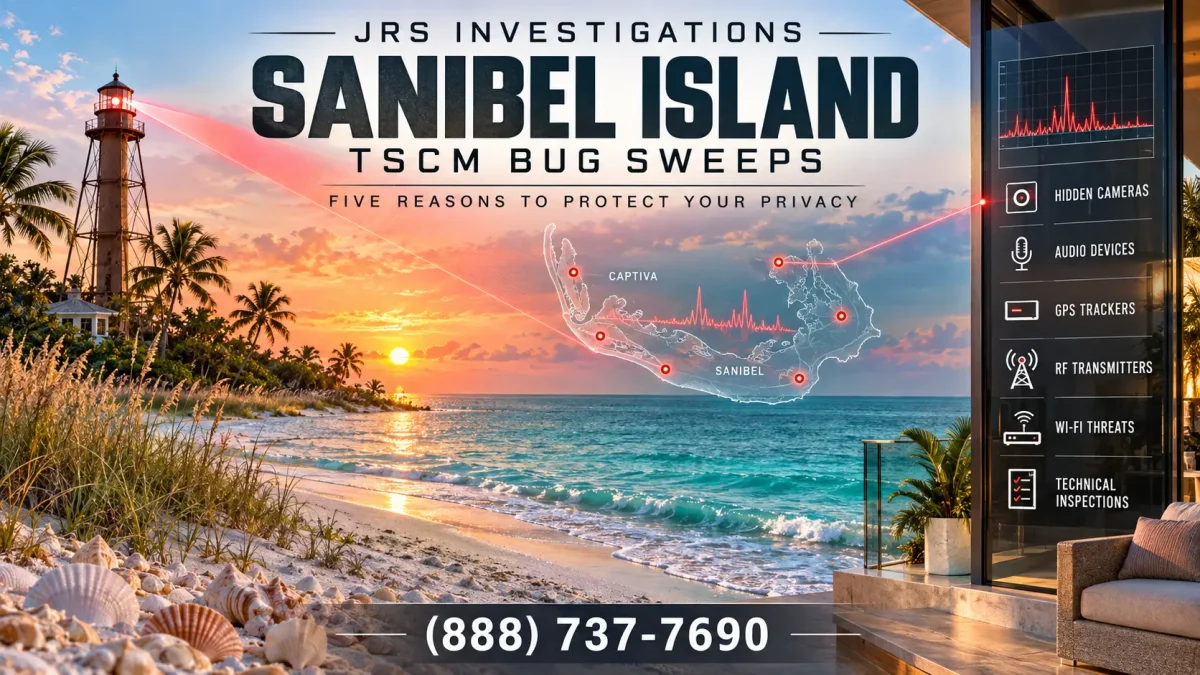
Sanibel Island TSCM Bug Sweeps: 5 Reasons to Act
Privacy concerns can feel especially personal on Sanibel Island. A private conversation may take place in a waterfront home, condominium, vacation rental, home office, vehicle, or small business where owners expect the space to be secure. When there is a credible reason to believe someone may be listening, watching, or tracking, guessing is rarely helpful. A professional technical surveillance countermeasures inspection provides a structured way to evaluate the concern.
Below are five practical reasons Sanibel Island homeowners, business owners, executives, property managers, and families may consider a professional TSCM bug sweep. The goal is not to create fear or promise that every concern will uncover a device. It is to replace uncertainty with a methodical inspection, documented observations, and sensible next steps.
What is a TSCM bug sweep?
TSCM stands for technical surveillance countermeasures. A TSCM inspection is a planned examination of an authorized property, room, vehicle, or defined electronic environment for signs of covert surveillance or unauthorized monitoring. Depending on the agreed scope, the work may include a detailed visual and physical inspection, radio-frequency analysis, examination of common concealment points, review of selected network or Wi-Fi conditions, non-linear junction detection, and inspection for certain hidden cameras, audio devices, transmitters, or tracking devices.
A professional sweep is broader than walking through a room with a consumer detector. Ordinary electronics, wireless networks, neighboring signals, building systems, and environmental conditions can all create alerts. The investigator must evaluate those signals in context, trace anomalies when possible, and distinguish a routine source from something that deserves additional attention.
1. Protect private conversations at home
Sanibel residences range from primary homes and condominiums to seasonal properties and vacation homes. These spaces may host conversations about finances, relationships, legal matters, health, business decisions, or family disputes. If a former partner, guest, employee, contractor, or other person had access to the property, an owner may reasonably want the environment examined.
A TSCM inspection can focus on areas where sensitive conversations occur, such as a home office, primary bedroom, living area, or meeting space. The scope should be based on access history, the reason for concern, recent changes to the property, and the client’s priorities. This targeted approach is more useful than treating every object or wireless signal as evidence of surveillance.
2. Evaluate seasonal properties after access changes
Sanibel’s seasonal occupancy and property-management activity create a practical reason to review security after unusual access. A residence may be vacant for part of the year and then entered by cleaning crews, repair contractors, property managers, guests, renters, vendors, or prospective buyers. Most access is legitimate, but a long or complicated access history can make it difficult to know who entered a property and what changed.
A sweep may be appropriate after a high-conflict separation, unauthorized entry, unexplained maintenance visit, ownership transition, extended vacancy, or other event that creates a specific concern. Before the inspection, clients should prepare a list of people with keys, codes, garage access, alarm access, or permission to enter. That information helps the investigator prioritize rooms, devices, and time periods without making unsupported accusations.
3. Safeguard business and executive information
Remote work and private meetings do not stop when someone is on the island. Executives, attorneys, financial professionals, real-estate professionals, healthcare leaders, and business owners may handle confidential calls or documents from a residence, condominium, hotel-style setting, private office, or conference space. A compromised meeting environment could expose strategy, negotiations, client information, personnel matters, or financial decisions.
A business-focused sweep can be planned around the rooms and equipment that matter most. The investigator may review the physical space, common electronics, wireless activity, and other agreed areas while minimizing disruption. For a broader explanation of the process, visit the Sanibel Island TSCM bug sweep service page.
4. Address concerns about hidden cameras or vehicle tracking
Not every surveillance concern involves an audio transmitter. Clients may be worried about a hidden camera, a GPS tracker, a modified household object, an unfamiliar electronic device, or unusual access to a vehicle. The right inspection method depends on the suspected threat and the authorized scope.
Vehicle inspections require careful visual and physical work because legitimate components, aftermarket accessories, fleet systems, toll devices, and maintenance equipment can be mistaken for trackers. Likewise, a small lens or opening is not automatically a camera. A trained examiner documents what is observed and avoids presenting an ordinary component as proof of wrongdoing.
If the concern includes a phone, account, or possible stalkerware, a room sweep alone may not answer the question. Digital forensics or qualified device support may be a separate service. JRS Investigations can help define the problem and explain which type of review fits the facts.
5. Create a documented basis for the next decision
One of the most valuable outcomes of a professional sweep is a clear record of the work performed. A client should understand what areas were inspected, what methods were used, what limitations applied, what anomalies were evaluated, and what follow-up steps are recommended. A finding may require preservation, additional analysis, legal advice, law-enforcement contact, network remediation, locksmith work, or a change in access controls.
A negative sweep is not a lifetime guarantee that a property is secure. It reflects the defined areas, conditions, and time of the inspection. New access, new equipment, renovations, tenancy changes, or a later incident can change the risk. Good documentation helps the client make a measured decision instead of reacting to speculation.
Possible warning signs are not proof
Clients often call after noticing an unfamiliar device, a moved object, unexpected access, private information becoming known, unexplained holes or wiring, unusual account activity, or repeated concerns involving a former partner or employee. These details can help establish the scope, but none of them proves that a hidden device exists.
Clicks, static, battery drain, dropped calls, network problems, and similar electronic symptoms frequently have ordinary explanations. A professional should evaluate the entire situation and avoid using a checklist of generic symptoms as a diagnosis.
What a Sanibel Island TSCM inspection may include
- Confidential intake and threat assessment
- Review of authorized access, recent incidents, and priority areas
- Detailed visual and physical inspection of the agreed space
- Radio-frequency spectrum analysis and signal evaluation
- Non-linear junction detection when appropriate
- Inspection for selected hidden cameras, audio devices, transmitters, or trackers
- Limited network or Wi-Fi review when included in the assignment
- Documentation of significant observations and recommended next steps
The exact process depends on the property, threat model, available access, equipment, time, and assignment terms. A residence, commercial office, vacation property, and vehicle should not be treated as identical projects.
How to prepare for a bug sweep
- Limit discussion of the appointment. If surveillance is genuinely suspected, avoid announcing the inspection inside the potentially affected location or through a device you do not trust.
- Do not rearrange the property. Leave questionable objects, electronics, furniture, wiring, and access points as they are unless safety requires otherwise.
- Prepare an access timeline. List recent guests, contractors, employees, renters, service providers, former partners, and anyone with keys or codes.
- Identify the priority areas. Note where sensitive conversations occur and what event created the concern.
- Provide lawful access. The client must have authority to authorize an inspection of the property, room, vehicle, network, or device included in the scope.
For more detail about the inspection process, read five things a Sanibel TSCM bug sweep can involve and the comprehensive Sanibel Island TSCM guide.
What to do if you find a suspicious device
Do not immediately dismantle, reset, power off, or publicize a suspicious item unless there is an urgent safety reason. Moving or handling it may alter useful information or create an unnecessary confrontation. Photograph the item in place if doing so is safe, restrict access to the area, and seek guidance from qualified counsel or law enforcement when appropriate.
Florida law regulates the interception and disclosure of wire, oral, and electronic communications. The Florida Legislature’s current text of section 934.03 explains the general prohibition and listed exceptions. The facts of each situation matter, so this article is educational and is not legal advice.
Frequently asked questions
Can a TSCM sweep guarantee that no device exists?
No. A professional inspection evaluates the authorized scope under the conditions present at the time. Hidden devices can be inactive, removed, outside the inspected area, or based on a technology that requires a different method. The investigator should explain the scope and limitations clearly.
Should I buy a handheld detector first?
Consumer detectors can react to legitimate wireless signals and may create false confidence or unnecessary alarm. If the concern is serious, changing the environment before a professional inspection can make the review harder. Discuss the situation first and follow a planned process.
Can you inspect a Sanibel Island home and vehicle in the same assignment?
Often, yes, when both are authorized and included in the agreed scope. The time and equipment required depend on the size and complexity of the property and vehicle.
Do I need proof before requesting a sweep?
No, but specific facts help. Explain who had access, what changed, when the concern began, which information appears compromised, and where sensitive conversations occurred. The intake should separate facts from assumptions.
Schedule a confidential Sanibel Island consultation
JRS Investigations provides professional TSCM bug sweeps for authorized residential, commercial, vacation-property, and vehicle assignments in Sanibel Island and surrounding Southwest Florida areas. We use a defined scope, professional equipment, and documented findings to help clients make informed decisions.
Call (888) 737-7690 or contact JRS Investigations to discuss your concern confidentially. You can also review our Sanibel Island private investigator services.
This article provides general information and does not constitute legal advice. Every TSCM assignment depends on lawful authority, the agreed scope, site conditions, and the facts presented.