
(888) 737-7690

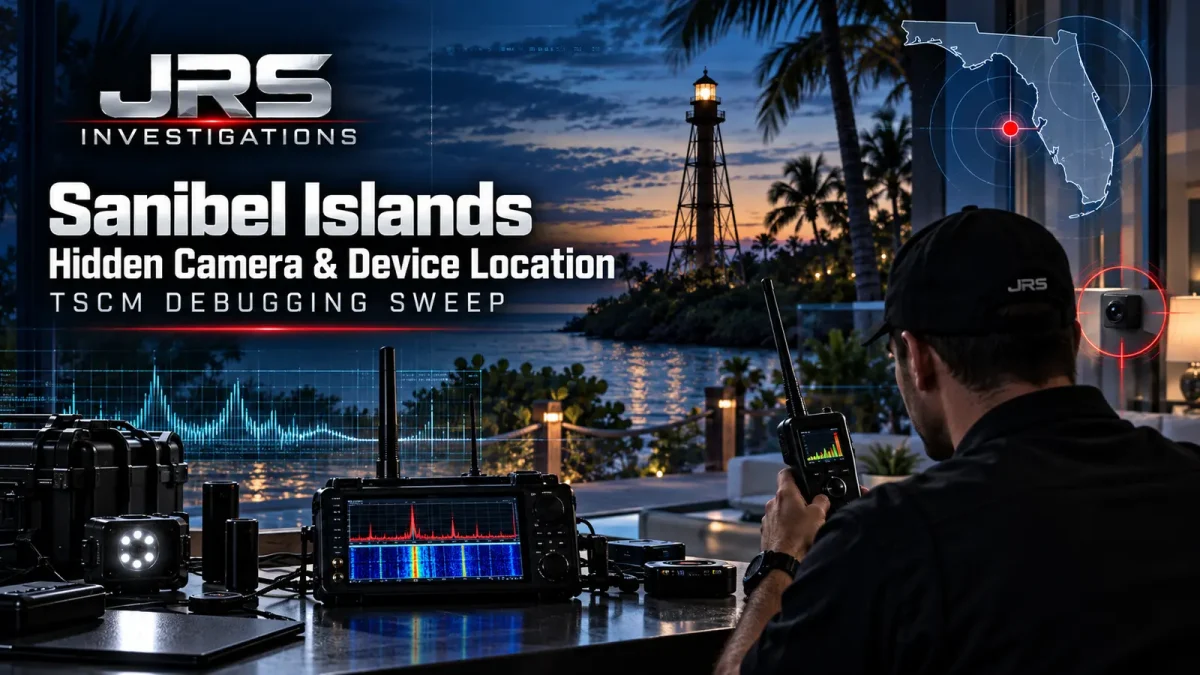
Sanibel Island TSCM Bug Sweeps: A Professional Guide
Privacy concerns can feel especially disruptive in a place associated with quiet homes, vacation properties, waterfront businesses, and confidential retreats. Professional Sanibel Island TSCM bug sweeps provide a structured way to examine an authorized property for hidden cameras, listening devices, unauthorized transmitters, and other signs of covert surveillance.
TSCM stands for technical surveillance countermeasures. A professional inspection is more than a quick scan with a handheld detector. It combines careful planning, electronic testing, optical examination, physical inspection, and informed analysis of the property. The goal is to identify suspicious devices or conditions, document findings, and give the client practical next steps.
If you have a specific concern, JRS Investigations offers TSCM bug-detection services for Sanibel Island and can help determine the appropriate scope for an authorized inspection.
What a Sanibel Island TSCM Bug Sweep Examines
A TSCM inspection may cover homes, condominiums, vacation rentals, offices, conference rooms, vehicles, vessels, or other spaces the client owns or is legally authorized to inspect. The exact scope should be established before the work begins because each environment has different construction, electronics, access limitations, and privacy considerations.
Depending on the assignment, a sweep may look for:
- Hidden audio transmitters or recording devices
- Covert cameras, including devices concealed in ordinary objects
- Unexpected radio-frequency activity
- Unexplained electronic components or modified wiring
- Cellular, Wi-Fi, Bluetooth, or other wireless devices that do not belong
- Signs of physical tampering in likely concealment areas
- Suspicious power sources, cabling, adapters, or network-connected equipment
No single instrument can identify every possible surveillance threat. Some devices transmit continuously, some communicate only at intervals, and others store information locally without broadcasting. That is why credible TSCM work uses several complementary methods and does not treat one quiet RF reading as proof that a room is clear.
Why Sanibel Properties Require Careful Planning
Sanibel’s mix of private residences, seasonal homes, condominiums, rental properties, small businesses, and waterfront locations creates a varied inspection environment. A property may contain smart-home devices, security cameras, wireless access points, entertainment systems, marine electronics, and equipment installed by owners, tenants, contractors, or property managers. Each legitimate device adds context that must be understood before an anomaly can be judged.
Coastal conditions also matter operationally. Humidity, storms, repairs, renovations, and changing occupancy can result in unfamiliar wiring or replaced devices. Those conditions do not automatically indicate surveillance, but they can complicate the process of distinguishing an innocent installation from something that deserves further examination.
A useful pre-sweep interview helps the examiner understand who has had access, when the concern began, what rooms or conversations are sensitive, and whether any recent maintenance, turnover, or construction occurred. This information helps prioritize the inspection without assuming that a particular person is responsible.
How a Professional TSCM Inspection Is Conducted
1. Scope, authorization, and baseline information
The process begins by confirming the client’s authority to inspect the property and defining the areas, vehicles, or equipment included. The examiner may ask about known electronics, network devices, access history, recent visitors, maintenance work, and the circumstances behind the concern. Floor plans, device inventories, or photographs can improve efficiency when available.
2. Radio-frequency spectrum analysis
RF analysis evaluates the radio environment for signals that may warrant investigation. A spectrum analyzer and appropriate antennas can help identify active transmissions across relevant frequency ranges. The examiner evaluates signal strength, behavior, modulation, timing, and location instead of relying only on a detector that beeps near any wireless device.
Normal sources can include routers, phones, smart televisions, alarm components, wireless speakers, neighboring networks, and marine or public-safety communications. The professional task is to correlate a signal with a legitimate source or continue investigating it until its significance is understood.
3. Nonlinear junction detection
A nonlinear junction detector, often called an NLJD, can help locate electronic circuitry even when a device is turned off, not transmitting, or designed to record locally. It may be used on furniture, fixtures, walls, containers, and other areas where concealed electronics could be present. Results still require interpretation because many ordinary electronic items and some metal contacts can create responses.
4. Optical and thermal examination
Optical tools can assist in finding camera lenses or unusual openings that may be difficult to see with the unaided eye. Thermal imaging may reveal unexpected heat patterns from powered electronics, adapters, or modified components. These methods support the larger inspection; neither is a stand-alone guarantee.
5. Detailed physical inspection
Physical examination remains essential. An examiner may inspect smoke detectors, clocks, chargers, power strips, decorative objects, vents, light fixtures, outlets, furniture, ceiling areas, wiring paths, and other plausible concealment points. The inspection should be methodical and proportionate, with care taken not to damage property unnecessarily.
6. Network and device review when included
Some assignments include a limited review of connected devices and local network conditions. This can help identify unfamiliar endpoints or equipment that requires explanation. A TSCM sweep is not automatically a complete cybersecurity incident response, forensic computer examination, or malware analysis. Those services should be scoped separately when the facts call for them.
Common Reasons to Schedule a Sweep
A sweep is most effective when tied to a defined concern or risk event. Common reasons include:
- Unexplained disclosure of private conversations or business information
- A contentious separation, legal dispute, or sensitive negotiation
- Turnover in a vacation rental, residence, office, or executive space
- Unusual objects, wiring, devices, or network activity
- Unauthorized access, lost keys, or a suspected entry
- Preparation for confidential meetings or high-value transactions
- Post-renovation or post-contractor verification in sensitive areas
A strong feeling that something is wrong deserves to be handled respectfully, but the inspection should remain evidence-led. Many suspicious sounds, battery changes, or wireless alerts have ordinary causes. A disciplined process helps separate those explanations from findings that require action.
How to Prepare Without Disturbing Evidence
Before the inspection, avoid conducting an aggressive search on your own. Moving objects, unplugging equipment, opening walls, confronting a suspected person, or announcing the sweep can destroy context and may cause a device to be removed. Continue using the space normally unless there is an immediate safety concern.
Prepare a concise timeline of incidents, a list of people with authorized access, and an inventory of known electronics. Note recent repairs, new furnishings, changes in internet service, and devices installed by contractors or property managers. If a particular conversation appears to have been compromised, record when and where it occurred and who knew the information.
The examiner may recommend temporarily controlling phones, smart devices, or wireless equipment during portions of the sweep. Follow those instructions at the scheduled time rather than disconnecting everything in advance. A realistic baseline can be useful during signal analysis.
Legal Authority and Evidence Handling
A TSCM provider should confirm that the person requesting the sweep has authority to inspect the location or property involved. A tenant, guest, employee, property manager, vehicle owner, vessel owner, or business principal may have different rights and limitations. When ownership or consent is uncertain, obtain legal advice before the inspection.
Federal law restricts the interception and use of certain communications. The official U.S. Code text for 18 U.S.C. § 2511 provides important context, but it is not a substitute for advice from an attorney familiar with the facts and applicable state law.
If a suspicious device is found, do not immediately destroy it or post photographs publicly. Its position, power source, connections, serial information, and surrounding conditions may matter. The examiner should document the finding and discuss safe next steps. Depending on the situation, the client may need guidance from legal counsel or law enforcement before removal or further testing.
What a Useful TSCM Report Should Include
Reporting should be clear enough to support decisions after the inspection. The exact format varies, but a useful report may identify the authorized scope, date and location, areas examined, general methods used, significant observations, photographs, items requiring follow-up, and recommendations for reducing future risk.
A report should distinguish between confirmed findings, unexplained anomalies, and ordinary devices that were identified and cleared. It should not exaggerate ambiguous signals or claim that any property is permanently “bug free.” Conditions can change as soon as people re-enter the space, devices are installed, or access occurs.
Choosing a Qualified TSCM Provider
Ask prospective providers how they define the scope, what categories of equipment they use, how they handle non-transmitting devices, and what documentation is delivered. Be cautious of anyone promising certainty from a single detector or offering an instant sweep without learning about the property.
Other useful questions include:
- How will authorization and confidentiality be documented?
- Does the inspection combine RF, NLJD, optical, thermal, and physical methods as appropriate?
- How are legitimate signals identified and recorded?
- What happens if a suspicious device or component is located?
- Will the report explain limitations and recommended follow-up?
- Is additional expertise available if the concern involves computers, phones, or a larger security incident?
For broader due diligence, review these questions to ask before hiring a private investigator. You can also read about five elements a Sanibel TSCM sweep can involve.
Reducing Risk After the Inspection
A sweep provides a point-in-time assessment. Future risk can be reduced by controlling keys and access codes, maintaining an accurate device inventory, changing credentials after staff or tenant turnover, reviewing contractor access, securing meeting rooms, and limiting sensitive discussions to appropriate locations.
Schedule follow-up work based on actual exposure rather than an arbitrary promise that every property needs the same timetable. A confidential transaction, access breach, renovation, unexplained information leak, or change in occupancy may justify another inspection sooner than a low-risk environment would.
Arrange an Authorized Sanibel Island TSCM Sweep
If you are concerned about hidden cameras, listening devices, or unauthorized surveillance in a Sanibel residence, condominium, rental, office, vehicle, vessel, or other authorized space, discuss the facts discreetly before changing the environment.
Call JRS Investigations at (888) 737-7690 or use the confidential contact page to discuss scope, authorization, timing, and the next appropriate step.