(888) 737-7690

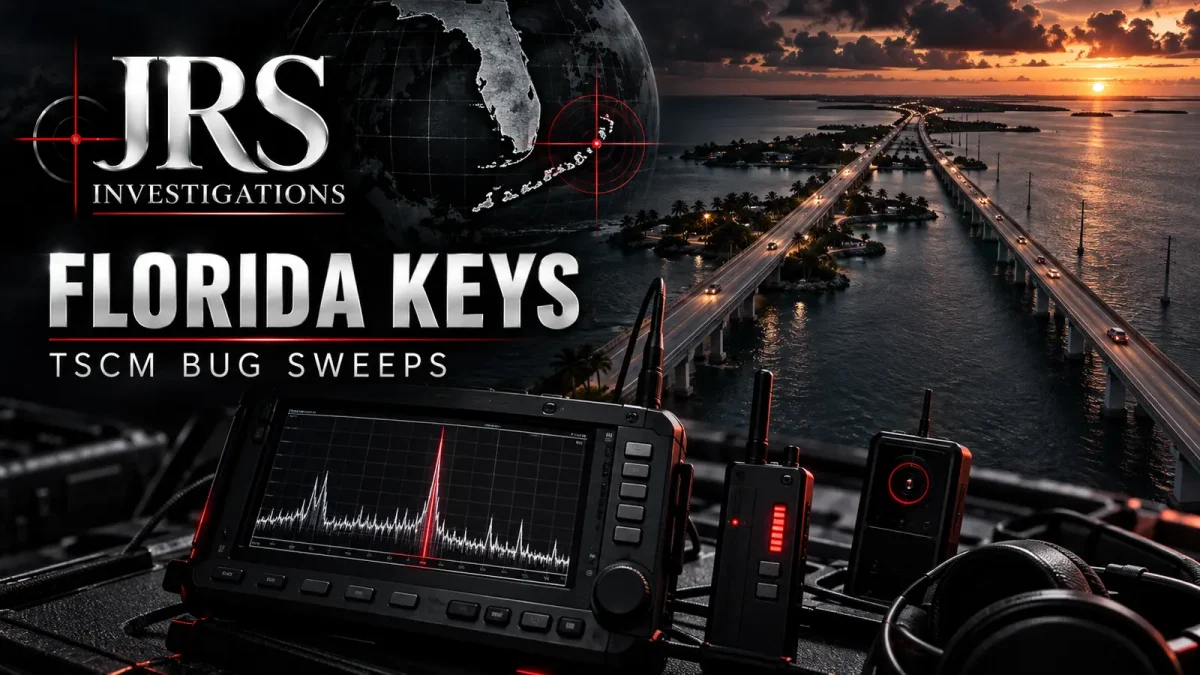
Florida Keys TSCM Bug Sweeps: A Professional Guide
Concerns about hidden cameras, listening devices, unauthorized trackers, or unexplained wireless activity require a careful, lawful response. Professional Florida Keys TSCM bug sweeps combine technical testing with physical inspection to evaluate an authorized residence, business, rental, vehicle, or vessel for signs of covert surveillance. The goal is not to confirm a suspicion in advance or promise that every possible device can be found. It is to replace guesswork with a defined scope, documented methods, defensible observations, and clear next steps.
Florida Keys assignments can involve waterfront homes, resorts, short-term rentals, offices, marinas, charter vessels, vehicles, and remote properties stretching from Key Largo through Islamorada and Marathon to Key West. Each setting presents a different mix of access, construction, legitimate electronics, wireless congestion, environmental exposure, and privacy boundaries. JRS Investigations begins by confirming who controls the location, what may lawfully be inspected, what prompted the concern, and what reporting the client needs.
What is a professional TSCM bug sweep?
Technical Surveillance Countermeasures, commonly called TSCM or a bug sweep, is a structured examination for unauthorized surveillance technology and related security weaknesses. Depending on the agreed scope, an inspection may combine radio-frequency spectrum analysis, non-linear junction detection, optical hidden-camera searches, thermal review, physical inspection, and evaluation of selected network or device information.
No single detector is sufficient. Routers, access points, security systems, marine radios, navigation equipment, cellular devices, smart-home products, Bluetooth accessories, hotel systems, and neighboring networks can all create legitimate signals. A covert device may also transmit intermittently, store information locally, use cellular or Wi-Fi connectivity, or remain inactive during part of an inspection. Layered testing helps the examiner correlate signals and objects with their locations, expected functions, and surrounding conditions.
JRS Investigations’ Florida Keys TSCM service can be scoped for authorized homes, offices, meeting areas, rentals, hotel rooms, vehicles, docks, and vessels. The written plan should identify exactly what is included before work begins.
When a Florida Keys bug sweep may be appropriate
A sweep is most useful when it responds to a concrete privacy or security concern. Common triggers include unauthorized access, confidential information becoming known unexpectedly, suspicious objects or wiring, unexplained changes to electronics, a domestic or business dispute, stalking behavior, or preparation for a sensitive meeting, transaction, or guest.
Businesses may schedule an inspection after renovations, staff changes, vendor access, a security incident, or the discovery of an unfamiliar device. Private clients may request an authorized review of a home, rental, vehicle, or boat after noticing circumstances that ordinary troubleshooting cannot explain. The related guide to the benefits of a Florida Keys TSCM sweep offers additional planning context.
A concern does not establish that surveillance is occurring. Batteries fail, consumer electronics behave unpredictably, unfamiliar rental equipment may be legitimate, and modern properties contain many authorized wireless transmitters. A professional examiner should test reasonable possibilities instead of validating a theory in advance.
Florida Keys environments require specific planning
Waterfront homes and island properties often combine indoor living areas, outdoor entertainment spaces, docks, detached structures, security cameras, Wi-Fi extenders, smart controls, and marine electronics. A room-only sweep does not automatically include the entire parcel. Tell the investigator which spaces, fixtures, systems, and exterior areas matter so the scope and access plan are realistic.
Hotels, resorts, condominiums, and vacation rentals create additional boundaries. Shared walls and common infrastructure can produce signals from neighboring rooms or building systems. The client must have authority over every room, fixture, account, and device included. A guest’s right to occupy a rental or hotel room does not automatically authorize invasive examination of building systems or another person’s property.
Vehicles and vessels require separate inspection planning. Boats may contain navigation, communications, monitoring, entertainment, power-conversion, and security systems in compact spaces. Cars and fleet vehicles may include factory telematics and aftermarket accessories. Salt air, humidity, previous repairs, and tight access can complicate physical inspection, but they do not by themselves establish anything suspicious. Advance notice helps the examiner plan time, equipment, power, access, and documentation for each asset.
For more location-specific information, JRS also maintains guidance on hidden cameras a Key West sweep may encounter and signs that may justify an Islamorada TSCM inspection.
How layered detection methods work
Radio-frequency spectrum analysis
RF analysis examines the local radio environment for active transmissions and signal behavior that warrants correlation. The examiner compares detected activity with known devices, services, vessels, and nearby sources. A signal alone is not evidence of a bug. Frequency, strength, timing, modulation, movement, location, and context all matter.
Non-linear junction detection
A non-linear junction detector, or NLJD, can help locate electronic components even when a device is not actively transmitting. It may be used on selected walls, furniture, containers, fixtures, cabinetry, and other accessible areas. Interpretation is essential because ordinary electronics and some metal junctions can also produce a response.
Optical and hidden-camera examination
Optical techniques can reveal certain camera lenses through reflected light. The physical review may also consider likely sight lines and inspect unusual openings, chargers, clocks, smoke detectors, power adapters, decorative objects, and other accessible items. A suspicious-looking object must still be evaluated in context: its construction, power source, placement, and ability to capture the protected area all matter.
Thermal and physical inspection
Thermal imaging may reveal heat patterns that justify closer examination, but heat alone does not prove surveillance. Physical inspection remains essential. Wiring, power supplies, ceilings, vents, furniture, bulkheads, communications equipment, and recently disturbed areas may be reviewed within the authorized scope and without unnecessary damage.
Network and device review
When specifically included, the team may evaluate authorized connected-device lists, access points, selected equipment settings, or other network information. A TSCM sweep is not automatically a full cybersecurity audit, penetration test, malware examination, or digital-forensics assignment. Those services require separate objectives, authority, expertise, and evidence-handling procedures.
What to do before an inspection
- Use a safe communication channel. If a phone, computer, email account, or network may be compromised, do not use it to discuss sensitive details.
- Preserve the environment. Avoid dismantling suspicious objects, disconnecting unfamiliar wiring, or running consumer detectors through the location before receiving guidance.
- Document the concern. Record dates, access events, unexplained disclosures, equipment changes, and the rooms, vehicles, docks, or vessels involved.
- Confirm authority. Be ready to establish ownership, occupancy, management authority, or written permission for every property, vehicle, vessel, account, or device in scope.
- List known electronics. Routers, cameras, alarms, smart devices, marine radios, navigation systems, access points, and authorized trackers help identify expected activity.
- Arrange privacy and access. Minimize unnecessary occupants and allow enough uninterrupted time to examine the agreed areas.
Authorization, privacy, and evidence preservation
TSCM work must remain within the client’s lawful authority. An investigator should not inspect another person’s property, private account, communications, or electronic device without permission or another valid legal basis. Federal interception law, including 18 U.S.C. § 2511, may apply alongside Florida law and other privacy rules. Legal counsel should be consulted when ownership, consent, workplace monitoring, recording, or access rights are disputed.
If a suspicious device is located, do not immediately remove, activate, test, or destroy it. Photograph it in place when safe, restrict access, and obtain direction from the investigator, legal counsel, or law enforcement as appropriate. The correct response depends on safety, lawful authority, possible criminal conduct, and the need to preserve evidence and chain of custody.
A responsible provider will not promise that every surveillance method can be detected or that a finding will automatically be admissible in court. The report should distinguish confirmed observations from ordinary electronics, unresolved anomalies, inaccessible areas, and recommended follow-up.
What a useful TSCM report should explain
At the conclusion, the client should understand which locations and items were examined, which methods were used, what was observed, what could not be accessed, and what actions are recommended. Photographs, equipment details, or technical notes may be included when appropriate to the assignment and the client’s confidentiality requirements.
The report should not turn routine wireless activity into a dramatic conclusion. It should explain how known signals and devices were correlated, identify material limitations, and describe any issue that may require additional inspection, digital forensics, network security work, legal advice, or law-enforcement involvement.
A result of “no confirmed covert device identified” means none was found within the tested scope and conditions. It does not prove that surveillance was impossible at an earlier time or outside the inspected areas. Follow-up may be appropriate after new access, before a sensitive meeting or charter, following renovations or equipment changes, or when the threat level materially changes.
How to evaluate a Florida Keys TSCM provider
Ask specific questions before scheduling. A qualified provider should explain the process and its limitations without making absolute promises or exposing sensitive operational details.
- Which inspection methods are included beyond basic RF detection?
- How will legitimate household, hotel, marine, and neighboring signals be separated from unexplained activity?
- Does the scope include physical inspection, camera searches, NLJD work, networks, vehicles, docks, or vessels?
- What access and authorization must the client provide?
- How are potential findings validated, documented, and preserved?
- Will inaccessible areas and other limitations appear in the report?
- How is client information protected before, during, and after the assignment?
Price and duration depend on the actual scope. Property size, construction, signal density, number of rooms, vehicles or vessels, access conditions, island location, travel, urgency, and reporting requirements all affect the work. A responsible estimate should state what is included rather than rely on a universal flat-price promise.
Frequently asked questions
Can a sweep detect a device that is turned off?
Sometimes. Physical inspection and NLJD work can identify certain electronics that are not transmitting. No method detects every device in every concealment condition, which is why multiple techniques and clear limitations matter.
Should I use a consumer RF detector first?
Consumer tools often react to normal wireless activity and may create false confidence or unnecessary alarm. If the concern is serious, preserve the environment and speak privately with a professional before conducting an improvised search.
Can an inspection include a residence, vehicle, and boat?
Yes, when each asset is included in the written scope and the client has authority. Advance notice allows the provider to plan the time, equipment, access, and documentation appropriate to each environment.
How often should a business or vessel be swept?
Frequency should follow risk, sensitivity, and access history. Many clients use event-driven inspections after unauthorized access, staffing disputes, maintenance work, equipment changes, executive travel, or before a high-confidentiality meeting, charter, or guest visit.
What if I find a suspicious camera or listening device?
Do not dismantle or test it. Photograph it in place if safe, prevent unnecessary access, and obtain guidance from the investigator, counsel, or law enforcement. Evidence preservation may be more important than immediate removal.
Schedule a confidential Florida Keys TSCM consultation
A well-planned inspection replaces speculation with a defined technical process. JRS Investigations can discuss the location, authorization, concerns, timing, and reporting needs for a Florida Keys residence, office, rental, hotel room, vehicle, dock, or vessel.
Call JRS Investigations at (888) 737-7690 or request a confidential consultation. Do not use a device or network you believe may be compromised to discuss sensitive information.