(888) 737-7690

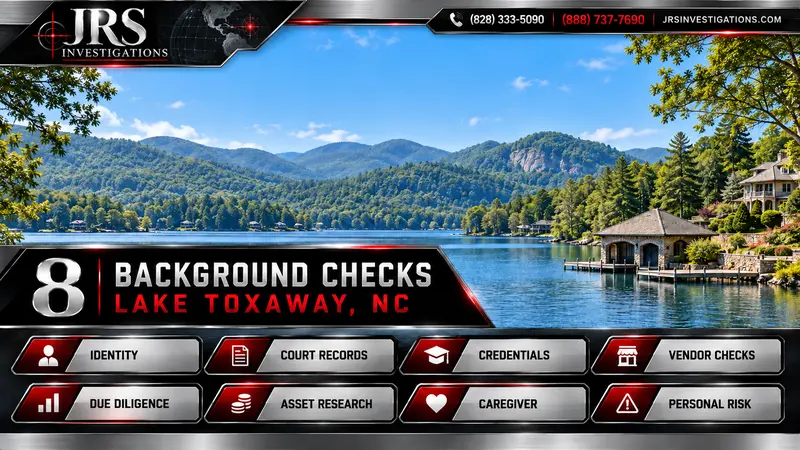
8 Background Checks in Lake Toxaway, NC: What JRS Can Verify
Background checks in Lake Toxaway, NC can help property owners, families, employers, attorneys and business clients make important decisions with verified information. A low-cost database search may return outdated entries, incomplete records or information tied to someone with a similar name. A professional investigation starts by identifying the correct subject, defining the lawful purpose and following the record trail across the jurisdictions that matter.
JRS Investigations provides discreet background research for Lake Toxaway and the surrounding Western North Carolina region. Because people may maintain a primary residence elsewhere while owning a second home, business interest or property in Transylvania County, a meaningful search often extends beyond one local source. JRS tailors the scope to the client’s decision and explains both the findings and the practical limitations.
For another western North Carolina overview, review our Blue Ridge background-check guide.
Why background verification matters in Lake Toxaway
Lake Toxaway is a mountain and lake community where private residences, vacation properties, estate matters, contractors, household employees and service providers can create distinctive due-diligence needs. A client may be granting someone access to a home, hiring for a position of trust, considering a significant transaction or trying to verify claims made in a personal relationship.
Reliable research is more than collecting names from search results. Investigators compare identifiers, examine relevant dates and locations, review original sources when available and separate confirmed records from unresolved leads. That process reduces the risk of confusing two people or drawing a conclusion from a filing that does not show the final outcome.
1. Identity, alias and address-history checks
Every sound background investigation begins with identity resolution. Common names, nicknames, name changes, incomplete birth information and outdated addresses can produce false matches. JRS may compare lawfully supplied identifiers, known aliases, telephone information, former addresses, business connections and other corroborating details before attributing a record to the subject.
Address history helps define where research should occur. Someone now working or spending time in Lake Toxaway may have lived in another North Carolina county, another state or outside the United States. Following those geographic connections can expose relevant records that a single-county search would miss. When an identity cannot be confirmed, the report states that limitation instead of presenting an uncertain match as fact.
2. Criminal and court-record research
Criminal and court research requires context. An arrest is not a conviction, a charge may be dismissed and an online index may not reflect a later disposition or expunction. JRS can review appropriate court and public-record sources, compare identifiers and document the jurisdiction, case type and available outcome when the assignment has a lawful purpose.
The North Carolina Judicial Branch is the state’s official court-system source. Public access, record formats and request procedures vary by court and record type. For employment, housing or other regulated screening, clients must follow applicable consent, notice and fair-screening requirements rather than relying on an informal name search.
3. Employment, education and license verification
Résumés, proposals and online profiles may contain exaggerated titles, incorrect dates or credentials that were never earned. With appropriate authorization, JRS may help verify claimed employment, education, certifications, professional licensing and experience. The scope should focus on qualifications that actually matter to the responsibility involved.
This can be particularly valuable when a person will manage property, supervise staff, handle sensitive information, work with children or older adults, or enter a residence without direct oversight. Verification does not replace an employer’s legal hiring process, but it can identify discrepancies that deserve clarification before access or responsibility is granted.
4. Contractor, vendor and household-service checks
Mountain and vacation properties often depend on contractors, caretakers, maintenance companies, domestic workers and seasonal service providers. A polished website or referral does not always establish identity, experience or business legitimacy. Due diligence may examine company registration, ownership, litigation, professional claims, references and other relevant public information.
JRS can compare the individual who appears at the property with the person or company named in the agreement. Clients may also want to understand whether a vendor has changed business names, operated through several entities or faced disputes connected to similar work. The investigation should remain proportionate to the access, value and risk involved.
5. Business and investment due diligence
Before entering a partnership, private investment, acquisition or high-value contract, clients can verify whether representations align with the record. Research may address business registrations, affiliated entities, leadership history, litigation, liens, judgments, professional background, adverse media and the experience claimed by key principals.
JRS organizes findings by source and relevance. A registered company may still be inactive, thinly capitalized or unrelated to the experience being promoted. One lawsuit may have little significance, while repeated disputes or concealed affiliations may justify further questions. The report distinguishes confirmed information from indicators that require documents, interviews or legal discovery.
6. Civil litigation, property and financial red flags
Civil records may be relevant to property transactions, estate disputes, family matters, debt recovery and business relationships. An investigation can look for properly matched lawsuits, judgments, liens, recorded property interests, bankruptcies, business connections and other lawful indicators connected to the client’s question.
Private investigators cannot lawfully obtain protected bank balances, credit reports or private account data without authorization or legal process. JRS develops documented asset and ownership leads through legitimate sources. Those findings may help a client or attorney decide whether to pursue formal discovery, request financial documentation or expand the investigation into another jurisdiction.
7. Caregiver, estate and household-access screening
Families may rely on caregivers, companions, house managers, drivers or other professionals who have access to an older adult, medication, financial paperwork, valuables or a residence. A role-specific review can verify identity, relevant history, credentials, licenses and references when the client has appropriate authority.
A background check is one layer of protection. Families should also use written duties, controlled access, secure financial practices and ongoing communication. JRS can help identify discrepancies before trust is extended, but no historical search can predict every future action. The strongest risk plan combines verification with practical supervision and clear boundaries.
8. Dating, premarital and personal-risk checks
Personal relationships can involve emotional and financial risk when important facts remain unverified. Warning signs may include conflicting identity details, repeated emergencies, requests for money, secretive business claims, inconsistent travel stories or reluctance to meet through ordinary channels. A discreet investigation may compare the information provided with lawful public records and credible open sources.
Depending on the facts, research may address identity, address history, marital-status indicators, business interests, litigation, adverse media and potential fraud connections. JRS does not hack accounts, impersonate a subject or obtain restricted information through deception. The objective is to give the client verified facts and clearly labeled uncertainties, not speculation.
How JRS conducts a Lake Toxaway background investigation
The process begins with a confidential consultation. JRS identifies the decision the report must support, the intended use and the subject information already available. Investigators then select the appropriate jurisdictions and sources, which may include Transylvania County, neighboring Western North Carolina counties, prior states of residence, federal records or international research when justified.
Methods can include official records, lawful commercial resources, open-source intelligence, direct verification, corporate research, interviews and field inquiries. Material findings are reviewed for identity consistency and source reliability. The final reporting explains what was confirmed, what remains unresolved and what information was unavailable or legally restricted.
For broader service details, review JRS’s background-check services and private investigation services. Local clients can also visit the Lake Toxaway private investigator page or read the guide to hiring JRS Investigations in Lake Toxaway. Families with a related matter may find the Lake Toxaway child-custody investigation article useful.
Privacy, consent and responsible use
The law that applies to a background check depends on who requests it, which information is sought and how the result will be used. Employment, housing, credit, insurance and certain licensing decisions may require written authorization, notices or specific procedures. Clients should consult qualified counsel when their intended use falls within a regulated process.
JRS accepts assignments for legitimate purposes and limits collection to information relevant to the question. Investigative services should not be used to harass, discriminate, stalk or violate a court order. Ethical limits protect the client, the subject and the usefulness of the evidence.
Frequently asked questions
How long does a Lake Toxaway background check take?
Timing depends on the number of jurisdictions, the identifiers available, the records requested and whether direct verification or fieldwork is needed. JRS reviews the scope first and provides a practical time estimate.
Can a database produce a complete background report?
No single database covers every jurisdiction or updates every record at the same time. Databases can help identify leads, but important findings may require comparison with original records and other reliable sources.
Can JRS research subjects who live outside North Carolina?
Yes. A Lake Toxaway matter may involve a person whose primary residence, business or earlier history is elsewhere. JRS can expand the jurisdictional scope when the purpose is legitimate and the requested work is lawful.
Will the subject know about the investigation?
That depends on the purpose, applicable consent rules and whether direct contact is necessary. JRS discusses the proposed methods with the client and does not promise secrecy when disclosure is legally required.
Request a confidential consultation
If you need background checks in Lake Toxaway, NC, call JRS Investigations at the North Carolina number (828) 333-5090 or the toll-free confidential line at (888) 737-7690. You may also contact JRS Investigations online to discuss the subject, purpose, deadline and appropriate investigative scope.