(888) 737-7690

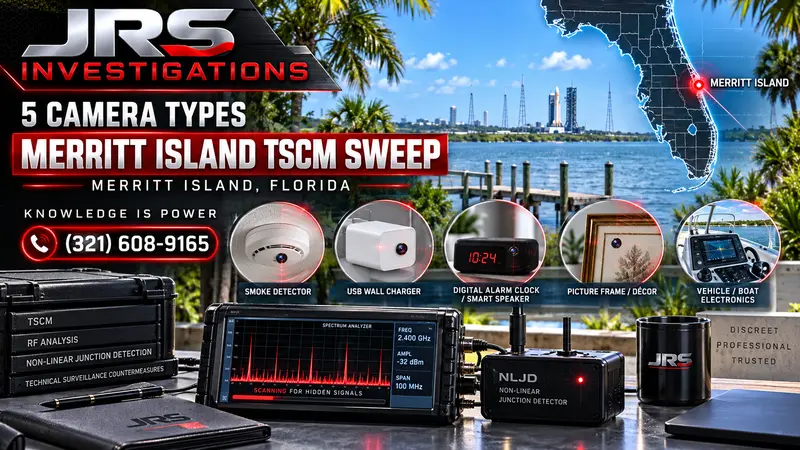
5 Hidden-Camera Types a Merritt Island TSCM Sweep May Find
Hidden cameras are sold in many ordinary-looking forms, but an unfamiliar object or small lens is not automatically evidence of surveillance. A professional Merritt Island TSCM sweep combines a threat assessment, careful physical inspection, and technical testing to determine what deserves closer examination.
The five categories below describe devices that may be encountered in homes, condominiums, offices, vacation properties, vehicles, or vessels. The investigator’s methods and authorized scope should be matched to the location, access history, and specific concern.
1. Smoke detectors and ceiling-mounted devices
Smoke detectors, motion sensors, air-quality monitors, and other ceiling fixtures offer a broad view of a room and may have access to power. Some legitimate products also contain visible sensors, indicator lights, or test openings that can resemble a camera lens.
An investigator should compare the device with known equipment, examine its installation and wiring when authorized, and determine whether an apparent anomaly has an ordinary explanation before treating it as suspicious.
2. USB chargers, adapters, and power accessories
Wall chargers, charging blocks, power strips, and surge protectors can conceal small electronic components while appearing functional. A substituted accessory may be especially difficult to notice in a guest room, office, rental property, or shared workspace.
Visual inspection, component comparison, power-source review, and appropriate technical testing may help distinguish normal electronics from an unexplained device. Clients should avoid opening or unplugging an unfamiliar item before the inspection if doing so could alter evidence.
3. Clocks, speakers, routers, and smart-home equipment
Digital clocks, speakers, network devices, voice assistants, and smart-home products already contain electronics and are commonly positioned where people work, sleep, or talk. That makes them important to identify during an inventory of legitimate equipment.
Many of these devices normally use Wi-Fi, Bluetooth, or cloud services. Their presence alone is not suspicious. A TSCM investigator must account for authorized devices and expected signals before deciding whether additional verification is needed.
4. Décor and everyday household objects
Small lenses can be concealed in picture frames, wall art, shelves, lamps, tissue boxes, mirrors, plants, or other objects with a clear view of a sensitive area. Physical placement, line of sight, access history, and unexplained changes can be as important as the object itself.
A reflective point, hole, or dark surface is not proof of a camera. The anomaly should be examined systematically and, when appropriate, traced to a physical component rather than judged from appearance alone.
5. Portable, vehicle, and marine devices
Portable cameras, battery-powered recorders, cellular devices, and equipment installed in vehicles or vessels can present different challenges from a device connected to a building’s power. Merritt Island assignments may involve waterfront properties, boats, marinas, vehicles, home offices, or mixed residential and business spaces.
Each area must be expressly authorized and included in the scope. Vehicles and vessels may require different access, inspection time, and equipment, and environmental electronics can create signals that need to be identified before an anomaly is escalated.
What a Merritt Island TSCM sweep can and cannot determine
A responsible sweep may combine confidential intake, visual and physical inspection, radio-frequency analysis, targeted examination of accessible electronics, anomaly verification, and a clear discussion of findings. No single instrument detects every surveillance method.
A device may be wired, dormant, powered off, remotely activated, recording locally, concealed behind inaccessible construction, or outside the authorized area. A physical TSCM sweep also does not automatically determine whether a phone, computer, email account, or cloud camera has been compromised. Those concerns may require separate cybersecurity or digital-forensics work.
How to prepare without disturbing possible evidence
- Do not discuss the planned sweep in the area of concern.
- Do not move, open, unplug, or disable unfamiliar equipment.
- Preserve relevant messages, photographs, access logs, and maintenance records.
- List authorized occupants, contractors, cleaners, guests, and property managers.
- Prepare a concise timeline of unusual access or information exposure.
- Confirm which rooms, vehicles, vessels, and devices can legally be inspected.
If you discover a suspected device, do not touch or move it. Photograph it from where it sits if that can be done safely, restrict unnecessary access, and contact law enforcement if there is an immediate threat, stalking, violence, or another emergency. An attorney or law-enforcement agency can advise how potential evidence should be handled in a specific matter.
Merritt Island TSCM and investigation resources
Learn more about JRS Investigations’ Merritt Island TSCM bug-sweep services and Merritt Island private-investigation services.
For additional local guidance, read our comprehensive Merritt Island TSCM guide, guide to hiring a Merritt Island private investigator, and overview of Merritt Island background investigations. Concerns extending north toward the Space Coast can also be reviewed through our Cape Canaveral TSCM page.
Schedule a confidential Merritt Island consultation
To discuss the property, access history, concern, and appropriate inspection scope, call JRS Investigations at (321) 608-9165 or contact us online. Knowledge is power, and a careful assessment starts with accurate information.