(888) 737-7690

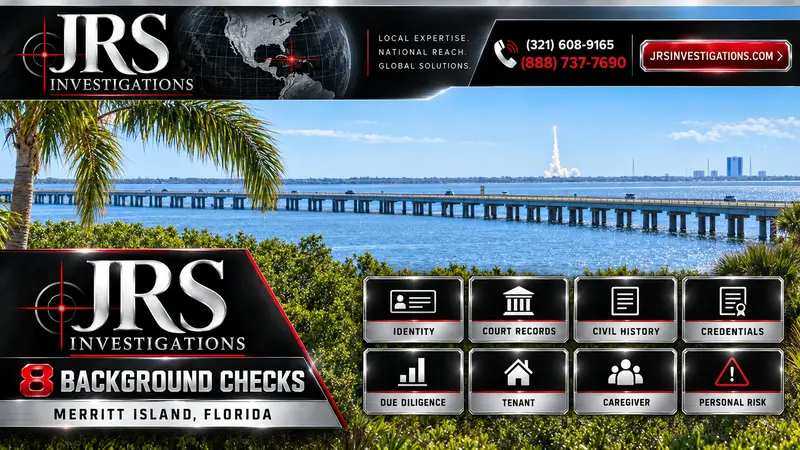
8 Background Checks in Merritt Island: What JRS Can Verify
Background checks in Merritt Island can help individuals, families, employers, landlords, attorneys and business owners make important decisions with better information. A quick database search may return fragments, duplicate names or records that belong to someone else. A professional investigation is different: the work begins with verified identifiers, follows lawful sources, compares records across jurisdictions and explains what the findings do—and do not—show.
JRS Investigations serves Merritt Island and the surrounding Space Coast with discreet, fact-focused research. Depending on the purpose and the client’s lawful authority, an investigation may combine public records, court files, business filings, professional-license information, open-source research and direct verification. The exact scope is tailored to the decision at hand, whether it involves hiring, a business relationship, housing, caregiving or a personal concern.
Why a professional background investigation matters
Merritt Island is connected to Cocoa, Cape Canaveral and the broader Brevard County economy. People often live, work, own property or maintain business interests in multiple Florida counties—or in other states. That mobility can make a single-county search incomplete. Names may be misspelled, addresses may be outdated and online profiles may blend accurate details with misleading claims.
JRS approaches each assignment as a verification problem, not a hunt for gossip. Investigators establish the correct subject, identify relevant jurisdictions, document sources and look for inconsistencies that deserve further review. Clients receive findings in context so they can make their own informed decision. No legitimate investigation can promise that every fact exists in a searchable record, but a well-defined process can reduce avoidable blind spots.
1. Identity and address-history verification
A reliable background check starts with identity resolution. Common names, aliases, name changes and incomplete dates of birth can produce false matches. An investigator may compare lawfully available identifiers, former addresses and other corroborating information before attributing a record to a person.
Address history also helps determine where additional searches may be appropriate. A subject who recently moved to Merritt Island may have meaningful records in another Florida county or state. This foundational step improves accuracy across every later category and helps prevent a client from acting on information associated with the wrong individual.
2. Criminal and court-record research
Criminal-history research can involve more than typing a name into a commercial database. Records may be maintained by different courts and agencies, and a search result may not reflect the final disposition. JRS can review relevant, lawfully accessible sources and examine details such as jurisdiction, identifiers, filing information and case outcome when available.
Florida also provides an official criminal-history search through the Florida Department of Law Enforcement. That resource can be useful, but the meaning and completeness of any result should be assessed carefully. For employment, housing or other regulated decisions, clients must follow applicable notice, consent and fair-screening requirements.
3. Civil litigation, judgments and dispute history
Civil records may reveal lawsuits, contract disputes, injunctions, judgments or patterns relevant to a proposed relationship. Attorneys may need pre-litigation research on parties or witnesses. A business owner may want to understand whether a prospective partner has been involved in repeated disputes. An individual entering a major transaction may want independently documented facts before committing funds.
A lawsuit is an allegation, not proof of wrongdoing. JRS separates complaints from outcomes and reports the available procedural context. The goal is not to label a person based on one filing; it is to identify verifiable information that may warrant questions, additional documents or professional advice.
4. Employment, education and credential checks
Résumés and professional biographies can contain omissions, inflated titles or credentials that were never earned. With the proper authorization and a lawful purpose, JRS may help verify employment claims, education, professional licenses and other qualifications. The assignment can be focused on the facts most important to the position instead of collecting unnecessary personal information.
For employers, screening should be consistent and job-related. Requirements can differ depending on the role, the source of the report and how the information will be used. JRS defines the investigative scope with the client, while the employer and its counsel or compliance professionals remain responsible for their decision process and required notices.
5. Business and executive due diligence
Before an investment, partnership, acquisition or high-value contract, due diligence can test whether the story matches the record. Research may include corporate registrations, leadership history, litigation, regulatory matters, liens, judgments, professional claims and adverse information found through credible open sources. The work may cover both an organization and the principals behind it.
This is especially useful when a proposal involves urgent deadlines, complicated ownership or claims that are difficult to verify. JRS organizes findings by source and significance, highlights unresolved inconsistencies and distinguishes confirmed facts from leads. Clients can then decide whether to proceed, renegotiate, request documentation or end discussions.
6. Tenant and property-related screening support
Rental decisions can carry substantial financial and safety consequences. Where permitted and properly authorized, a screening scope may address identity, address history, relevant court records and other lawful factors. Property owners should use consistent standards and comply with federal, state and local housing rules rather than making decisions based on assumptions or protected characteristics.
JRS can also assist with investigative research when a property dispute has already developed—for example, by verifying identities, locating public filings or documenting information relevant to counsel. A focused assignment helps avoid irrelevant intrusion while giving the client a clearer factual record.
7. Caregiver and household-support screening
Families often invite caregivers, home-health workers, companions, contractors or other service providers into a private residence. When the person may have access to an older adult, child, medication, financial information or valuables, verification can be an important risk-management step.
A caregiver review may include identity, relevant records, claimed qualifications, license status and references when those checks are authorized and appropriate. The investigation should reflect the role and the level of access involved. Background information cannot replace supervision, secure financial practices or ongoing communication, but it can help a family ask better questions before granting trust.
8. Dating, premarital and personal-risk checks
Online relationships can move quickly, while identities and personal histories remain difficult to confirm. Warning signs may include repeated emergencies, requests for money, inconsistent employment stories, reluctance to meet by video, or photographs connected to another identity. A discreet background investigation can compare known details with lawful records and open-source information.
Premarital or personal due diligence may also address undisclosed marriages, business interests, litigation, aliases or other material inconsistencies. JRS does not hack accounts, impersonate people or obtain information through unlawful access. The purpose is to verify facts through legitimate methods so a client can protect personal safety, emotions and finances.
What clients should expect from JRS Investigations
Every assignment begins with the client’s question, the intended use of the information and the identifiers already available. JRS then defines a proportionate scope, explains practical limitations and identifies any authorization that may be required. Research is documented, reviewed for possible mismatches and presented in clear language.
A useful report does more than list search results. It connects records to the correct subject, notes the jurisdiction and source, describes significant gaps and separates confirmed information from unresolved leads. Sensitive findings are handled discreetly. Clients who need a broader investigative strategy can review JRS’s background-check services and private investigation services.
Local knowledge across Merritt Island and the Space Coast
Location matters because the relevant trail may extend beyond the island itself. A subject may have connections throughout Brevard County, elsewhere in Florida or nationwide. JRS can build a jurisdictional plan from verified address, employment, property and business history rather than assuming one local search tells the whole story.
Clients can learn more about the Merritt Island private investigator team or read the guide to hiring a private investigator in Merritt Island. Related concerns involving suspected electronic surveillance can be reviewed through the Merritt Island TSCM bug-sweep service.
Legal, ethical and privacy considerations
The rules governing a background check depend on who is requesting it, what sources are used and how the results will affect another person. Employment and tenant decisions can trigger specific federal and state obligations. Certain personal, financial, medical, communications and account information is restricted or unavailable without consent, legal process or another valid basis.
JRS works within lawful boundaries and avoids unnecessary collection. Clients should not use an investigation to harass, discriminate, stalk or evade a legal restriction. When a planned use raises a compliance question, the client may need advice from qualified counsel. Ethical limits protect the subject, the client and the credibility of the findings.
Questions to ask before ordering a background check
- What specific decision are you trying to make?
- Which claims or risk factors need independent verification?
- What identifiers and documents do you already have?
- Will the information be used for employment, housing, credit or another regulated purpose?
- Which locations, time periods and business entities may be relevant?
- What deadline applies, and what level of reporting will be useful?
Clear answers help keep the investigation efficient and relevant. A narrowly designed check may be enough for one decision, while a complex business matter can require a deeper multi-jurisdictional review. JRS will discuss the available options before work begins.
Request a confidential consultation
If you need background checks in Merritt Island, speak with JRS Investigations about the decision, the known facts and the level of verification required. Call the Merritt Island office at (321) 608-9165 or the toll-free line at (888) 737-7690. You can also contact JRS Investigations online to request a discreet consultation.