(888) 737-7690

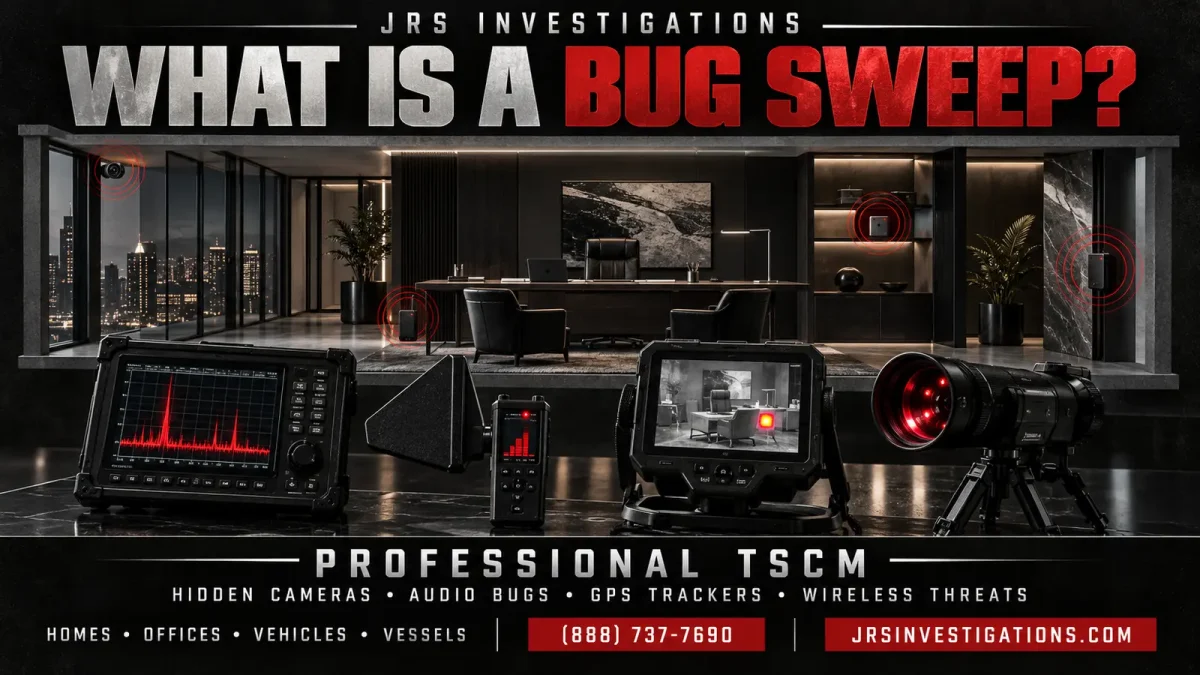
What Is a Bug Sweep? A Professional TSCM Guide
A bug sweep is a professional search for hidden surveillance technology and the weaknesses that could allow it to be installed. The formal name is a Technical Surveillance Countermeasures inspection, commonly shortened to TSCM. It combines a careful physical examination with electronic testing to identify concealed audio devices, hidden cameras, unauthorized wireless transmitters, GPS trackers, and other privacy risks.
A real bug sweep is not a quick pass with a handheld detector. It is a structured investigation performed with specialized equipment, a documented process, and a clear understanding of how modern surveillance devices are powered, concealed, and connected. JRS Investigations provides professional counter-surveillance and debugging sweeps for homes, offices, vehicles, vessels, and other authorized environments.
What does a professional bug sweep look for?
Today’s surveillance devices range from inexpensive consumer products to professionally installed systems. Some transmit continuously. Others record locally, activate only when sound or motion is detected, or communicate in short bursts. A competent inspection therefore looks beyond one frequency or one type of device.
- Hidden audio devices: wired microphones, wireless transmitters, modified chargers, concealed voice recorders, and devices built into everyday objects.
- Covert cameras: pinhole cameras, Wi-Fi cameras, recording devices, and lenses hidden in fixtures, electronics, décor, or building components.
- Location trackers: unauthorized GPS, cellular, Bluetooth, or radio-frequency trackers attached to or concealed inside a vehicle, vessel, bag, or equipment case.
- Unauthorized wireless signals: suspicious cellular, Wi-Fi, Bluetooth, or radio-frequency activity that requires further investigation.
- Physical security concerns: disturbed fixtures, unfamiliar wiring, tampered electronics, unexplained power sources, or access points that could support surveillance.
No single instrument can detect every threat. A device that is switched off, hard-wired, dormant, encrypted, or recording to local storage may not produce an obvious radio signal. That is why a professional bug sweep combines electronic analysis with a methodical physical inspection.
How is a bug sweep performed?
The process begins before equipment is unpacked. The investigator discusses the concern, the locations involved, recent access, unusual events, and the client’s authority to have the area inspected. This helps establish the appropriate scope and avoids unnecessary disruption.
1. Threat assessment and inspection plan
The examiner identifies what information may be at risk, who has had access, when suspicious activity began, and which rooms, vehicles, devices, or communications require attention. A conference room used for negotiations has a different risk profile from a family vehicle or a private residence.
2. Physical examination
A visual and hands-on inspection can reveal objects that do not belong, altered fixtures, unusual wiring, tiny apertures, concealed power sources, or evidence that an area has been disturbed. This portion of the work is essential because many recording devices remain silent during an electronic scan.
3. Radio-frequency analysis
A spectrum analyzer and related tools can be used to examine radio-frequency activity in the environment. The investigator separates ordinary signals—such as authorized Wi-Fi, Bluetooth, cellular, and building systems—from activity that is unexplained or inconsistent with the location.
4. Electronic and optical testing
Depending on the assignment, the inspection may use a non-linear junction detector to locate electronic components, optical tools to search for camera lenses, thermal equipment to identify unusual heat signatures, and other specialized instruments. Findings are interpreted together rather than treated as isolated alarms.
5. Vehicle or vessel inspection
Vehicles and vessels require a different search pattern because trackers and recorders can be hidden outside the passenger area, connected to power, or placed where movement and weather complicate detection. The examiner considers both electronic activity and possible attachment points.
6. Findings and recommendations
After the inspection, the client should receive a clear explanation of what was examined, any suspicious findings, limitations, and recommended next steps. If a device is discovered, the response should be controlled. Removing or powering it down immediately can destroy evidence or alert whoever installed it.
When should you consider a bug sweep?
You do not need absolute proof before requesting an inspection. A sweep may be appropriate when confidential information appears to be leaking, a private conversation becomes known to an unauthorized person, an unfamiliar object or wiring change appears, or someone with a motive has recently gained access.
Businesses may schedule TSCM inspections before or after sensitive negotiations, mergers, litigation strategy meetings, product discussions, executive travel, or the departure of a key employee. Individuals may request help during a contentious separation, stalking concern, high-profile dispute, custody matter, or unexplained pattern of privacy intrusions. Our broader private investigation services can support situations in which the technical inspection is only one part of the case.
What a bug sweep cannot prove
A professional inspection can identify devices, suspicious signals, physical evidence, and security vulnerabilities present at the time of the examination. It cannot guarantee that a location has never been monitored, identify every person who may have had access, or eliminate every future risk.
A physical TSCM inspection is also different from examining a phone, computer, or cloud account for spyware or unauthorized access. A suspicious mobile app, compromised password, account takeover, or malware infection may require digital-forensic or cybersecurity work. The right first step depends on whether the concern is in the physical environment, on a device, or both.
How to prepare for a TSCM inspection
Discretion matters. Avoid discussing the planned sweep in the location to be inspected or through devices that may be compromised. Do not conduct a highly visible amateur search, move suspicious objects, or confront a suspected person before speaking with the investigator.
- Prepare a short timeline of unusual incidents and information leaks.
- List who has had recent access to the property, vehicle, vessel, or office.
- Identify authorized Wi-Fi, Bluetooth, security, smart-home, and building systems.
- Preserve messages, photographs, access logs, or other relevant records.
- Arrange lawful access to every area included in the inspection.
Only an owner, authorized occupant, responsible company representative, or another person with lawful authority should approve the inspection. JRS will clarify access and scope before work begins.
Choosing a bug-sweep provider
Ask what the inspection includes, which environments the provider can examine, how findings are documented, and what happens if a device is located. Be cautious of anyone who promises a guaranteed “all clear” after a few minutes with one detector. Equipment matters, but the examiner’s methodology, investigative judgment, and ability to explain the results matter just as much.
JRS Investigations serves clients across Florida and North Carolina, with authorized assignments in the Caribbean. Visit our areas served directory to find local coverage, or review our agency background before scheduling a confidential consultation.
Frequently asked questions
How long does a bug sweep take?
Timing depends on the size and complexity of the location, the number of rooms or vehicles, the amount of electronic equipment present, and the threat level. A careful inspection should not be rushed. JRS defines the expected scope and scheduling requirements during the consultation.
Can a bug sweep find a hidden camera?
It can identify many types of covert cameras through a combination of physical inspection, optical examination, wireless analysis, and electronic detection. No honest provider can guarantee detection of every possible device under every condition, especially when access is limited or a device has been removed.
Can I use a phone app to perform my own sweep?
A consumer app may display nearby wireless networks or Bluetooth devices, but it cannot replace professional RF analysis, physical inspection, optical testing, or electronic-component detection. Apps also produce false alarms and may miss devices that do not use the signal type being scanned.
What should I do if a device is found?
Do not automatically touch, disconnect, or destroy it. Photograph and preserve the scene if it is safe to do so, restrict access, and follow the investigator’s guidance. Depending on the circumstances, law enforcement, legal counsel, corporate security, or a digital-forensics specialist may need to be involved.
Schedule a confidential bug sweep
If you are concerned about hidden cameras, listening devices, trackers, or unexplained privacy breaches, speak with JRS Investigations before the situation escalates. We will help determine whether a professional TSCM inspection is the appropriate next step and define a lawful, discreet scope for the assignment.
Call (888) 737-7690 or contact JRS Investigations for a confidential consultation.