(888) 737-7690

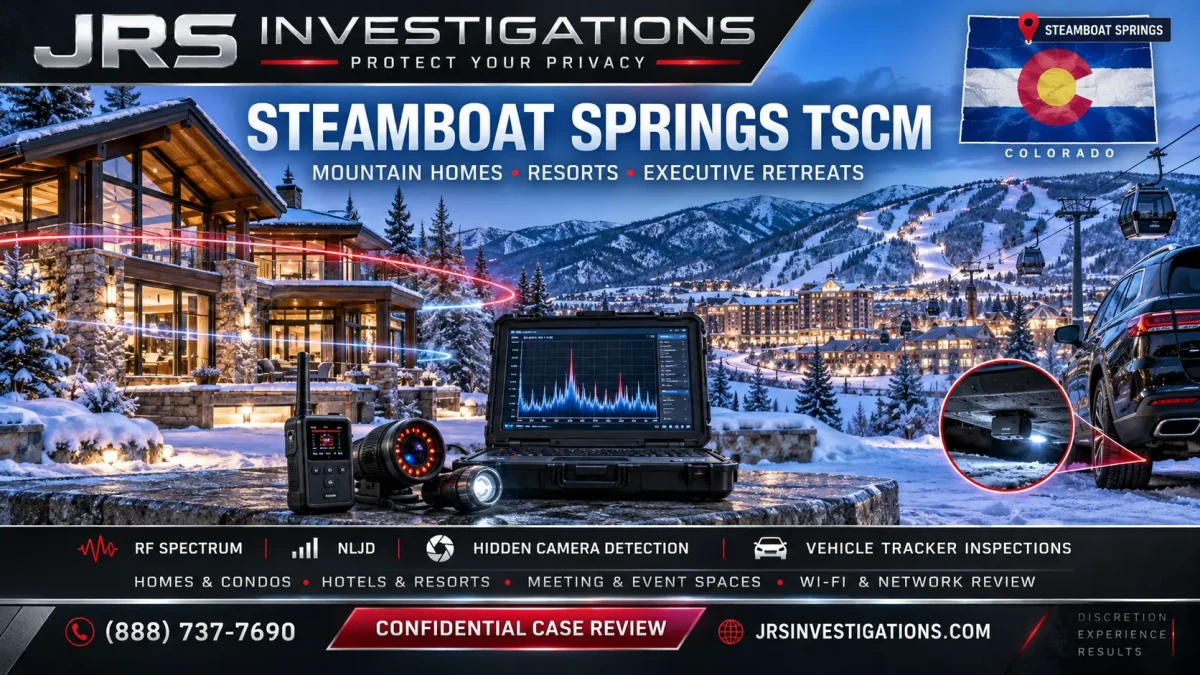
Steamboat Springs TSCM Planning for Mountain Properties
Steamboat Springs TSCM Planning for Mountain Properties
Privacy concerns in Steamboat Springs can involve more than a single room or device. A mountain residence may include guest suites, home offices, utility areas, detached buildings, vehicles, and changing service access. A resort assignment may involve lodging, meeting rooms, event space, staff coordination, and a narrow window between occupants. Thoughtful Steamboat Springs TSCM planning helps define the authorized areas, timing, technical methods, and reporting needed for a professional inspection.
JRS Investigations provides confidential technical surveillance countermeasures for authorized residential, hospitality, business, and vehicle environments. The objective is to assess specific privacy concerns with appropriate technical equipment, physical inspection, and documented findings. No inspection can guarantee that every possible device or method will be identified, but careful planning gives the examination a clear scope and reduces avoidable gaps.
Why Mountain Properties Require Deliberate Planning
Steamboat Springs properties often combine distinctive architecture with seasonal use. Timber construction, stone features, large windows, vaulted ceilings, mechanical rooms, multiple Wi-Fi access points, smart-home systems, and detached structures can all affect how an inspection is organized. Snow, road conditions, guest turnover, maintenance schedules, and limited access windows may also influence the sequence of work.
These conditions do not automatically indicate surveillance. They do mean that the site should be discussed before equipment is deployed. Floor plans, room use, recent access, renovation history, and the client’s specific concern help the investigator prioritize the areas where confidential conversations, personal activity, or sensitive work are most likely to occur.
Mountain Homes, Estates, and Slopeside Condominiums
A residential TSCM assignment can be designed around an entire authorized property or selected high-priority areas. Common priorities include bedrooms, home offices, living areas, conference-style spaces, media rooms, entry points, garages, and vehicles. In condominiums and managed communities, shared walls, common wireless activity, property management access, and neighboring signals may add complexity to radio-frequency analysis.
The planning conversation should identify who owns or controls the space, who can authorize access, and whether cleaners, contractors, guests, household staff, property managers, or previous occupants have recently entered. This information creates context; it is not treated as proof that any person installed a device.
Vacation Rentals and Changing Occupancy
Short-term and vacation properties can have frequent changes in occupants, vendors, and maintenance personnel. If a client has authority to request an inspection, scheduling it after the relevant occupants leave and before the next arrival can provide a controlled working period. The property should remain as undisturbed as reasonably possible when there is a specific concern, because moving electronics, discarding objects, or confronting another person may remove useful context.
For a broader explanation of local inspection services, see the Steamboat Springs TSCM bug sweep service page.
Hotels, Resorts, and Executive Retreats
Hotels and resort environments require coordination. An authorized client may control a guest room, private suite, reserved meeting room, or event space, while other areas remain under separate management. The scope must respect those boundaries. For an executive retreat, the best plan may include rooms used for strategy sessions, temporary offices, private dining, lodging, and approved transportation.
Timing matters. An inspection is usually more useful when it occurs close enough to the confidential activity to reflect the current environment, yet early enough to address findings without disrupting the meeting. The investigator may also discuss room changes, vendor access, audiovisual installations, and whether the space can be secured after the inspection.
Guest Ranches, Event Spaces, and Remote Buildings
Steamboat’s lodging options include private homes, cabins, guest-ranch settings, and event venues. The city’s lodging information reflects the variety of local property types. A remote building may require additional time for travel, power and connectivity checks, outbuilding access, or coordination with an owner or manager.
Large sites should be prioritized rather than described simply as “the whole property.” A useful scope names the specific buildings, rooms, vehicles, and systems to be examined. That clarity supports realistic scheduling and a more meaningful report.
Start With Authority and a Defined Scope
JRS Investigations performs inspections only where the client has appropriate authority or permission. Before scheduling, the investigator may ask who owns, leases, manages, or controls the space; whether another authorized representative must participate; and which areas are excluded. A lawful scope protects the client, the property, and the integrity of the work.
Colorado law addresses unlawful wiretapping and eavesdropping, including provisions reflected in Colorado Revised Statutes §§ 18-9-302 through 18-9-304. Clients should obtain legal advice for questions about recording, monitoring, evidence use, or consent. The Colorado General Assembly’s published statutory materials provide an official starting point.
What a Professional TSCM Inspection May Include
The methods used depend on the property and concern. A planned inspection may combine a detailed visual and physical examination with radio-frequency spectrum analysis, non-linear junction detection, optical camera-lens searching, inspection of accessible wiring and electronics, and review of relevant network or wireless indicators. No single instrument can evaluate every threat.
Equipment readings require interpretation. Normal devices, building systems, neighboring transmitters, and temporary wireless activity can produce signals that need to be identified and separated from unexplained activity. That is why consumer “bug detector” readings alone rarely provide a reliable conclusion.
Radio-Frequency Analysis in a Resort Town
Hotels, condominiums, dense lodging areas, and smart homes can contain many legitimate transmitters. Wi-Fi networks, Bluetooth devices, keyless systems, security equipment, appliances, phones, and neighboring access points may all be present. RF analysis looks for relevant activity and patterns, but it must be paired with inspection and contextual verification.
Signal jammers are not an appropriate privacy solution. The Federal Communications Commission explains that operating, marketing, or selling jammers that interfere with authorized radio communications is prohibited in the United States. See the FCC jammer enforcement guidance.
Hidden Cameras, Listening Devices, and Nontransmitting Electronics
Some devices transmit continuously, some transmit intermittently, and others store information locally. A device that is silent during an RF scan may require a different detection method. Visual inspection, lens-detection techniques, non-linear junction detection, and examination of objects or electronics can complement spectrum analysis.
Clients noticing unusual objects, unexplained changes, or privacy concerns can review the related guide to warning signs of possible surveillance in Steamboat Springs. A warning sign is a reason to evaluate the situation—not proof of monitoring.
Vehicle and Tracker Concerns
A vehicle inspection may be included when location tracking or in-vehicle monitoring is part of the concern. The vehicle should be legally controlled by the requesting client, accessible in a safe working location, and identified during the initial scope discussion. Exterior, interior, accessible compartments, power sources, and relevant electronic indicators may be examined based on the circumstances.
A phone application or dashboard alert does not identify every possible tracker, and an unfamiliar signal does not automatically establish malicious intent. Findings must be verified and documented in context.
Network and Smart-Property Context
Modern mountain properties may use mesh Wi-Fi, smart speakers, cameras, thermostats, access controls, entertainment systems, and remote property-management tools. These systems can create legitimate traffic and may also expose configuration questions outside the scope of a physical sweep. The client should identify known devices and provide authorized access to relevant network information when appropriate.
A TSCM inspection is not a substitute for a full cybersecurity assessment. If the concern involves account compromise, phishing, cloud access, malware, or data theft, the client may also need qualified digital-forensics or cybersecurity support.
How to Prepare Without Disturbing the Site
- Write down the specific concern, when it began, and which areas or conversations are involved.
- Confirm ownership, control, and permission for every room, building, vehicle, and system in scope.
- List recent occupants, contractors, maintenance visits, renovations, room changes, or unusual access.
- Keep ordinary electronics in place unless the investigator gives different instructions.
- Avoid using consumer detectors to dismantle objects or publicly confronting a suspected person.
- Arrange keys, parking access, property contacts, floor plans, and enough uninterrupted time for the inspection.
- Identify any meeting, guest arrival, or travel deadline that affects scheduling.
Handling a Potential Finding
If an unusual device or condition is located, the next step depends on what it is, where it was found, who controls the property, and whether law enforcement or legal counsel should be contacted. Photographing and documenting the item in place may be important. Immediate removal is not always the best first action if doing so could damage evidence, create safety concerns, or interfere with a broader investigation.
JRS Investigations can explain the observed condition and available next steps within the scope of the assignment. Legal conclusions and decisions about prosecution, employment, tenancy, or civil action belong with the appropriate authorities and counsel.
Reports, Limitations, and Follow-Through
A useful report should connect the work performed to the authorized scope. Depending on the engagement, documentation may include inspected areas, equipment categories used, relevant observations, photographs, identified devices, unresolved limitations, and practical recommendations. Access restrictions, active construction, unavailable rooms, dense radio environments, or systems outside the client’s control should be noted rather than ignored.
Follow-through may involve securing access, changing room procedures, reviewing device inventories, improving network administration, consulting counsel, or arranging a targeted reinspection after a material change. The appropriate timing is based on risk and circumstances, not a one-size-fits-all promise.
Plan a Confidential Steamboat Springs Inspection
For a focused conversation, be ready to describe the property type, authorized areas, principal privacy concern, relevant timing, and whether vehicles or multiple buildings are involved. JRS Investigations will use that information to discuss an appropriate scope for a Steamboat Springs residence, condominium, resort, meeting space, executive retreat, or other authorized environment.
Protect your privacy. Call JRS Investigations at (888) 737-7690 or visit the contact page to request a confidential case review.