(888) 737-7690


Comprehensive Guide to TSCM Bug Sweeps Palm Beach Gardens
Comprehensive Guide to TSCM Bug Sweeps in Palm Beach Gardens
TSCM Bug Detection Sweeps Palm Beach Gardens Florida
Palm Beach Gardens Florida TSCM Bug Sweeps Licensed Licensed Local Trusted Private Investigations
Surveillance Detection Countermeasures Florida
Knowledge Is Power Call Now (888) 737-7690
Understanding TSCM Bug Sweeps in Palm Beach Gardens
In a world where digital eavesdropping and privacy invasion have become alarmingly common, businesses and individuals are increasingly prioritizing security. Technological advancements offer many benefits, but they also pave the way for sophisticated threats. This is where TSCM (Technical Surveillance Countermeasures) comes into play, and its importance is particularly pronounced in areas like Palm Beach Gardens, where privacy breaches can have significant repercussions.
Residents and businesses in Palm Beach Gardens are recognizing the essential role of TSCM bug sweeps to protect sensitive information. Bug sweeps are comprehensive inspections performed to detect and neutralize illegal surveillance devices. These sweeps are critical for maintaining confidentiality, especially in environments where sensitive communications occur regularly, such as boardrooms or private offices.
The Growing Threat of Eavesdropping
The modern landscape has seen an upsurge in eavesdropping techniques, from hidden cameras to sophisticated listening devices. These threats are not confined to any one sector; they affect corporate meetings, legal counsel sessions, and even high-profile private residences. According to a report from CSO Online, the rise in these intrusive activities demands advanced countermeasures that TSCM experts can provide.
In Palm Beach Gardens, an area known for its affluent communities and business hubs, the stakes are particularly high. Private individuals and businesses are turning to professional TSCM services to ensure their communications remain secure. For instance, during corporate negotiations or family discussions concerning sensitive matters, an undiscovered bug could lead to devastating consequences.
Real-World Impact and Protection Strategies
One notable example involved a corporation in Palm Beach Gardens that faced a severe breach. After employing TSCM bug sweeps, several listening devices were discovered within their headquarters, revealing vulnerabilities that had been exploited for months. By leveraging these expert services, the company was able to safeguard its confidentiality moving forward, illustrating the tangible benefits of TSCM strategies.
For those considering enhancing their security posture, it’s crucial to understand the complexities involved in identifying these covert threats. Engaging a professional investigation agency can provide peace of mind and a robust defense against espionage. To learn more about how to select a reliable private investigation agency, check out this guide on hiring a good private investigation agency.
Understanding the Technical Aspects of TSCM Bug Sweeps
Technical Surveillance Countermeasures (TSCM) bug sweeps are a sophisticated blend of techniques and technologies used to detect and mitigate unwanted eavesdropping devices. In Palm Beach Gardens, where sensitive business transactions and high-profile individuals converge, the demand for such services is on the rise. The presence of hidden cameras, microphones, and GPS tracking devices poses a significant threat to privacy and confidentiality. This necessitates a strategic approach to TSCM operations.
The Importance of a Thorough Sweep
Conducting a comprehensive bug sweep involves more than just sweeping for wireless frequencies. TSCM experts employ state-of-the-art equipment, including spectrum analyzers, non-linear junction detectors, and thermal imaging cameras, to uncover concealed devices. For instance, spectrum analyzers are used to detect radio frequencies emitted by hidden transmitters. According to Infosec Institute, these devices can uncover threats that a cursory search might miss.
Case Studies in Effective TSCM Application
A notable example involves a business in downtown Palm Beach Gardens that uncovered a years-long espionage operation by conducting a detailed TSCM bug sweep. By employing a team of experts equipped with the latest tools, the business was able to identify several covert listening devices installed by a competitor. This underscores the importance of timely intervention, especially in regions where corporate espionage is a viable threat.
Practical Steps for Businesses
For businesses seeking to safeguard against these threats, it is crucial to engage a certified TSCM professional. Prioritizing regular bug sweeps is essential, especially for entities handling sensitive information. Furthermore, internal policies should be instituted to raise awareness among employees about the risks associated with espionage. Investing in TSCM bug sweeps in Palm Beach Gardens is a prudent strategy to ensure business integrity and protect sensitive data. Additionally, you can explore 10 reasons to hire a private investigator to further bolster your defense mechanisms.
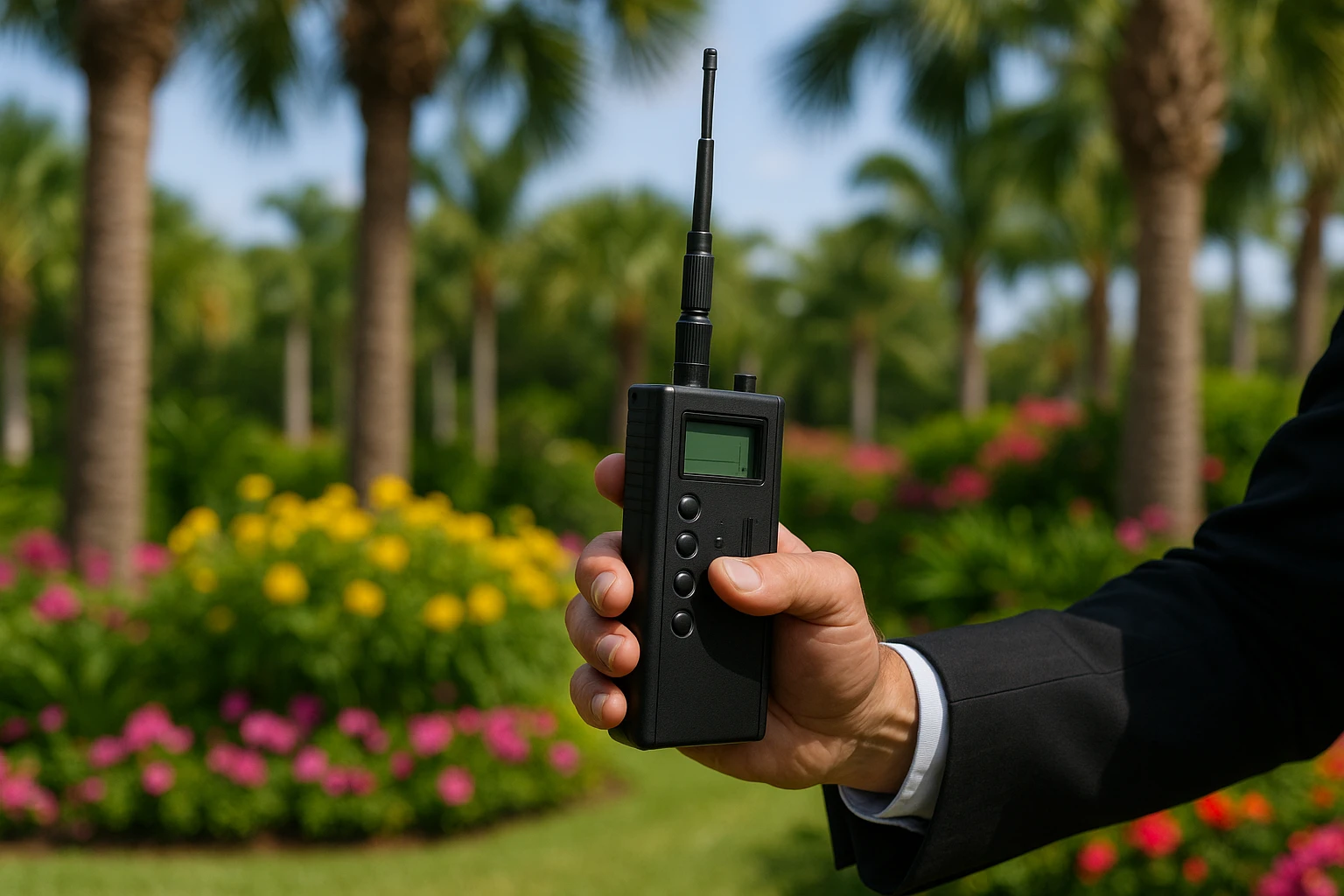
A close-up of a TSCM investigator’s hand holding a radio frequency scanner in a lush garden setting in Palm Beach Gardens, surrounded by palm trees and vibrant flowers.
Advanced Techniques in TSCM Sweeps
Technical Surveillance Counter-Measures (TSCM) have become an essential service for protecting sensitive information. In Palm Beach Gardens, where businesses often deal with high-stakes negotiations and confidential data, the demand for advanced TSCM bug sweeps has increased. This need is amplified by the rise in unauthorized surveillance attempts, which can compromise business integrity and privacy.
Understanding The Threat Landscape
The modern threat landscape is complex. Devices capable of eavesdropping or recording conversations are smaller and more accessible than ever. Hidden cameras and covert microphones can be placed with ease, meaning businesses need to be vigilant. According to a Data Protection Report, breaches often go undetected for extended periods, emphasizing the importance of regular TSCM inspections.
Organizations are now investing in TSCM bug sweeps to ensure their environments are secure. These sweeps involve using cutting-edge technology such as radio frequency scanners and infrared searches, capable of detecting various types of surveillance devices. The deployment of such techniques is crucial for safeguarding information.
Case Studies and Real-World Applications
Consider a financial firm in Palm Beach Gardens that discovered unauthorized devices in their boardroom. Post-identification, they implemented a regular schedule of TSCM bug sweeps, effectively nullifying future threats. This proactive approach saved them from potential data leaks and financial damages.
Additionally, individuals dealing with sensitive personal matters, such as infidelity or custody battles, also find value in TSCM services. Utilizing resources like 5 Signs Infidelity can provide insight into potential threats and reinforce the need for thorough checks.
Partnering with Professionals
Leveraging professional services ensures thoroughness and expertise are applied to each sweep. Many professionals use platforms like https://www.jrsinvestigations.com/ to streamline their operations, granting peace of mind to clients knowing that their privacy is safeguarded by experts.
For businesses and individuals in Palm Beach Gardens, engaging in periodic TSCM bug sweeps is a strategic move. It not only defends your current operations but also secures your future against unauthorized surveillance. This practice is an investment in privacy and protection, integral to any organization or individual seeking to maintain confidentiality and operational security.
Enhancing Security Measures After a Sweep
Having conducted thorough tscm bug sweeps palm beach gardens, it’s not enough to simply remove any discovered devices; reinforcing your privacy through strategic follow-up actions is essential. Post-sweep, consider implementing the following measures to sustain robust protection and to vastly reduce the chance of future breaches.
Establish Ongoing Surveillance and Monitoring
Once a sweep is complete, clients benefit from periodic monitoring to catch devices that may be planted afterward or reactivated. For example, many professional firms recommend scheduling scheduled follow-up sweeps—especially before sensitive meetings or events—or setting up continuous RF monitoring to detect abnormal signal patterns immediately. This proactive layer of surveillance prevents threats from slipping in unnoticed.
Upgrade Physical and Digital Infrastructure
Integrating structural enhancements with adaptive digital safeguards provides a comprehensive shield. Physically, you might consider reinforcing meeting areas with RF-shielding paint or signal-blocking curtains. Digitally, invest in secure, encrypted communication platforms, and conduct regular network vulnerability scans. By combining both physical and cyber defenses, you create multiple barriers that deter both hardware-based and network-based eavesdropping.
Train Staff and Implement Privacy Protocols
Technical measures alone are not foolproof without informed human behavior. Training staff on recognizing signs of surveillance—such as unfamiliar equipment, irregular wire placements, or unexplained interference on communication devices—is critical. Establish simple yet effective protocols: always report suspicious activity, restrict access to sensitive areas, and avoid taking calls or using personal devices in high-risk zones. These best practices reinforce technical defenses with a human layer of security.
Document Findings and Formalize Response Plans
After any sweep, maintaining a detailed report that includes photographic documentation, device descriptions, and the exact areas inspected is invaluable. Clients can use these reports as evidence for internal investigations or legal actions. Furthermore, these records support the development of customized response plans that outline next steps should a future breach occur, ensuring swift, organized action rather than reactive scrambling.
By combining continuous monitoring, structural improvements, staff education, and detailed documentation, organizations and individuals in Palm Beach Gardens not only address immediate threats but also cultivate a resilient security posture. These reinforced measures significantly heighten the protection of sensitive environments, preserving confidentiality and maintaining peace of mind.
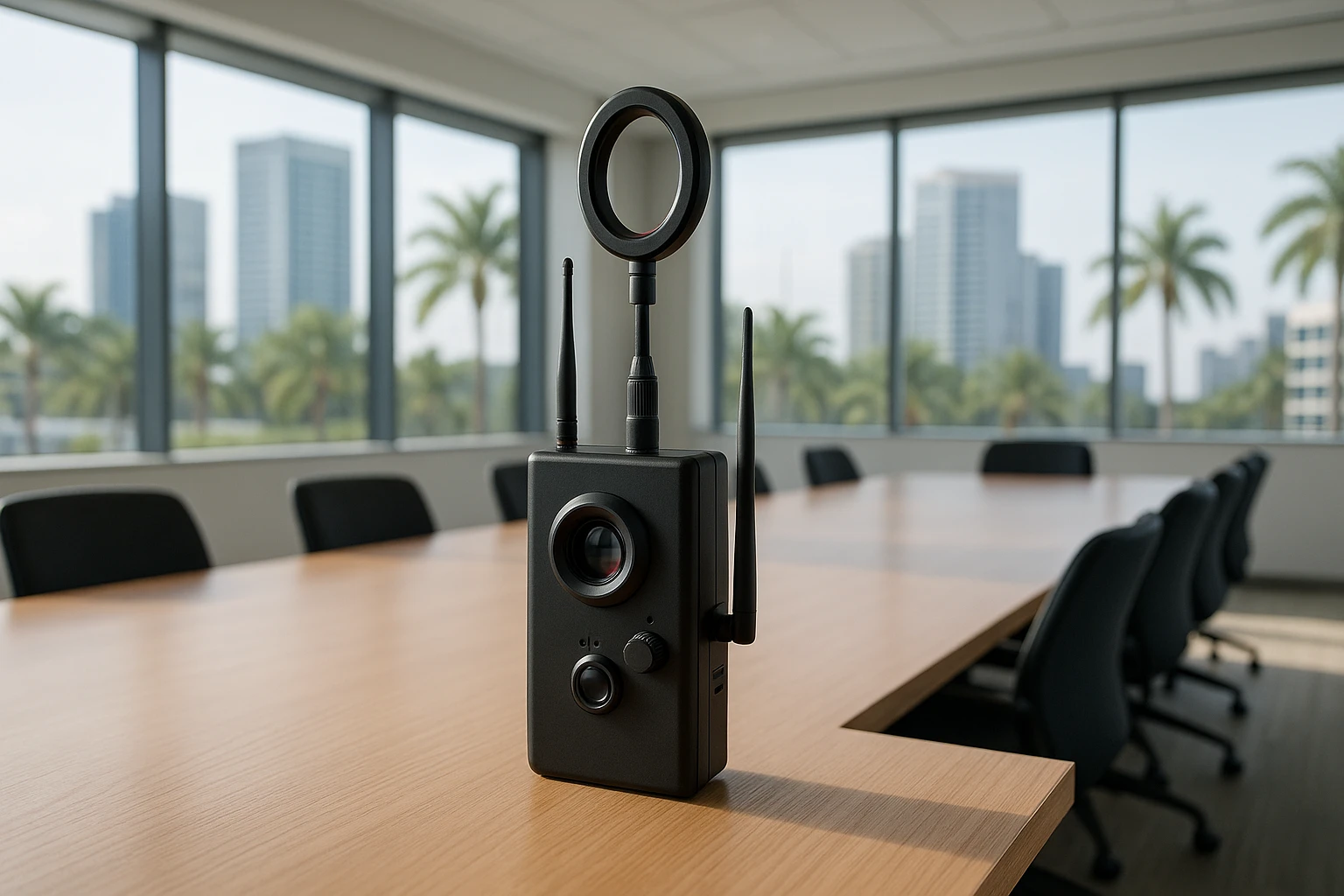
A sleek, advanced surveillance detector on a conference table in a brightly lit office conference room in Palm Beach Gardens, with floor-to-ceiling windows showing a cityscape skyline and palm trees outside.
Conclusion: Ensuring Security Through TSCM Bug Sweeps
In a world where privacy is paramount, taking proactive measures to protect your personal and corporate spaces from unwanted surveillance is crucial. TSCM bug sweeps in Palm Beach Gardens offer a strategic way to safeguard your environment from potential threats. As we’ve explored, these sweeps utilize advanced technologies to identify and neutralize hidden surveillance devices, thereby maintaining confidentiality and security.
When choosing to undergo a TSCM bug sweep, engagement with a professional service is essential. Trained technicians have the skills and equipment necessary to conduct thorough inspections. Take, for instance, a financial firm that discovered unauthorized listening devices using a comprehensive sweep. This not only safeguarded their sensitive information but also reinforced their clients’ trust, illustrating the real-world impact of such services.
Whether you’re a business or an individual, understanding the value of TSCM services can make a significant difference. To begin with actionable strategies, consider evaluating the sensitivity of your information and identify areas most at risk. Regularly scheduled sweeps can help in preemptively identifying vulnerabilities before they become exploitable.
For those looking to enhance their protective measures, partnering with a credible agency is advisable. A reputable service such as JRS Investigations provides comprehensive TSCM bug sweeps tailored to meet specific needs. They offer expertise in uncovering surveillance devices in both corporate and residential settings, making them a valuable resource for anyone requiring assured privacy.
Ultimately, investing in TSCM bug sweeps in Palm Beach Gardens allows you to take control of your privacy and security. By understanding the potential threats and implementing ongoing protective measures, you can ensure that your environment remains uncompromised. Remember, security is not just a necessity but a wise investment in today’s digital age.