(888) 737-7690

6 Ways a Belize Criminal Defense Investigation Can Help
A Belize criminal defense investigation can help an attorney or other properly authorized client develop a clearer factual record, locate people with relevant information and preserve leads that might otherwise be lost. The investigator’s role is independent fact-finding—not deciding guilt, directing law enforcement, establishing probable cause or promising that information will be accepted by a court.
Cross-border matters require particular care. Evidence rules, privacy requirements, interview practices and access to records may differ from those in the United States. Work should be coordinated with qualified counsel and, when necessary, properly authorized local professionals in Belize. An investigator should stay within the agreed scope and document how each piece of information was obtained.
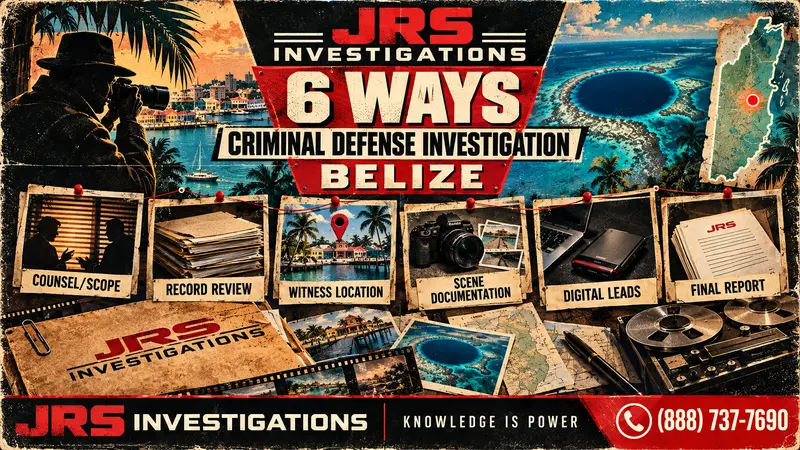
Here are six ways a carefully planned investigation may support a criminal defense matter connected to Belize.
1. Define the assignment with counsel
A productive investigation begins with specific questions. Counsel may need to test a timeline, identify a witness, verify an alibi-related fact, document a location or determine whether a record exists. Beginning with a written scope helps keep the work relevant, lawful and proportionate to the client’s priorities.
The investigator should understand who is authorizing the work, what jurisdiction is involved, which deadlines apply and how communications and work product should be handled. Legal privilege and disclosure obligations are questions for counsel; an investigator should not assume that every communication or report is automatically protected.
2. Review records and build a reliable chronology
Police reports, charging documents, witness statements, photographs, video, travel records, receipts, messages and other materials can contain dates or details that do not align. An investigator can organize authorized records into a chronology, identify unanswered questions and flag items that counsel may want to examine further.
A discrepancy is not proof that someone lied. Memory, translation, time-zone differences, incomplete records and simple clerical errors can all affect a timeline. The report should distinguish confirmed facts, unresolved conflicts and reasonable follow-up steps without overstating what the records prove.
3. Locate and interview relevant witnesses
Witnesses may have moved, changed contact information or never been identified during the initial inquiry. Lawful locate research, local inquiries and careful outreach may help find people who directly observed an event or can authenticate a relevant fact.
Interviews should be neutral and should separate firsthand observations from rumor. With appropriate consent and subject to local law, the investigator may document an interview in notes, a written statement or a recording. No witness should be pressured, coached or promised a particular legal result. If a witness is represented, counsel should guide any contact.
4. Document locations and physical conditions
A site visit can preserve context that is difficult to understand from a report alone. Depending on lawful access, an investigator may photograph public approaches, lighting, sight lines, distances, entrances, camera locations and environmental conditions. This may help counsel assess whether an account is physically possible or whether additional records should be requested.
A private investigator does not control an official crime scene and should not remove, alter or collect physical evidence without proper authority. Fingerprints, DNA, controlled substances, weapons and other forensic material belong with the appropriate law-enforcement or qualified forensic process. When potential evidence is located, the priority is to document it safely and obtain guidance from counsel or the relevant authorities.
5. Preserve authorized records and digital leads
Public records, business information provided with authorization, public online material and voluntarily supplied communications may help verify identities, relationships, dates or locations. An investigator can preserve relevant material with source information and context so counsel can evaluate it.
Access restrictions matter. Investigators should not obtain private accounts through false credentials, bypass security, impersonate officials or claim access to confidential government, financial or telecommunications databases. Recovering deleted files, examining a seized device or attributing online activity may require a qualified digital-forensics specialist and appropriate legal authority. A screenshot alone may not establish who created an account or when an item was posted.
6. Deliver clear findings for attorney review
The final product should explain what was requested, what was done, which sources were consulted, what was found and what limitations remain. A useful report separates observation from interpretation and includes organized exhibits, contact attempts and a chronology where appropriate.
An investigator may later explain the work performed if properly called, but cannot guarantee admissibility, testimony, charges, dismissal or any other outcome. Counsel determines how the findings fit the defense strategy and what additional legal process may be required.
How a criminal defense investigation can work for you
This JRS Investigations video provides an additional overview of how private fact-finding can assist a defense team:
Belize and cross-border considerations
Belize-related matters may involve travel schedules, island and mainland locations, multiple languages or dialects, foreign records and witnesses who are difficult to reach from the United States. Clear coordination helps avoid duplicated work and misunderstandings about what can be obtained.
Depending on the case, planning may consider:
- Which country’s law and court procedures apply to the requested work.
- Whether local permission, counsel or a qualified Belize-based professional is needed.
- How interviews, translations and recordings will be documented.
- How digital files and original records will be preserved and transferred.
- Travel, island access, weather and time-sensitive deadlines.
- Safety risks connected to witnesses, locations or active criminal activity.
For local service information, visit the Belize private investigator page and the San Pedro, Belize private investigator page. The comprehensive guide to hiring a Belize investigator provides additional planning considerations.
What a private investigator does not replace
A private investigator does not replace the Belize Police Department, a defense attorney, a prosecutor, a forensic laboratory or the court. If a crime is in progress or someone faces immediate danger in Belize, contact emergency services. The Belize Police Department lists 911 for emergencies and 922 for anonymous reports.
JRS Investigations does not promise access to sealed records, private accounts or government-only systems. The firm’s broader investigative services can be scoped according to the client’s authorization, the location and the specific factual questions involved.
Information to prepare before requesting assistance
- The attorney or authorized client contact and applicable jurisdiction.
- Known deadlines, hearing dates and travel requirements.
- A concise summary of the allegations and disputed facts.
- Names, aliases and last-known information for relevant witnesses.
- Existing reports, photographs, video, messages and timeline materials.
- Specific questions the investigation should attempt to answer.
- Known safety, privacy, language or access concerns.
A narrow, prioritized scope can protect the budget and allow urgent leads to be addressed first. Findings may support, contradict or simply clarify part of an account; each result should be reported accurately.
Discuss a Belize criminal defense investigation
JRS Investigations can review the objectives, available records, location and deadlines before proposing an investigative plan. No outcome can be guaranteed, and the work should be coordinated with qualified legal counsel.
Call (888) 737-7690 or contact JRS Investigations to request a confidential case assessment.
This article provides general information and is not legal advice for Belize, the United States or any other jurisdiction.