(888) 737-7690

Is Your Spouse Cheating? How to Get Clear, Lawful Answers
If you are asking, “Is your spouse cheating?” the uncertainty can be as difficult as the answer. Changes in routine, communication, intimacy, finances, or device habits may raise legitimate questions, but no single behavior proves infidelity. The most useful next step is to separate observations from assumptions and decide what information you actually need.
JRS Investigations helps clients pursue clear, lawful facts through discreet infidelity investigations and surveillance where authorized. We do not hack accounts, intercept private communications, trespass, or promise a predetermined result. For a confidential case assessment, call (888) 737-7690.
Possible Signs Are Not Proof of Infidelity
People often contact an investigator after noticing a pattern rather than one dramatic event. A changed schedule may be connected to work. Increased phone privacy may reflect a personal or professional concern. Emotional distance can result from stress, health, finances, or relationship problems unrelated to another person. Treating a sign as a conclusion can make an already difficult situation worse.
The question is not whether a behavior appears on a generic “cheating signs” list. The better question is whether several unexplained changes form a consistent pattern that affects an important decision.
Changes in Schedule or Availability
Repeated late nights, unexplained absences, unusual travel, or last-minute changes may prompt questions when they differ from a spouse’s established routine. Focus on dates, times, and explanations rather than trying to interpret every delay.
Greater Secrecy Around Devices
A spouse may suddenly keep a phone out of sight, change passwords, silence notifications, or leave the room to communicate. These behaviors may be relevant, but they do not authorize access to another person’s phone, email, cloud storage, or social account. Attempting to obtain private communications can create legal, safety, and evidence problems.
Unexplained Spending
New expenses, frequent cash withdrawals, unfamiliar charges, or discrepancies in shared financial records may deserve attention. Review only records you are legally entitled to access. Keep copies in their original form and avoid altering, annotating, or selectively editing them.
Emotional or Physical Distance
A sustained change in affection, availability, communication, or interest in shared plans may be meaningful within the context of the relationship. It can also reflect stress, depression, family responsibilities, or other private difficulties. This is a reason to seek clarity—not proof of an affair.
Inconsistent Explanations
Conflicting accounts about locations, companions, expenses, or timing may be more significant when they recur. Write down what you personally observed and when. Avoid embellishment, confrontation in the moment, or recruiting children, friends, or coworkers to investigate for you.
Decide What Answer You Actually Need
Before taking action, define the decision the information will support. Are you trying to decide whether to have a direct conversation, consult a counselor, speak with an attorney, protect a child’s routine, or verify conduct during a particular time period? A focused objective makes an investigation more proportionate and more useful.
Useful questions are specific:
- Is my spouse going to the location described during a defined period?
- Is there a recurring pattern of meetings that can be lawfully observed?
- Can dates and activities be documented without intruding on private spaces?
- What evidence format would an attorney need if a legal issue develops?
An investigator cannot determine what a relationship means to you or make a personal decision on your behalf. The investigator’s role is to document relevant facts within a lawful scope.
What You Can Do Before Hiring an Investigator
Record Your Own Observations
Keep a private, factual timeline of events you personally witnessed: the date, time, location, statement, or shared-record discrepancy. Distinguish what you know from what you suspect. A concise timeline helps an investigator evaluate patterns and avoids spending time reconstructing the same history.
Preserve Lawfully Available Records
Preserve shared bills, jointly accessible statements, calendar entries, or messages sent directly to you when they are relevant. Keep originals and note where each item came from. Do not guess passwords, impersonate your spouse, create deceptive accounts, or install tracking or monitoring software.
Consider a Direct Conversation When Safe
Some questions may be addressed through calm communication or counseling. If you believe a conversation could lead to intimidation, retaliation, or violence, prioritize safety rather than confrontation. The National Domestic Violence Hotline’s safety-planning resources provide confidential options, including phone and chat support. Call emergency services if there is immediate danger.
Consult an Attorney About Legal Decisions
If the concern may affect divorce, custody, property, support, or court strategy, ask a qualified attorney what information is legally relevant before commissioning extensive work. Rules and evidentiary needs vary by jurisdiction, and the investigator should not substitute personal opinions for legal advice.
What a Cheating-Spouse Investigator May Do
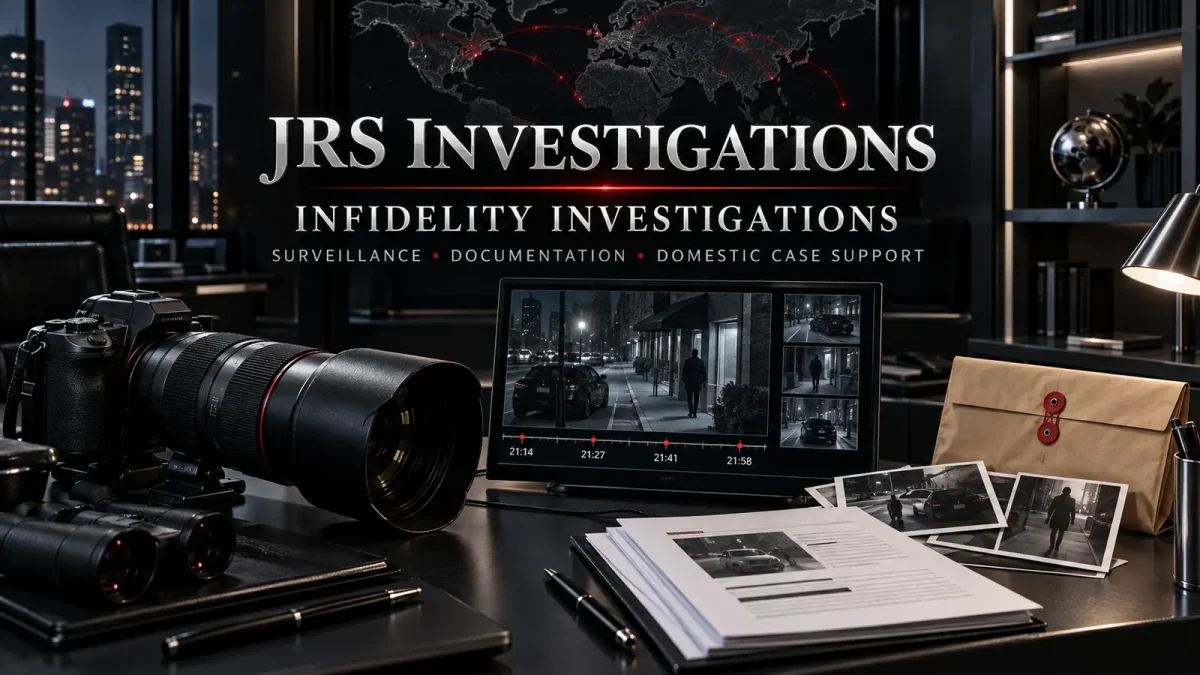
A properly scoped infidelity investigation may use lawful observation to document a person’s activities in places where surveillance is permitted. Depending on the facts, the work may include:
- Planning surveillance around specific dates, locations, or recurring patterns
- Documenting arrivals, departures, companions, and observable activities
- Capturing lawful photographs or video when conditions allow
- Reviewing relevant public records or other authorized sources
- Preparing a chronological written report with supporting media
Professional surveillance investigators should explain the realistic limits of coverage. Weather, traffic, secured buildings, private property, counter-surveillance behavior, and changing schedules can all affect results. A credible investigator will report what was observed, including periods when nothing relevant occurred.
What a Legitimate Investigator Will Not Do
A licensed investigator is not a shortcut around privacy, communications, or property laws. JRS will not:
- Hack email, social-media, cloud, or messaging accounts
- Install spyware or secretly access a spouse’s device
- Intercept private calls or messages
- Trespass or enter a home, hotel room, office, or secured area without authority
- Place a tracker where ownership, consent, or applicable law does not permit it
- Manufacture evidence or guarantee that infidelity will be proven
If someone offers these methods casually, that is a serious warning sign. Unlawfully obtained information may expose the client to legal consequences and may be unusable for the decision that prompted the investigation.
How to Choose the Right Private Investigator
Ask who will perform the work, where the agency is licensed, how the surveillance plan will be developed, what the budget covers, and how evidence will be stored and delivered. Florida clients can review licensing information through the Florida Department of Agriculture and Consumer Services.
A written agreement should identify the objective, hourly rates, retainer, mileage or travel charges, reporting time, equipment costs, stopping points, and who may authorize additional work. Ask whether you will receive a written report, photographs, video, and an oral briefing. Review JRS’s broader private investigation services for related capabilities.
How JRS Handles Infidelity Investigations
JRS begins with a confidential consultation focused on the facts you already have, the locations involved, the relevant time window, safety concerns, and the decision you need to make. We then recommend a lawful scope and explain what surveillance can and cannot realistically establish.
Our approach emphasizes discretion, careful planning, contemporaneous documentation, and clear reporting. When domestic or custody concerns overlap, we define each objective separately so the assignment remains focused. Learn more about our domestic investigation services.
Frequently Asked Questions
Can a private investigator read my spouse’s messages?
Not simply because you are married or share a home. Account ownership, device ownership, consent, privacy law, and the method of access all matter. Do not provide guessed or secretly obtained credentials. Ask an attorney about your specific rights.
Can surveillance guarantee proof of cheating?
No. Surveillance can document observable conduct during the approved coverage period. It cannot guarantee that a particular event will occur, reveal private communications, or establish every fact about a relationship.
How long does an infidelity investigation take?
The useful time frame depends on the known schedule, travel patterns, locations, budget, and investigative objective. A focused period built around credible information is generally more efficient than continuous or open-ended coverage.
Should I confront my spouse before hiring an investigator?
That is a personal decision, and safety comes first. A confrontation may change behavior and make later observation less productive. If legal, custody, financial, or safety issues are involved, consider speaking with the appropriate professional before acting.
Get Clear, Lawful Answers
You do not need to turn every concern into an accusation. A focused investigation can help distinguish a documented pattern from speculation while respecting legal and ethical boundaries. To discuss a confidential infidelity or domestic-investigation concern, call JRS Investigations at (888) 737-7690.