
(888) 737-7690

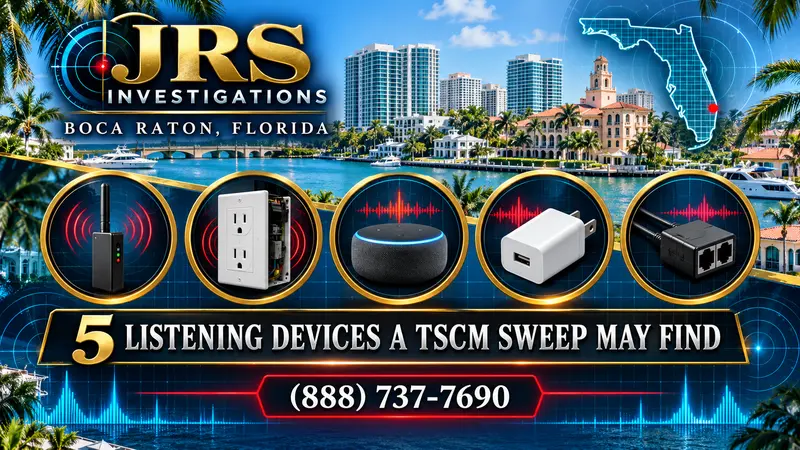
5 Listening Devices a Boca Raton TSCM Sweep May Find
A confidential conversation can be exposed by a device that looks ordinary, remains silent, or transmits only at selected times. A professional Boca Raton TSCM sweep evaluates the room, its electronics, the radio-frequency environment, and the physical pathways that could support unauthorized audio surveillance.
The five categories below are examples a technical inspection may evaluate. They are not presented as the “most common,” and finding one requires more than recognizing a suspicious object. Devices can be dormant, modified, concealed inside legitimate equipment, or configured to record without broadcasting.
What TSCM Means
Technical Surveillance Countermeasures, or TSCM, is a structured process for identifying technical surveillance risks. A qualified inspection may combine a physical examination, radio-frequency spectrum analysis, non-linear junction detection, thermal review, network assessment, telephone-line evaluation, and comparison of known equipment against unexpected signals or components.
No single tool detects every threat. A spectrum analyzer cannot locate a recorder that never transmits. A visual inspection alone may miss electronics hidden inside a wall or appliance. Effective work depends on method, documentation, and the ability to interpret several forms of evidence together.
1. Cellular or GSM Audio Transmitters
A cellular listening device can use a mobile network to send audio beyond the immediate property. Some designs resemble small black modules; others may be hidden inside chargers, power strips, vehicles, or household electronics. Because the device can communicate through a cellular connection, the person receiving the audio does not need to remain nearby.
Detection may involve spectrum analysis, inspection for unfamiliar SIM-enabled hardware, power-source tracing, and evaluation of signals that do not belong in the environment. A device may transmit intermittently or only when called or triggered, so an absence of continuous activity does not automatically clear the location.
2. Hardwired or AC-Powered Microphones
A concealed microphone can draw power from a wall outlet, lighting circuit, alarm component, telephone line, or other wired system. Continuous power can support long-term operation and eliminate the obvious clue of a battery change. The microphone may transmit audio, feed a recorder, or connect to another location through wiring.
A professional sweep may examine outlets, junction boxes, fixtures, cable routes, adapters, and visible alterations while respecting electrical and property-safety boundaries. When opening or testing energized systems is necessary, the work should be coordinated with an appropriately qualified technician.
3. Modified Smart Electronics
Routers, televisions, smart speakers, conferencing systems, computers, cameras, and other connected products already contain microphones, processors, radios, or network access. A legitimate device can be misconfigured, compromised, or physically modified. The risk may come from installed software, unauthorized account access, an added component, or misuse of an expected feature.
TSCM work can include visual and electronic inspection, device inventory, network review, account and configuration recommendations, and identification of equipment that should be examined by a digital-forensics specialist. A sweep should not assume that every smart device is hostile; it should document why a particular item or behavior requires follow-up.
4. Charger, Power-Strip, or Stand-Alone Recorders
A voice recorder can be concealed in an object that belongs in the room, including a USB charger, power bank, pen, clock, or power strip. Some units store audio locally and never emit a detectable radio signal. Others combine local recording with wireless access. Their ordinary appearance makes careful inventory and physical examination important.
Non-linear junction detection may help identify electronic components, including components in devices that are powered off, but results still require interpretation. The inspector must distinguish expected circuitry from unexplained electronics and avoid damaging legitimate property during examination.
5. Telephone, VoIP, and Conference-System Interception
Traditional line taps are only one part of the communications risk. Modern offices and residences may rely on VoIP phones, cloud conferencing, Bluetooth accessories, mobile devices, and network-connected room systems. Exposure can arise through physical modifications, unauthorized forwarding, compromised credentials, rogue peripherals, or insecure settings.
An inspection may evaluate handsets, cables, jacks, adapters, conferencing hardware, network connections, and configuration indicators. Protected account data and deeper forensic analysis require proper authorization and may need to be handled by the client’s IT team, attorney, or digital-forensics provider.
When to Consider a Boca Raton TSCM Sweep
- Confidential business, legal, financial, or personal information appears to be known by an unauthorized person.
- A residence, executive office, conference room, vehicle, or temporary workspace was accessed without clear authorization.
- Unfamiliar electronics, chargers, cables, adapters, or alterations appear in a sensitive area.
- A high-stakes meeting, transaction, dispute, or executive visit creates a heightened privacy risk.
- The organization needs a documented baseline inspection and practical security recommendations.
Do Not Disturb a Suspicious Device
If you find something suspicious, avoid unplugging, opening, moving, or publicly discussing it near the location. Photograph it only if doing so is safe, limit access to the area, and contact qualified assistance. Handling can destroy fingerprints or other evidence, alert the person responsible, interrupt a transmission pattern, or create an electrical hazard.
What a Professional Inspection Should Deliver
A defensible TSCM assignment starts with a confidential intake, threat assessment, defined inspection area, and review of authorized equipment. The final work product should distinguish confirmed findings from anomalies and recommendations. It should also explain limitations, such as inaccessible construction areas, encrypted systems, intermittent transmitters, or equipment outside the agreed scope.
Learn more about our Boca Raton and Parkland TSCM services, or review the complete JRS Investigations service area.
Request a Confidential Boca Raton TSCM Consultation
JRS Investigations can discuss the concern, the location, recent access, sensitive conversations, and the outcome you need. We will explain the proposed scope and appropriate next steps without promising that any specific device will be present.
Knowledge is power. Call JRS Investigations at (888) 737-7690.