
(888) 737-7690
Cocoa Beach TSCM Bug Sweeps: 4 Things to Expect
What Happens During a Cocoa Beach TSCM Bug Sweep?
Privacy concerns can arise in a waterfront residence, condominium, vacation property, office, meeting room, or vehicle. A professional technical surveillance countermeasures inspection—commonly called a TSCM bug sweep—uses a structured combination of threat assessment, physical examination, and technical testing to evaluate an authorized space for hidden cameras, listening devices, transmitters, recorders, tracking equipment, and related surveillance risks.
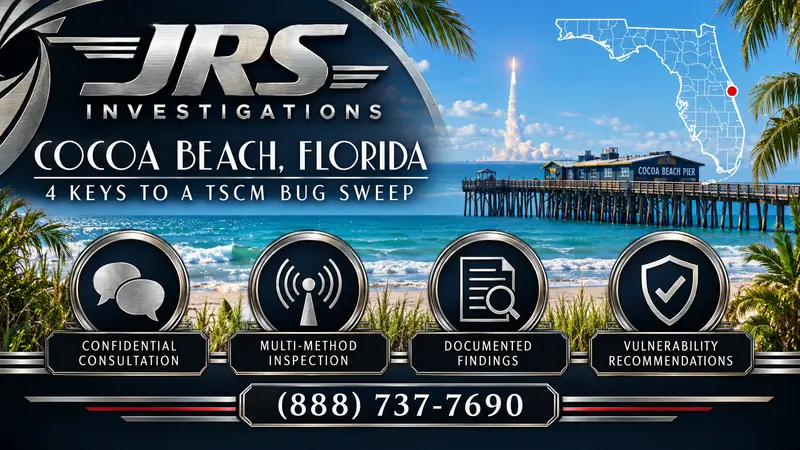
JRS Investigations approaches Cocoa Beach TSCM assignments methodically. Every location has different construction, access history, electronics, and background radio-frequency activity, so a credible inspection is tailored to the environment. The following four elements explain what clients should expect and why a professional sweep involves more than waving a single detector around a room.
1. A Confidential Threat Assessment
The first step is a private discussion about the concern. We ask what changed, when the suspected activity began, who had access, which conversations or movements may have been exposed, and whether any objects or fixtures appear unfamiliar or disturbed. This helps define the authorized scope and the most realistic threat scenarios.
A Cocoa Beach condominium, oceanfront rental, private home, professional office, hotel meeting space, and vehicle each present different vulnerabilities. The assessment may consider former occupants, contractors, guests, employees, domestic disputes, corporate conflicts, stalking concerns, or unexplained disclosure of confidential information. It also distinguishes a physical surveillance concern from issues that may require separate cybersecurity, mobile-device, or digital-forensic analysis.
Clients should avoid dismantling suspicious objects before the inspection. Moving an item could change its condition or affect potential evidence. If anyone faces an immediate safety threat, contact law enforcement or emergency services first.
2. Multiple Inspection Methods and Specialized Equipment
A professional bug sweep does not rely on one tool. Modern homes and businesses contain Wi-Fi routers, Bluetooth accessories, smart televisions, security systems, cellular devices, chargers, computers, and other electronics that create legitimate signals. An investigator must interpret that environment and examine findings in context.
Depending on the agreed scope and conditions, a TSCM inspection may combine visual and physical examination with radio-frequency analysis and other appropriate technical methods. Likely concealment areas, accessible fixtures, power sources, common objects, and electronics may receive closer attention. The process can account for devices that transmit continuously, communicate intermittently, store recordings locally, or remain dormant until activated.
Possible areas of concern include:
- Smoke detectors, clocks, chargers, lamps, power strips, décor, and unfamiliar electronics
- Conference rooms, executive offices, bedrooms, home offices, and private meeting areas
- Vehicles and accessible locations where unauthorized tracking or recording equipment might be concealed
- Network-connected devices or fixtures that appear altered, newly installed, or improperly positioned
Consumer apps and inexpensive scanners often produce false alarms because they cannot reliably distinguish ordinary electronics from a surveillance threat. Professional equipment is important, but training, experience, and careful interpretation are equally essential. Learn more about dedicated Cocoa Beach TSCM bug-sweep services.
3. Documentation and Careful Handling of Findings
When an unusual signal, object, wiring change, or concealment area warrants attention, the investigator evaluates it methodically. A suspicious item should not automatically be labeled a bug. It may be harmless equipment, an authorized device, a maintenance issue, or something requiring further analysis. Confirmed observations should be separated from unverified possibilities.
If potential surveillance equipment is located, the surrounding conditions may be photographed and documented. The safest next step depends on ownership, personal safety, legal considerations, and the possibility that the item could become evidence. In some situations, legal counsel or law enforcement should be consulted before anything is disconnected, blocked, removed, or altered.
No responsible TSCM provider can guarantee that every possible device or every form of monitoring will be detected. A sweep evaluates the agreed physical and technical scope at a particular time. Clear documentation allows the client to understand what was inspected, what was observed, and what limitations apply.
4. A Vulnerability Review and Practical Recommendations
The value of a TSCM inspection extends beyond searching for a device. A complete review may identify access-control problems, exposed meeting areas, poorly managed keys, unfamiliar electronics, unsecured network equipment, or routines that make confidential activity easier to observe.
After the inspection, JRS Investigations explains the relevant findings and recommends practical next steps. Recommendations may involve controlling access, documenting visitors or contractors, changing meeting practices, securing sensitive areas, reviewing authorized devices, scheduling follow-up inspections after a known access event, or consulting an appropriate cybersecurity specialist.
If no surveillance device is found, the client still receives a clearer understanding of the inspected environment and the limits of the assessment. The goal is informed decision-making, not fear-based conclusions.
Warning Signs That May Justify a Professional Assessment
One unusual event does not prove that a property has been compromised. A professional assessment may be reasonable when several credible indicators occur together, including:
- Private conversations, plans, or business information becoming known without explanation
- Unexplained access to a residence, rental property, office, vehicle, or restricted room
- New or unfamiliar chargers, adapters, fixtures, electronics, or network-connected devices
- Wall plates, smoke detectors, furniture, ceiling fixtures, or décor appearing disturbed
- A realistic stalking, domestic, corporate, legal, or high-conflict threat
- A sensitive meeting or transaction requiring a controlled environment
Static on a telephone, battery drain, or a strange noise can have ordinary technical causes. These signs should be considered in context rather than treated as proof. A threat assessment helps determine whether a TSCM inspection is appropriate and what areas should be included.
Residential, Commercial, Rental, and Vehicle Sweeps
JRS Investigations assists authorized clients with privacy concerns involving Cocoa Beach homes, condominiums, offices, meeting spaces, rental properties, and vehicles. Work can be coordinated discreetly with property owners, attorneys, corporate leadership, security professionals, or other authorized representatives.
For related investigative needs, review our Cocoa Beach private-investigator services or explore the full list of areas served.
Cocoa Beach TSCM Bug Sweep FAQs
How long does a bug sweep take?
The time depends on the size, contents, construction, number of rooms or vehicles, electronic environment, and agreed scope. Those factors are discussed before scheduling.
Should electronics be turned off before the inspection?
Do not make major changes unless instructed. The investigator may need to observe the space in its normal condition before isolating specific equipment or signals.
Can you inspect a rental property or condominium?
Yes, when the client has lawful authority for the areas being inspected. Shared spaces, neighboring property, and equipment owned by others may require additional permission.
What happens if something suspicious is found?
The item and surrounding conditions should be documented carefully. Safety, ownership, potential evidence, and legal considerations determine whether law enforcement, an attorney, or another specialist should be involved before removal.
Schedule a Confidential Cocoa Beach TSCM Consultation
If you have a credible concern about hidden cameras, listening devices, unauthorized tracking, or other surveillance activity, JRS Investigations can help define an appropriate inspection scope and explain the next steps.