(888) 737-7690

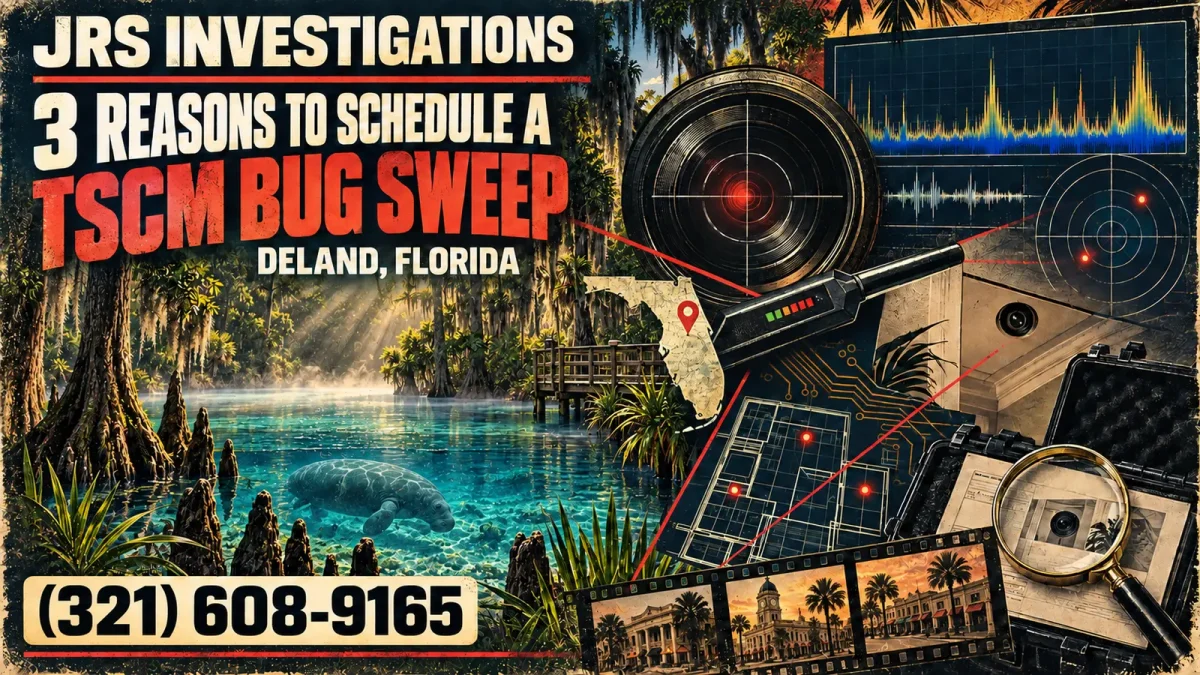
3 Reasons to Schedule a TSCM Bug Sweep in DeLand, FL
Concerns about hidden cameras, listening devices, unauthorized transmitters, or vehicle trackers can be disruptive, but a strange sound or unfamiliar wireless signal does not prove that surveillance is occurring. Homes and offices contain Wi-Fi equipment, Bluetooth devices, smart appliances, security systems, cellular signals, and other electronics that can create normal radio-frequency activity.
A professional DeLand TSCM bug sweep uses several complementary methods to assess an authorized space for suspicious devices and security weaknesses. JRS Investigations defines the scope around the location, the information believed to be at risk, recent access, and the client’s lawful authority to inspect the property.
3 Reasons to Schedule a TSCM Bug Sweep in DeLand
1. Protect Private Conversations and Personal Spaces
Homes, vehicles, hotel rooms, and private offices are places where people discuss finances, relationships, medical concerns, legal issues, and other sensitive matters. If an unauthorized device is present, the impact may extend beyond one conversation. A systematic inspection can help determine whether the concern is supported by physical or technical evidence.
Potential warning signs may include unexplained access to a room or vehicle, unfamiliar objects or chargers, disturbed fixtures, small lens-like reflections, unusual wiring changes, or confidential information becoming known to someone who should not have it. Each sign can also have an innocent explanation, so the investigator should evaluate the entire context rather than treating one symptom as proof.
Do not dismantle, destroy, or confront anyone about a suspicious item. Photograph what you observed, record the date, preserve the area, and obtain professional guidance. If there is an immediate safety threat, leave the location and contact law enforcement.
2. Safeguard Business, Legal, and Financial Information
Unauthorized monitoring can be especially damaging when a location is used for executive meetings, legal strategy, employee matters, negotiations, intellectual property, client information, or high-value transactions. Information leaks may also result from forwarded email, shared cloud access, compromised passwords, or human disclosure, so a physical sweep should be part of a broader security assessment when the facts justify it.
DeLand includes professional offices, historic commercial buildings, educational facilities, medical practices, residences, shared workspaces, and meeting locations throughout central Volusia County. Each environment has different wiring, construction, access patterns, and background signal activity. The inspection plan should reflect the specific room, building, vehicle, or device concern rather than applying the same checklist everywhere.
JRS may recommend reviewing access records, visitor activity, keys, cameras, network equipment, and recent maintenance alongside the technical inspection. This layered approach helps distinguish a suspicious event from ordinary electronic behavior and identifies practical steps for reducing future exposure.
3. Identify Security Weaknesses Before They Become Larger Problems
A TSCM inspection is not limited to searching for an active radio transmitter. Depending on the approved scope, technicians may examine common concealment areas, electrical fixtures, furniture, cabling, power sources, network devices, wireless activity, and areas where private conversations occur.
Specialized tools may include radio-frequency spectrum analysis, non-linear junction detection, hidden-camera or optical inspection, thermal examination, and a detailed physical search. The appropriate equipment depends on the property and concern. No single detector can locate every surveillance method.
Some devices transmit continuously, others send brief bursts, and some record locally without broadcasting. Wired microphones, dormant electronics, modified consumer devices, GPS trackers, network compromise, and mobile-device spyware present different technical challenges. A professional assessment combines instruments with experience, physical inspection, and analysis of the surrounding environment.
Locations That May Be Appropriate for a Bug Sweep
- Residences: Houses, condominiums, apartments, home offices, and private estates.
- Businesses: Executive offices, conference rooms, workspaces, reception areas, and off-site meeting locations.
- Vehicles: Cars, trucks, commercial vehicles, and other client-controlled vehicles where tracking or monitoring is suspected.
- Professional environments: Law offices, medical practices, financial offices, and other locations where confidential information is discussed.
- Temporary accommodations: Hotel rooms or authorized short-term locations used for sensitive meetings or travel.
For related services, review JRS Investigations’ counter-surveillance and TSCM capabilities and the main DeLand private investigator page.
How to Prepare for a TSCM Inspection
Preparation improves the value of the sweep. Provide a concise timeline, identify the rooms or vehicles involved, explain what information may have been compromised, list people with recent access, and note any suspicious objects, signals, maintenance visits, break-ins, or unusual device behavior.
- Do not discuss the planned inspection inside the location you believe may be compromised.
- Do not move, unplug, open, or destroy a suspicious object.
- Preserve visitor logs, access records, camera footage, and network information you lawfully control.
- Limit unnecessary changes to the space before technicians arrive.
- Confirm permission from the owner or authorized decision-maker for every area to be inspected.
Mobile phones and computers may require separate digital-forensics or cybersecurity work. A physical TSCM inspection should not be described as a complete examination of every account, application, or software threat unless that work is specifically included in the scope.
What Happens After the Sweep?
The client should receive a clear explanation of the inspected areas, significant observations, notable signals or devices, and recommended next steps. Documentation may include photographs and findings appropriate to the agreed scope.
If a suspicious device is located, decisions about removal, preservation, reporting, or law-enforcement involvement should be made carefully. Evidence may be relevant to litigation or a criminal matter, and unnecessary handling can damage it.
If no suspicious device is found, the result means none was identified within the scope and conditions of that inspection. It does not prove that monitoring never occurred or that a device cannot be introduced later. Access control, meeting procedures, password security, network review, and periodic reassessment may still be appropriate.
Frequently Asked Questions
Can a phone app perform a reliable bug sweep?
Phone apps and inexpensive RF meters often react to legitimate Wi-Fi, cellular, Bluetooth, and smart devices. They may also miss wired, dormant, locally recording, shielded, or intermittently transmitting equipment. A professional sweep uses multiple methods and interprets results in physical context.
Will a bug sweep find every device?
No responsible provider can guarantee detection of every possible surveillance method. Results depend on the scope, environment, device type, operating state, access, and inspection conditions. JRS explains these limitations before work begins.
Should a suspicious device be removed immediately?
Not always. Photograph it, avoid unnecessary handling, and obtain guidance. Preserving the device and its location may matter if law enforcement, an attorney, or a court will later evaluate the evidence.
How often should a business schedule a sweep?
Frequency depends on risk, access, sensitive meetings, personnel changes, information leaks, travel, and prior incidents. Some clients request an inspection after a specific event; higher-risk environments may benefit from periodic reviews and stronger access controls.
Schedule a Confidential DeLand TSCM Consultation
JRS Investigations provides authorized TSCM planning for homes, offices, vehicles, and other locations in DeLand and surrounding Volusia County. To discuss the concern, scope, scheduling, and expected costs, contact JRS Investigations or call (321) 608-9165 (DeLand local) or (888) 737-7690 toll-free.
Knowledge Is Power. A careful technical assessment can replace speculation with documented findings and practical security recommendations.