(888) 737-7690
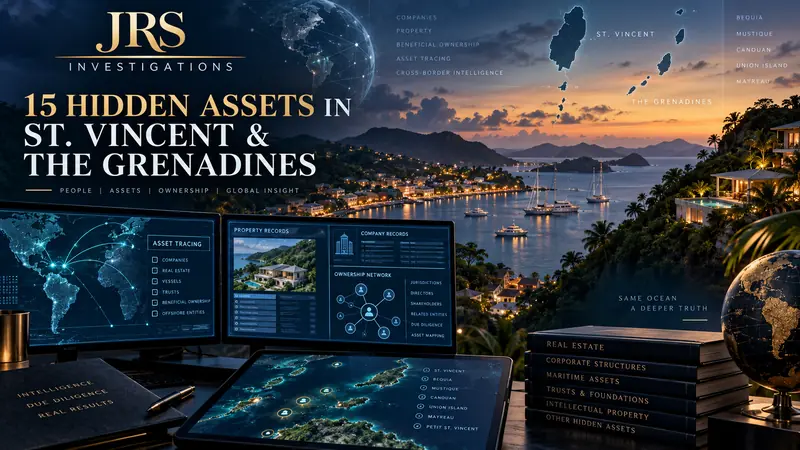
15 Types of Hidden Assets Investigators May Locate in St. Vincent and the Grenadines
Hidden-asset concerns often arise during divorce, estate disputes, fraud investigations, judgment enforcement, partnership conflicts, and commercial litigation. Assets are not always literally hidden. They may be held through a company, transferred to an associate, reported at an inaccurate value, omitted from disclosures, or located in another jurisdiction.
A St. Vincent hidden asset investigator can help identify lawful leads, organize ownership information, compare records, and document inconsistencies for attorneys, accountants, trustees, or other authorized decision-makers. JRS Investigations evaluates each assignment carefully and coordinates with appropriate local professionals when jurisdiction, licensing, access, or legal process requires it.
15 Types of Assets and Financial Interests That May Require Investigation
1. Real estate and beneficial property interests
Property may be held in an individual’s name, a company, a trust, or through another person. Research may examine available ownership records, transaction history, addresses, development interests, rental activity, and links between the property and related entities. Formal confirmation may require local counsel or official records.
2. Companies and ownership shares
A person may possess value through a corporation, partnership, limited-liability entity, or other business interest. Investigators can compare public filings, trading names, operating addresses, directors, shareholders where available, and relationships among entities. Not every jurisdiction makes complete beneficial-ownership information public.
3. Bank and investment-account leads
Private bank and brokerage records cannot be accessed without authorization or lawful process. Investigators may, however, identify institutions or transactions referenced in contracts, emails, invoices, financial disclosures, checks, wire instructions, or other records lawfully provided by the client. An attorney can determine whether subpoenas or court orders are available.
4. Boats, yachts, and maritime interests
St. Vincent and the Grenadines has a strong maritime environment extending from Kingstown through islands such as Bequia, Mustique, Canouan, and Union Island. Research may involve vessel names, registration details, ownership entities, marina activity, charter operations, insurance references, and financing documents, subject to record availability and legal access.
5. Vehicles and transportation assets
Cars, commercial vehicles, motorcycles, and other transportation assets may carry value or reveal links between a person and a company. Investigators can document lawfully observable use, compare available registration-related information, and develop leads from invoices, photographs, insurance records, or business materials supplied with proper authority.
6. Rental income and short-term accommodation revenue
Homes, villas, apartments, guesthouses, and vacation properties may generate income that is not fully reflected in financial disclosures. Lawful research may compare advertisements, booking availability, business names, property links, management arrangements, and documented occupancy. Private platform records require consent or legal process.
7. Receivables, contracts, and future payments
Value may be held in unpaid invoices, consulting agreements, commissions, settlement proceeds, royalties, loans due to the subject, or deferred compensation. Investigators can organize documents, identify counterparties, and compare payment representations with available records. Collection and disclosure remedies are legal questions for counsel.
8. Trusts, foundations, and nominee arrangements
Trusts and nominee structures can serve legitimate estate, privacy, and business purposes. They may also complicate efforts to determine who benefits from an asset. Investigators can develop links among trustees, settlors, beneficiaries, entities, addresses, transactions, and professional intermediaries without claiming ownership that the evidence does not establish.
9. Luxury goods, jewelry, art, and collectibles
High-value personal property may include watches, jewelry, art, antiques, wine, equipment, or collectibles. Leads may appear in insurance schedules, photographs, shipping records, invoices, storage references, appraisals, or social-media content. Investigators do not enter private property or seize items; documentation must be lawful.
10. Digital assets and cryptocurrency leads
Digital assets can include cryptocurrency, exchange accounts, online businesses, domain names, and other technology-based value. Investigators may identify wallet addresses or platforms referenced in lawfully obtained materials and preserve public blockchain information. They cannot bypass passwords, recover private keys without authority, or access protected accounts.
11. Insurance policies and annuity interests
Life insurance, cash-value policies, annuities, and related products may have financial significance. Leads can arise from premium payments, correspondence, beneficiary records, or financial statements supplied by an authorized party. The insurer generally requires consent, legal standing, or formal process before releasing private policy information.
12. Securities and investment interests
Shares, bonds, funds, private placements, and interests in closely held companies may be relevant to an asset inquiry. Investigators can trace publicly documented affiliations, corporate relationships, transaction references, and disclosures. Determining current value and ownership may require forensic accountants, valuation experts, or discovery through counsel.
13. Intellectual property and royalty income
Trademarks, copyrights, licensing agreements, online content, software, and brand rights may generate revenue. Research may connect a person to registered marks, companies, websites, publishing activity, licensing partners, or royalty arrangements. Ownership and valuation should be confirmed through appropriate legal and financial review.
14. Assets transferred to relatives or associates
A transfer shortly before litigation, separation, insolvency, or enforcement may warrant review. Investigators can compare timing, relationships, public ownership changes, payments, continued use, and other lawful indicators. A transfer is not automatically improper; an attorney determines whether it may be challenged.
15. Interests in foreign or offshore entities
Assets and companies may span the Caribbean, the United States, the United Kingdom, Canada, Europe, or other regions. International research may involve several registries, languages, privacy rules, and legal systems. JRS develops leads and coordinates appropriate resources rather than promising access to confidential offshore records.
How a Hidden-Asset Investigation Begins
The strongest cases begin with a clear legal or financial objective. Counsel may need to identify undisclosed property, verify representations in a transaction, locate assets potentially subject to a judgment, or understand relationships among companies and individuals. The investigator’s scope should match that objective.
Useful starting materials can include names and name variations, dates of birth, known addresses, business names, phone numbers, email addresses, contracts, financial disclosures, invoices, photographs, property details, vehicle or vessel information, and a timeline of significant transfers. Clients should provide only material they lawfully possess.
St. Vincent and the Grenadines Context
The country’s multi-island geography affects research and fieldwork. Kingstown serves as the principal commercial and administrative center, while the Grenadine islands include residential, tourism, marina, charter, and development interests. An asset may be connected to more than one island, entity, address, or professional service provider.
Property, corporate, maritime, and court information may be maintained through different authorities and may not be available in the same way as a U.S. online database. Reliable research requires local context, accurate identity matching, documented sources, and clear separation between confirmed ownership and an investigative lead.
Lawful Sources and Investigative Methods
Depending on the assignment and jurisdiction, work may include public-record research, corporate-link analysis, open-source intelligence, social-media preservation, interviews, site verification, lawful surveillance, document comparison, and coordination with attorneys or forensic accountants. A visual relationship chart can help show how people, companies, properties, vessels, and transactions connect.
JRS does not hack accounts, impersonate account holders, bribe officials, misrepresent legal authority, obtain private banking data without authorization, or access protected government systems. Requests for confidential financial, tax, immigration, or communications records generally require consent or formal legal process.
Why Attorneys and Forensic Accountants Matter
An investigator develops facts and leads. An attorney determines what is legally relevant, which discovery tools are available, and whether an asset can be restrained, disclosed, valued, or recovered. A forensic accountant may analyze complex financial statements, trace transactions, evaluate business income, and calculate potential discrepancies.
Early coordination reduces duplicated work and helps preserve evidence in a form that supports the legal strategy. It also prevents an investigation from pursuing information that cannot be used or obtained lawfully.
What a Final Report May Include
Depending on the approved scope, the report may include an executive summary, identity findings, source references, corporate and property links, relevant photographs, timelines, relationship diagrams, documented inconsistencies, and recommended next steps. Confirmed facts should be clearly separated from reported information and unresolved leads.
No ethical investigator can guarantee that assets will be found or recovered. Results depend on accurate identifiers, record access, ownership structures, timing, jurisdiction, and the legal authority available to the client. Asset recovery is a separate legal and financial process.
Speak With JRS About a St. Vincent Hidden-Asset Matter
If you need lawful asset research connected to St. Vincent and the Grenadines, contact JRS Investigations for a confidential case assessment. Providing a focused objective and organized starting documents allows the team to evaluate the most effective next step.
Knowledge is power. Call JRS Investigations at (888) 737-7690.