(888) 737-7690
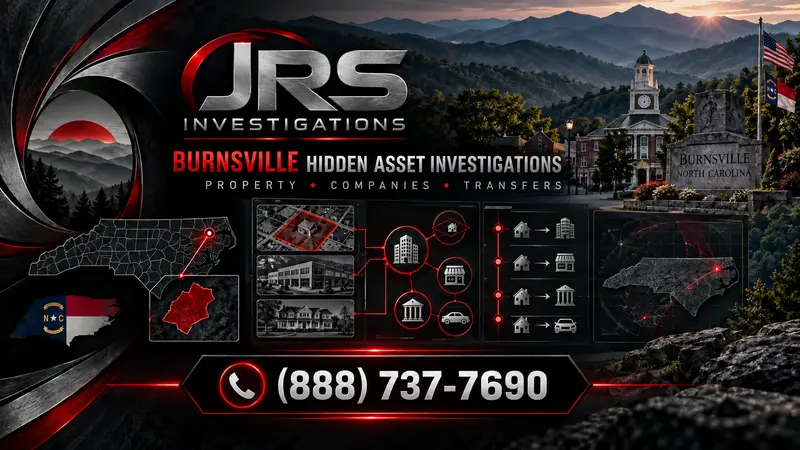
Burnsville Hidden Asset Investigator: 5 Reasons
Hidden-asset questions often arise when a person’s reported finances do not match known property, business activity, transfers, or lifestyle. A Burnsville hidden asset investigator helps attorneys, judgment creditors, businesses, fiduciaries, and other authorized clients identify lawful, documentable leads in Burnsville, Yancey County, and connected jurisdictions.
JRS Investigations does not promise to find every asset or gain access to protected financial records. The work begins with a defined legal purpose, known identifiers, and a strategy for connecting public records, corporate information, litigation, property, and other lawful sources.
Five reasons to hire a Burnsville hidden asset investigator
1. Connect property, companies, and associated parties
Assets are not always held under one obvious name. A subject may have interests connected to a company, partnership, family member, trust, prior address, business associate, or another jurisdiction. An investigation can develop those connections and identify which records merit closer review.
In and around Burnsville, real property, business registrations, civil filings, liens, judgments, addresses, and company affiliations may create a useful ownership or control picture. Each lead must be verified; a shared address or similar name does not prove beneficial ownership.
2. Build a chronology of transfers and financial representations
Timing can matter in a divorce, estate dispute, business conflict, fraud allegation, or judgment-recovery matter. Investigators can organize dates tied to property transfers, entity formation, lawsuits, reported addresses, business roles, and other relevant events. A clear chronology helps counsel compare public facts with disclosures, testimony, agreements, or known transactions.
JRS reports what the source shows and avoids unsupported conclusions about intent. A transfer may be relevant, but the client’s attorney determines its legal significance.
3. Extend research beyond a single county or state
A subject connected to Burnsville may also have lived, worked, invested, or formed companies elsewhere. Searches limited to Yancey County can miss out-of-county property, litigation, corporate interests, or associated entities. When facts justify it, JRS can expand research to other North Carolina jurisdictions, other states, or international locations.
Broader research should follow evidence rather than speculation. Known addresses, business partners, professional records, travel patterns, transaction dates, and corporate filings can help prioritize the next jurisdiction.
4. Preserve sources and prepare an attorney-ready report
Asset leads are most useful when each item can be traced to a source. JRS can organize records, source dates, screenshots or certified-document references where appropriate, name variations, entity relationships, and unresolved questions into a report designed for counsel or decision-makers to review efficiently.
The North Carolina Judicial Branch explains how court records and background-check resources can be accessed. State and county record systems have different coverage and update schedules, so findings should be dated and limitations identified.
5. Focus legal tools where they are most likely to matter
An investigation can identify leads, but it cannot compel a bank, employer, accountant, platform, or private person to disclose protected information. Counsel may need subpoenas, discovery, debtor examinations, court orders, or other legal process. Investigative research can help narrow those requests and identify records or entities worth pursuing.
This division of work matters: the investigator develops lawful facts and relationships; the attorney decides which legal remedy is available and proportionate.
Matters that may justify a hidden-asset investigation
- Judgment enforcement and collection planning
- Divorce, equitable distribution, alimony, or support disputes
- Estate, probate, trust, or inheritance conflicts
- Business-partner or shareholder disputes
- Fraud, embezzlement, or misrepresentation allegations
- Due diligence before a transaction or settlement
- Verification of financial representations in litigation
A legitimate purpose is essential. JRS will not conduct an asset search to facilitate harassment, stalking, identity theft, unlawful collection activity, or access to records the client has no right to obtain.
What a Burnsville asset search may examine
Depending on the facts, lawful authority, and available sources, research may include:
- Real estate and publicly recorded property interests
- Deeds, mortgages, liens, and transfer history
- North Carolina and out-of-state business registrations
- Officers, managers, registered agents, and business addresses
- Civil litigation, judgments, bankruptcy, and recorded claims
- Professional licenses and public disciplinary records
- Known employment, self-employment, and business advertising
- Vehicles, vessels, or other titled-property leads where lawfully available
- Public online material and archived business references
- Associated people, entities, addresses, and jurisdictions
A public record lead is not the same as a confirmed recoverable asset. Ownership may have changed; property can be encumbered; an entity can be inactive; and exemptions or superior claims can affect value. Counsel and qualified financial professionals should assess legal ownership, valuation, priority, and recoverability.
Information an investigator cannot simply obtain
Private investigators do not have a universal right to obtain personal bank balances, account transactions, credit reports, tax returns, protected employment files, or private investment statements. Those records generally require consent, a permissible statutory purpose, legal process, or another form of lawful authority.
JRS does not hack accounts, misrepresent authority, bribe insiders, use unlawful tracking technology, or guarantee that any lead will be admissible or produce a recovery.
Why Burnsville and Yancey County context matters
Burnsville’s mountain setting can involve rural addresses, family-held property, small businesses, agricultural or undeveloped parcels, and records connected to nearby counties. Local property information may be only one piece of a wider pattern. Accurate identifiers and careful jurisdiction mapping reduce false matches and wasted research.
A phased assignment may begin with identity, address, court, property, and company research. If those findings point elsewhere, the scope can expand with the client’s approval.
What to provide at intake
Helpful information includes the subject’s full legal name and variations, date of birth or other lawful identifiers, known addresses, companies, associates, property references, case number, judgment or order, relevant dates, prior disclosures, and the specific financial representation or inconsistency that prompted the search.
For related services, review JRS Investigations’ hidden asset investigations, Burnsville private investigator services, international asset investigations, and judgment recovery investigations.
Discuss a Burnsville hidden-asset investigation
To discuss a lawful scope, call JRS Investigations at (888) 737-7690 or contact JRS Investigations. We will explain which questions can be addressed through investigative research and which may require counsel or formal legal process.
#BurnsvilleNC #HiddenAssetInvestigation #AssetSearch #JudgmentRecovery #JRSInvestigations